
Drug Combination Risk Assessment Tool
Risk Assessment Calculator
This tool helps you understand your risk of dizziness or fainting when taking alpha-blockers and PDE5 inhibitors together. Based on the 2024 European Association of Urology guidelines and clinical studies.
Combining alpha-blockers and PDE5 inhibitors might seem like a smart way to treat two common problems at once - an enlarged prostate and erectile dysfunction. But for many men, this combo comes with a dangerous side effect: sudden dizziness or even fainting. It’s not rare. It’s not theoretical. It’s something that happens in real life, often when people least expect it - like getting up in the middle of the night to use the bathroom.
Why This Combo Is So Risky
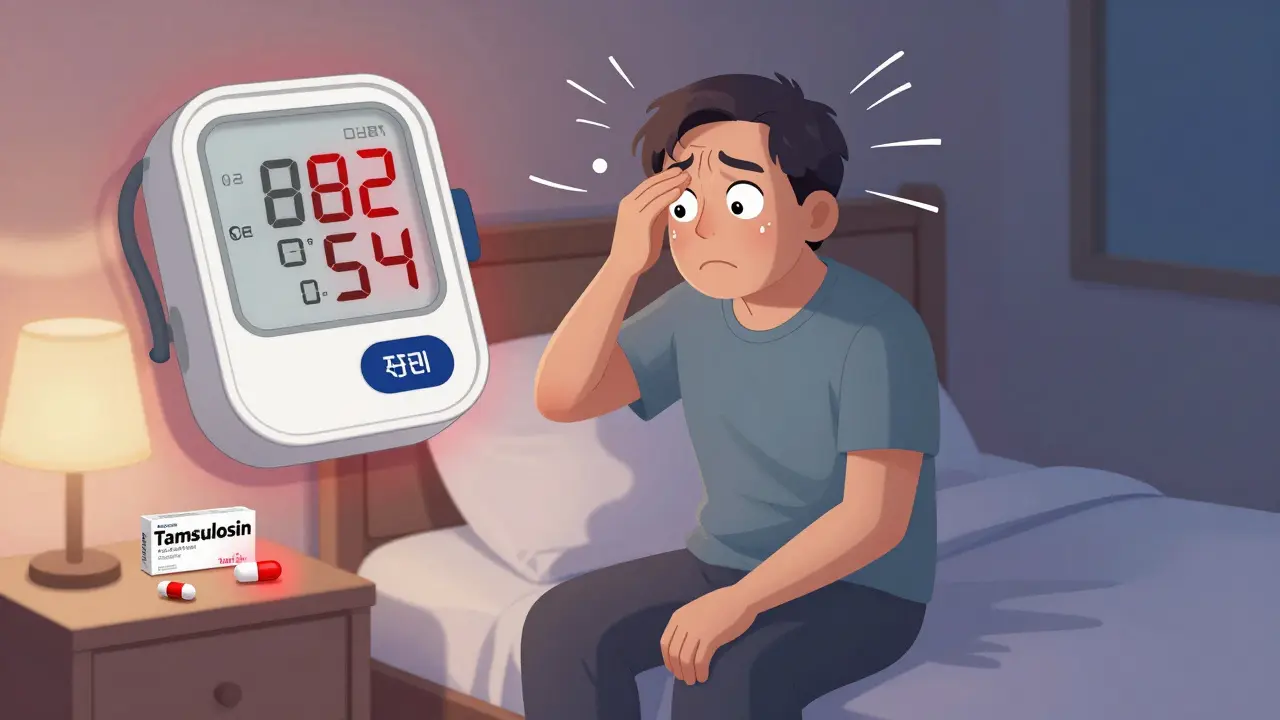
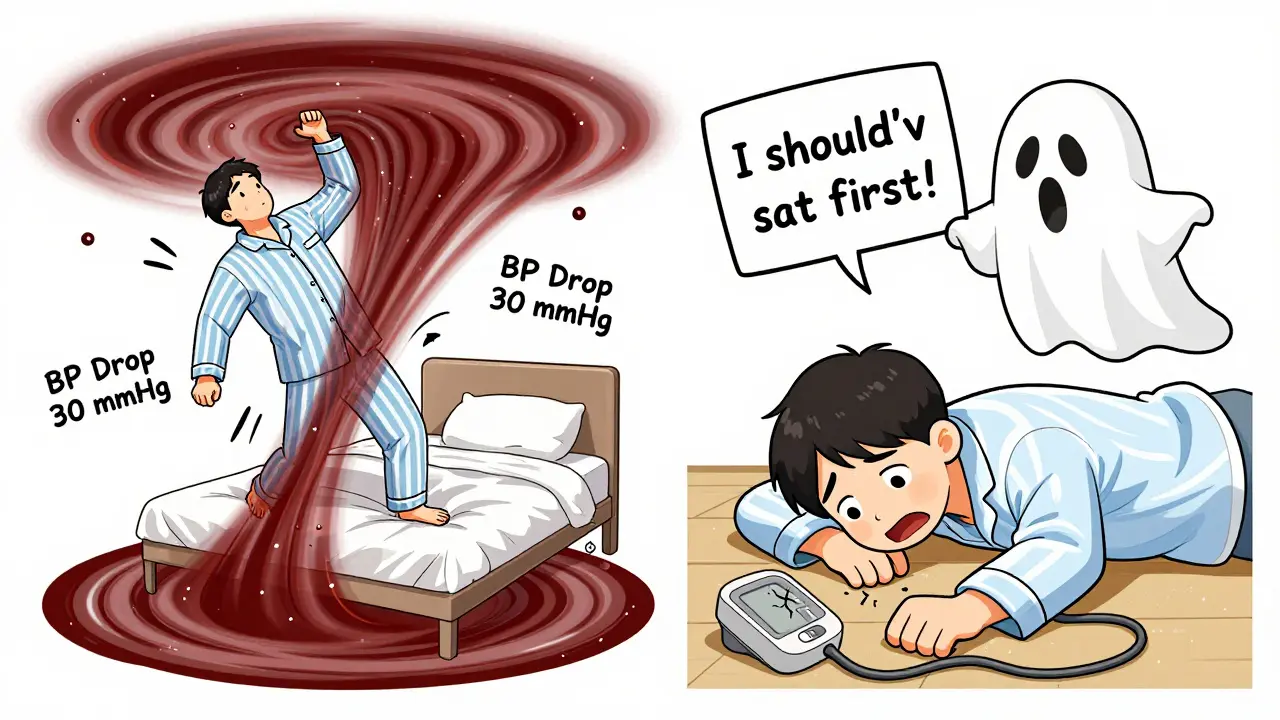
Alpha-blockers like tamsulosin (a uroselective alpha-blocker commonly sold as Flomax) and terazosin (a non-selective alpha-blocker used for both BPH and high blood pressure) work by relaxing smooth muscle in the prostate and blood vessels. This helps with urine flow and lowers blood pressure. PDE5 inhibitors - including tadalafil (Cialis), sildenafil (Viagra), and avanafil (Stendra) - boost blood flow by enhancing nitric oxide’s effect, which also lowers blood pressure. When you take both, the effects stack up. Your blood pressure can drop more than either drug alone.This isn’t just a mild dip. Studies show that when these drugs are taken together, systolic blood pressure can plunge by over 30 mmHg in some people. That’s enough to make your head spin - or knock you out cold. The risk peaks about 1 to 2 hours after taking a PDE5 inhibitor, which is exactly when many men get up at night. One patient on a medical forum described fainting after taking tadalafil and tamsulosin: "I landed hard on my shoulder. My blood pressure monitor showed 82/54 when I woke up."
Who’s Most at Risk
Not everyone who takes this combo will faint. But certain people are far more likely to have problems:- Men over 65 - aging blood vessels don’t react as quickly to pressure changes.
- Those with baseline systolic blood pressure under 110 mmHg - their bodies have little room to absorb a drop.
- People taking more than one blood pressure medication - the combined effect is unpredictable.
- Anyone who drinks alcohol - alcohol adds another layer of vasodilation and can raise the risk by 37%.
- Patients with undiagnosed autonomic dysfunction - their bodies can’t regulate blood pressure properly.
According to the European Association of Urology’s 2024 guidelines, these groups should avoid the combination entirely. For others, caution is non-negotiable.
Real Numbers, Real Consequences
The data doesn’t sugarcoat this:- A 2014 meta-analysis of nearly 30,000 patients found 4.76% experienced dizziness with the combo.
- Another study showed 5.2% of patients on tadalafil plus an alpha-blocker had dizziness or vertigo.
- On Reddit’s urology forum, 73% of users on this combo reported dizziness - compared to just 22% on alpha-blockers alone.
- Up to 5.8% of patients had to stop the treatment because dizziness was too severe.
And it’s not just about discomfort. Fainting can lead to falls, fractures, head injuries, and hospital visits. One man on Drugs.com wrote: "Dizziness was constant for three hours after combining Cialis with Flomax - felt like being on a rocking boat." That’s not an exaggeration. It’s a real, measurable effect.
How to Stay Safe - Step by Step
If you’re on an alpha-blocker and your doctor suggests adding a PDE5 inhibitor, don’t assume it’s fine. Here’s what actually works:- Start with the alpha-blocker first. Give your body at least 2 to 4 weeks to adjust before adding the PDE5 inhibitor. This lets your blood pressure stabilize.
- Use the lowest possible dose. Never start with 10 mg or 20 mg of tadalafil. Begin with 5 mg - the lowest available dose. The same goes for sildenafil: start with 25 mg, not 50 or 100.
- Space them out. Take your alpha-blocker at night and your PDE5 inhibitor in the morning - or vice versa - with at least 4 hours between doses. This avoids peak concentrations overlapping.
- Never skip the standing rule. Before getting out of bed, sit on the edge for 1 to 2 minutes. Let your body adjust. If you feel dizzy, lie back down. Don’t rush.
- Avoid alcohol completely. Even one drink can turn a manageable drop in blood pressure into a dangerous one.
- Monitor your blood pressure. If you’re in the high-risk group, get a home monitor. Check it before and after taking the combo. If your systolic drops below 90 or you feel lightheaded, call your doctor.
Pharmacists now counsel 68% of patients on this combo about dizziness risk - up from 42% in 2018. That’s progress. But you can’t rely on them alone. You need to know the signs and act.
What About Newer Drugs?
In 2023, the FDA approved a new extended-release form of tadalafil (Adcirca) designed to reduce those sharp spikes in blood concentration. Early data suggests it may lower dizziness risk, but it’s not a magic fix. The same principles still apply: start low, go slow, avoid alcohol, and don’t stand up too fast.Meanwhile, the NIH-funded TAD-ALPHA trial is testing whether a daily 2.5 mg dose of tadalafil - half the usual starting dose - can maintain benefits while cutting dizziness rates. Results are expected in late 2025. Until then, the safest path remains conservative dosing and strict timing.

When to Say No
Some men should never take this combo:- Those with heart failure, recent heart attack, or unstable angina.
- Patients already on nitrates - this is a hard contraindication.
- Anyone with uncontrolled high blood pressure.
- People who’ve fainted before without clear cause.
The American Urological Association says combination therapy improves prostate symptoms better than either drug alone. But if you’re dizzy every time you stand up, the benefit isn’t worth the cost. Your quality of life isn’t just about sex or urination - it’s about not falling down.
Bottom Line
This isn’t a warning to avoid treatment. It’s a call to treat smarter. Alpha-blockers and PDE5 inhibitors are powerful tools. Used together, they can help men live better. But used carelessly, they can put you in the hospital. Know your risk. Know the signs. Know how to protect yourself. If your doctor hasn’t walked you through this - ask. If they brush it off - get a second opinion. Your next step off the bed shouldn’t be a fall.Can I take tadalafil with tamsulosin safely?
Yes, but only under strict conditions. Start with tamsulosin for 2-4 weeks first. Then begin tadalafil at the lowest dose (5 mg), not the standard 10 or 20 mg. Take them at least 4 hours apart. Avoid alcohol. Sit for 1-2 minutes before standing. If you feel dizzy, stop and call your doctor.
Why do I feel dizzy only at night?
PDE5 inhibitors like tadalafil peak in your bloodstream 1-2 hours after taking them. If you take it in the evening and get up to use the bathroom, your blood pressure drops right when your body is trying to adjust from lying down to standing. This timing makes nighttime fainting very common with this combo.
Is tamsulosin safer than other alpha-blockers?
Yes. Tamsulosin is "uroselective," meaning it targets the prostate more than blood vessels. Non-selective alpha-blockers like terazosin and doxazosin cause more widespread blood vessel relaxation, leading to bigger drops in blood pressure. So while tamsulosin is safer, the risk still exists - especially when combined with PDE5 inhibitors.
How common is fainting with this drug combo?
Fainting isn’t the most common side effect - dizziness is. But studies show that about 1 in 20 men on this combo experience fainting episodes. The risk jumps significantly in men over 65, those on multiple blood pressure meds, or those who drink alcohol.
Should I stop my medication if I get dizzy?
Don’t stop abruptly. Call your doctor. Dizziness might mean you need a lower dose, a different timing schedule, or a different drug. Stopping suddenly can make your prostate symptoms worse or raise your blood pressure dangerously. Work with your provider to find a safer balance.
Can I use erectile dysfunction creams or injections instead?
Topical creams and injections like alprostadil may be safer alternatives because they don’t cause the same systemic blood pressure drop as oral PDE5 inhibitors. But they still carry some risk, especially if you have heart conditions. Talk to your urologist - they can help you weigh the trade-offs.
Johny Prayogi
March 20, 2026 AT 17:19Bro this is wild. I took Cialis and Flomax together for months and never thought twice. Then one night I passed out in the bathroom and cracked my skull on the toilet. Hospital. CT scan. No brain bleed but damn. My doctor said I was lucky. Now I take my meds 6 hours apart and never drink. Seriously, if you’re doing this combo, stop being a dumbass and read the damn guidelines.
Sandy Wells
March 20, 2026 AT 18:24I’m not saying this is wrong but I’m also not surprised. People take meds like candy. I mean really. You take something for your prostate and something for your... you know... and think it’s fine? You’re not a lab rat. Your body isn’t a spreadsheet. Just say no. Or at least sit down first.
Nicole James
March 22, 2026 AT 13:29Whoa. Okay. So… let me get this straight. Big Pharma wants us to take these drugs together because… profit? And now we’re supposed to believe this is just ‘risk’? What about the clinical trials? Who funded them? Who signed the consent forms? And why is no one talking about the fact that this combo was pushed hard in ads for years? I’m not paranoid-I’m informed. This is a classic case of corporate greed disguised as medical progress. And don’t even get me started on how they downplayed the dizziness rates. They knew. They knew.
Allison Priole
March 23, 2026 AT 08:14Man I just read this whole thing and I’m so glad I didn’t ignore my doctor’s warning. I was on tamsulosin for a year and then my urologist suggested Cialis. I said ‘nah, I’ll try it’ and he looked at me like I had three heads. He made me sit on the edge of the bed for 5 minutes every morning for a week before even trying it. I did. I felt fine. Then I took the 5mg dose at 8am. Didn’t touch alcohol. Checked my BP. 118/72. Perfect. I’m not some hero. I just listened. And honestly? I’m still getting results. No fainting. No dizziness. Just… better sleep. Better sex. Better life. Don’t overthink it. Just be smart.
Casey Tenney
March 24, 2026 AT 15:40People are dying. Not metaphorically. Literally. Falling. Breaking hips. Brain bleeds. And you’re out here thinking ‘I’ll be fine.’ No. You won’t. You’re not special. You’re not immune. This isn’t a game. Stop being reckless with your body. Your kids don’t want to clean up your blood on the bathroom floor.
Bryan Woody
March 25, 2026 AT 18:43Look. I’m a pharmacist. I’ve counseled 200+ men on this exact combo. And 80% of them thought they were invincible. ‘I’ve been on Flomax for 5 years, I’m fine.’ Yeah. Until you take Cialis and stand up. Then you’re a human pendulum. The worst part? They all say ‘My doctor never told me.’ Bullshit. You didn’t ask. You didn’t read. You just googled ‘Cialis and Flomax together’ and said ‘cool.’ So here’s your free advice: Start at 2.5mg. Wait 48 hours. Sit before you stand. No alcohol. Ever. And if you feel like the room is spinning? Lie down. Don’t be a hero. Your prostate isn’t worth a broken collarbone.
Timothy Olcott
March 26, 2026 AT 04:21USA strong! We don’t need these fancy warnings. I take both meds together and I’m 68 and still hiking. If you’re weak then maybe you shouldn’t be taking meds at all. This is just another way for the government to control us. I’ve been doing this for 3 years. No problem. Maybe if you stop being so scared you’d be fine too. America: where we don’t faint, we just adapt.
Jackie Tucker
March 26, 2026 AT 10:23How quaint. A 15-sentence treatise on ‘how not to faint.’ As if the real issue isn’t the systemic failure of modern medicine to prioritize patient autonomy over pharmacological convenience. We’ve reduced men’s health to a dosing schedule. A timing protocol. A checklist. But where is the dignity? Where is the humanity? You speak of blood pressure drops as if they’re merely statistical anomalies. But they’re existential. The moment you must sit on the edge of your bed for two minutes before standing-you’ve lost a piece of your autonomy. And no, I won’t ‘call my doctor.’ I’ll write a poem about it instead.