
Cholesterol Medication Calculator
Estimate your potential LDL reduction and costs with alternative cholesterol medications for statin-intolerant patients.
Based on clinical data from the article:
- Ezetimibe: 15-22% LDL reduction
- Bempedoic Acid: 21% LDL reduction
- Combination: 35-40% LDL reduction
Your Estimated Results
What If Statins Don’t Work for You?
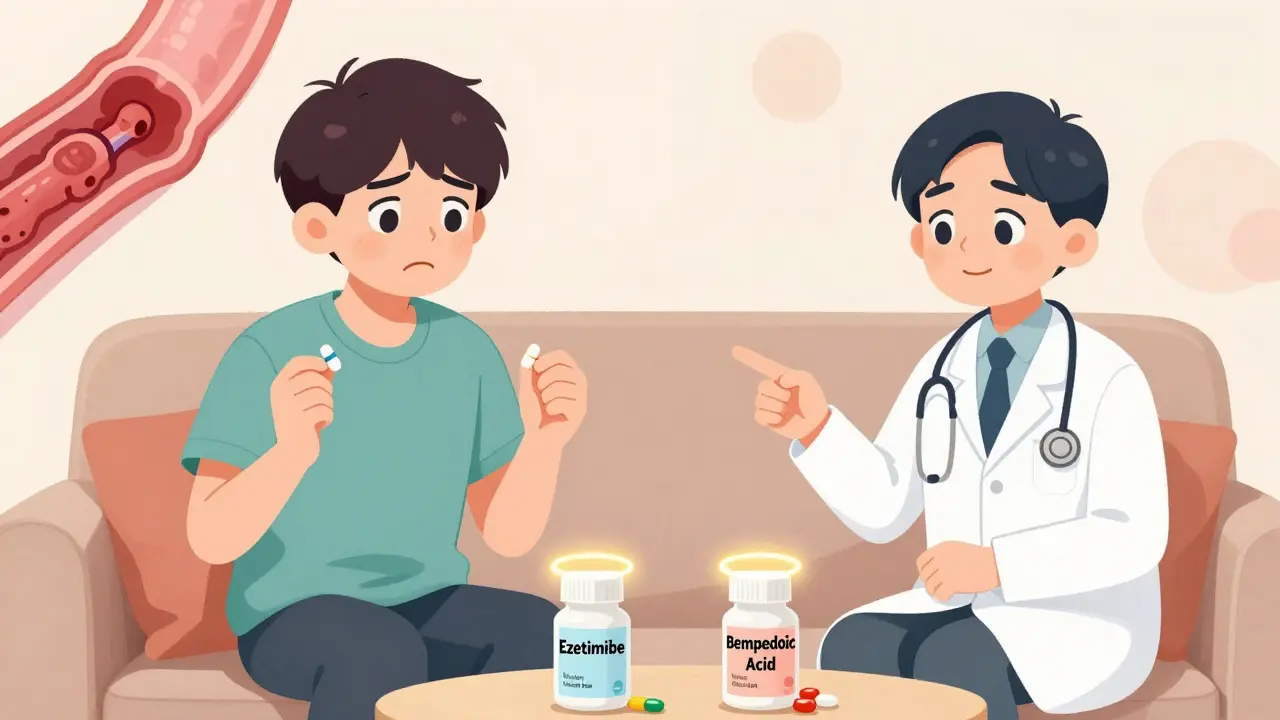
Statins are the go-to for lowering bad cholesterol. But if you’ve tried them and ended up with muscle pain, fatigue, or worse - you’re not alone. Around 1 in 5 people can’t stick with statins because of side effects. That leaves a lot of people wondering: what now? The answer isn’t just "live with high cholesterol." Two proven, FDA-approved alternatives exist: ezetimibe and bempedoic acid. Neither is a statin. Both work differently. And both can help you lower your LDL without the muscle issues.
Ezetimibe: The Quiet Workhorse
Ezetimibe (brand name Zetia) has been around since 2002. It doesn’t touch your liver like statins do. Instead, it blocks cholesterol absorption in your small intestine. Think of it like a bouncer at the door - it stops dietary cholesterol from getting into your bloodstream. On its own, it lowers LDL by about 15-22%. That’s not flashy, but it’s real. When you add it to a low-dose statin, it bumps the reduction up another 18-25%.
Here’s the kicker: it’s cheap. Generic ezetimibe costs as little as $4 a month through Medicare Part D. Most people tolerate it well. Side effects? Rare. Maybe a little stomach upset, but nothing like the muscle aches that send people running from statins. On patient forums, users give it a 7.1 out of 10. Why? Because it works without wrecking their legs.
Bempedoic Acid: The New Kid on the Block
Bempedoic acid (Nexletol) got FDA approval in 2020. It’s the first oral, non-statin drug with hard proof it reduces heart attacks and strokes - not just cholesterol numbers. How? It blocks a different enzyme in the liver (ACL), one that’s far from your muscles. That’s why it doesn’t cause muscle pain. In clinical trials, muscle side effects were almost the same as placebo.
The CLEAR Outcomes trial followed nearly 14,000 people who couldn’t take statins. Those on bempedoic acid saw their LDL drop by 21% and had 13% fewer major heart events over 3.5 years. That’s not just a lab number - it’s a life saved. It’s not as strong as a high-dose statin (which can drop LDL by 50%+), but it’s the best oral option for people who can’t use statins at all.
It’s taken as one 180 mg pill a day. The downside? Cost. Without insurance, it runs about $230 a month. Even with discounts, it’s still 50 times pricier than generic ezetimibe. That’s why many patients hesitate - even if it works.
Combination Power: Nexlizet
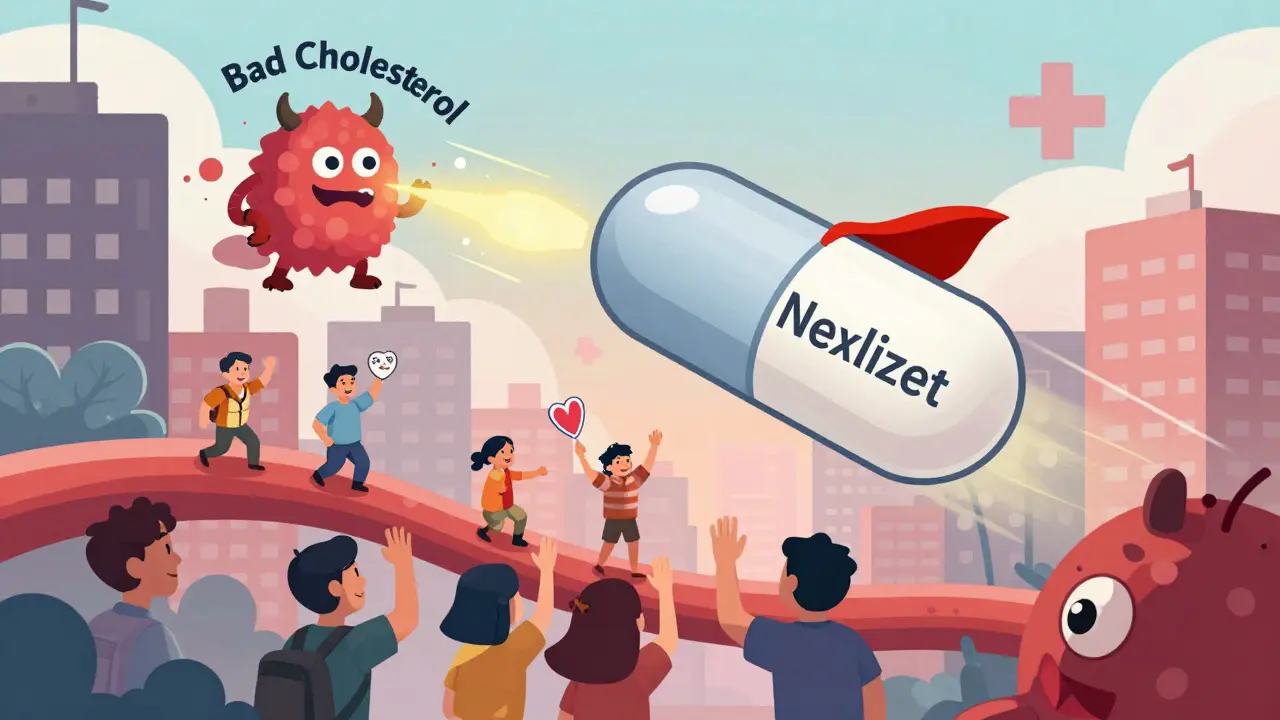
What if you need more than one tool? In 2024, the FDA approved Nexlizet - a single pill with 180 mg bempedoic acid and 10 mg ezetimibe. This combo drops LDL by 35-40%. For patients who need bigger drops but can’t tolerate statins, this is a game-changer. No more juggling two pills. Just one daily dose with proven heart protection.
How Do They Compare to Statins and Other Drugs?
Let’s be clear: statins still win on power and price. Atorvastatin (generic) costs less than $1 a day and cuts LDL by 30-55%. That’s why guidelines still say: try statins first.
But here’s the reality - if statins wreck your muscles, you need something else. PCSK9 inhibitors like Repatha or Praluent lower LDL even more (50-60%), but they’re injections given every two weeks. And they cost over $10,000 a year. For most people, that’s not practical.
Ezetimibe and bempedoic acid sit in the middle: oral, affordable (relatively), and effective enough to matter. They’re not magic bullets. But for the 7-29% of people who can’t take statins, they’re the best tools we have.
Who Should Use These Drugs?
Not everyone needs them. These are for specific cases:
- You tried at least two statins and had clear muscle pain or weakness that went away when you stopped
- Your LDL is still too high even on the highest tolerable statin dose
- You have heart disease or diabetes and need to get LDL under 70 mg/dL
- You’re at high risk for heart attack or stroke and need extra lowering beyond what statins can give
Doctors don’t just hand these out. You need a confirmed history of statin intolerance. That usually means trying different statins over 3-6 months, with careful monitoring. If you just didn’t like the idea of taking a pill - that’s not enough.
Side Effects and Risks
Ezetimibe is very safe. The most common issue? Mild stomach upset. No major warnings.
Bempedoic acid has a few things to watch for:
- Increased uric acid levels - can raise risk of gout (about 3-5% of users)
- Tendon problems - rare, but the FDA requires a warning. Tendon ruptures happened in 0.5% of trial participants
- Joint pain - reported by 12% of real-world users, higher than the 2% seen in trials
- Can’t use with high-dose simvastatin or pravastatin - it can spike statin levels dangerously
It’s also not for people with severe kidney disease (eGFR under 30). Your doctor will check your kidney function before prescribing.

Real People, Real Results
On Reddit, one user wrote: "Switched from atorvastatin to bempedoic acid. My LDL went from 142 to 101. No muscle pain. Best decision I made." Another said: "Ezetimibe dropped my LDL by 18 points. Not worth the copay."
That’s the range. Some people get great results. Others feel let down. Why? Because cholesterol lowering isn’t the same for everyone. Genetics, diet, and other meds all play a role. If you start one of these and your LDL only drops 10%, that doesn’t mean it’s broken - it might just mean you need more.
Monitoring and Expectations
These drugs don’t work overnight. You’ll need a blood test 4-12 weeks after starting to see results. Doctors look for:
- Ezetimibe: at least a 10% drop in LDL
- Bempedoic acid: at least a 15% drop
If you don’t hit those numbers, your doctor might add another agent or adjust your plan. Don’t give up after one month. It takes time.
Also, don’t assume you can stop lifestyle changes. These meds work best with a heart-healthy diet, regular exercise, and no smoking. They’re tools - not replacements for good habits.
What’s Next?
Research is ongoing. The CLEAR CardioTrack trial, with results expected by late 2025, is using imaging to see if bempedoic acid actually shrinks plaque in arteries. Early signs say yes.
Meanwhile, the market is shifting. Ezetimibe sales are slowly dropping as generics dominate. Bempedoic acid is growing fast - Esperion made $412 million in sales in 2023. More doctors are learning how to use it. More insurers are starting to cover it, especially for high-risk patients.
By 2027, experts predict up to 40% of statin-intolerant patients will be on bempedoic acid or its combo pill. That’s not because it’s perfect. It’s because we finally have a safe, effective, oral option for people who were left with no good choices.
Aliyu Sani
December 23, 2025 AT 08:18Gabriella da Silva Mendes
December 24, 2025 AT 05:44Jamison Kissh
December 25, 2025 AT 20:50Sam Black
December 26, 2025 AT 13:11Nader Bsyouni
December 27, 2025 AT 08:10Tony Du bled
December 28, 2025 AT 10:23Kathryn Weymouth
December 30, 2025 AT 08:39Sai Keerthan Reddy Proddatoori
December 31, 2025 AT 18:20Julie Chavassieux
January 2, 2026 AT 04:16