
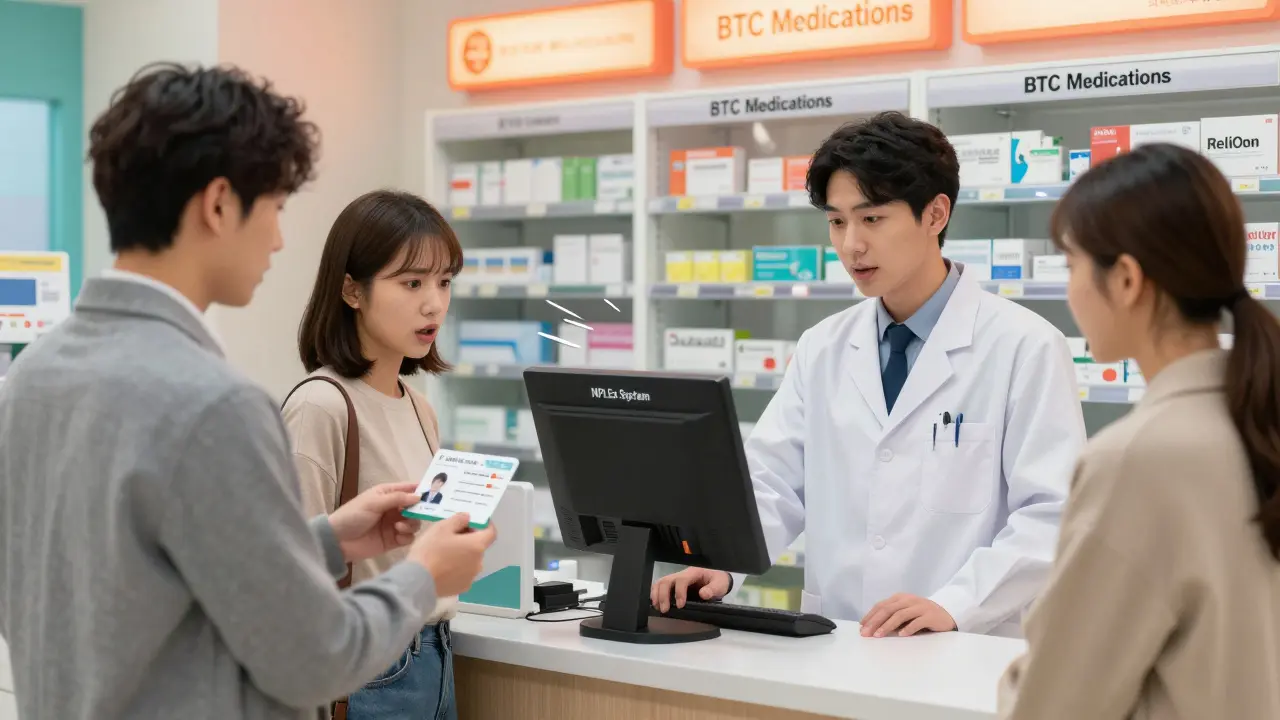
Ever walked into a pharmacy to buy cold medicine, only to be asked for your ID, told to wait, and then handed a box of Sudafed like it’s a restricted item? You’re not imagining things. That’s not a glitch in the system-it’s the behind-the-counter (BTC) system in action. These aren’t regular over-the-counter (OTC) pills you can grab off a shelf. They’re not prescriptions either. They’re something in between-and understanding how they work can save you time, frustration, and even money.
What Exactly Are Behind-the-Counter Medications?
Behind-the-counter medications are drugs that you can buy without a doctor’s prescription, but you can’t just pick them off the shelf. They’re locked behind the pharmacy counter. To get them, you need to talk to a pharmacist, show ID, and have your purchase logged into a federal tracking system. This isn’t a new idea-it started in 2006 after Congress passed the Combat Methamphetamine Epidemic Act. The goal? Stop people from buying huge amounts of pseudoephedrine, a common cold medicine ingredient that criminals could turn into meth. But the system didn’t stop there. Over time, it became a practical middle ground for other medications that need some oversight but don’t require a full prescription. Think of it like a safety net: you still get quick access, but a trained professional checks in to make sure you’re using it right.Common BTC Medications You Might Need
You’ve probably encountered at least one of these without realizing it. Here are the most common behind-the-counter drugs in 2026:- Pseudoephedrine products (Sudafed, Claritin-D, Allegra-D): These are the original BTC drugs. Each tablet usually contains 30-60 mg of pseudoephedrine. Federal law limits you to 3.6 grams per day and 9 grams per 30 days. That’s about 6-12 tablets, depending on the strength. You’ll need to show ID every time, and the pharmacy logs your purchase in the National Precursor Log Exchange (NPLEx) system.
- Emergency contraceptives (Plan B One-Step, Next Choice): Available without a prescription to anyone 17 and older. You still need to ask the pharmacist, show ID, and wait a few minutes. But unlike before 2013, you don’t need to see a doctor. These are 89% effective if taken within 72 hours of unprotected sex.
- ReliOn insulin (Humulin R, Novolin N): Walmart’s low-cost insulin brand is available behind the counter for $25-$40 per vial. No prescription needed. This is a game-changer for people without insurance or those struggling with high drug prices. (Note: Newer insulins like NovoLog still require a prescription.)
- Some cough syrups (in a few states): In Oregon and Mississippi, low-dose codeine cough syrups (up to 12.8 mg per dose) are still BTC. In most other states, any codeine product now requires a prescription.
These aren’t random choices. They’re medications with real risks if misused-but also high value if used correctly. The BTC model lets people get them quickly while reducing abuse or harm.
Why Not Just Make Them Fully OTC?
You might wonder: why not just put pseudoephedrine back on the shelf like ibuprofen? The answer is science. Pseudoephedrine is significantly more effective than its OTC replacement, phenylephrine. Studies show pseudoephedrine relieves nasal congestion in 72% of users, while phenylephrine works for only 38%. That’s a huge difference for someone with a bad cold or sinus infection. But here’s the catch: making it fully OTC would mean no tracking, no ID checks, and no limits. That’s how meth labs used to operate-buying 100 boxes of Sudafed at once. The BTC system cuts that risk while keeping the medicine available to people who need it. The same logic applies to emergency contraception. Before Plan B became BTC, you needed a prescription. That meant delays, doctor visits, and sometimes missed windows of effectiveness. Now, you can walk in at 11 p.m. and get it without an appointment. CDC data shows teen pregnancy rates dropped 46% between 2007 and 2017-partly because of easier access to emergency contraception.
The Downsides: Inconvenience, Confusion, and Bias
The BTC system isn’t perfect. For one, it’s inconvenient. You can’t just grab it while picking up milk. You have to go into the pharmacy, wait, show ID, and sometimes be questioned. In rural areas, where pharmacies are sparse, this becomes a real barrier. About 60 million Americans live more than 10 miles from a pharmacy. For them, a 30-minute drive for a cold medicine is a big deal. There’s also inconsistency. Rules vary by state. Oregon limits pseudoephedrine to 7.5 grams per month. Texas allows 9 grams. Some pharmacies still refuse to sell Plan B to people they think are “too young,” even if they’re 17 or older. A 2022 Kaiser Health News investigation found that 22% of pharmacies would sell Plan B to underage teens without checking ID-while others turned away adults. And then there’s bias. A University of Michigan study in 2021 found Black customers were 3.2 times more likely to be questioned or refused when buying pseudoephedrine than white customers-even when their purchase history was identical. That’s not just unfair. It’s dangerous. People who avoid pharmacies because of bad experiences may skip needed medicine altogether.What Happens When You Buy a BTC Medication?
If you’ve never bought a BTC drug before, here’s what to expect:- Go to the pharmacy counter-not the OTC aisle.
- Ask for the medication by name. Don’t assume the pharmacist knows what you want.
- Hand over a government-issued photo ID (driver’s license, passport, state ID).
- The pharmacist will check your purchase history in the NPLEx system to make sure you haven’t hit your monthly limit.
- They’ll ask a few questions: “Why are you buying this?” “Do you have high blood pressure?” “Are you pregnant?”
- They’ll log the sale, hand you the product, and may give you a printed fact sheet.
This process usually takes 5-7 minutes. It’s longer than grabbing a bandage, but it’s designed to protect you as much as it protects the public.
Pharmacies Bear the Cost Too
It’s not just you who deals with the hassle. Pharmacies have to pay for it. They need special software to track purchases, which costs about $1,200 per location per year. Staff need training-about 8 hours per employee annually-to handle the rules correctly. And they’re on the front line when things go wrong: a customer gets angry because they hit a limit, or a pharmacist gets accused of discrimination. Still, most pharmacists support the system. A 2023 Pharmacy Times survey found 73% of pharmacists want to expand the BTC category. Why? Because they see themselves as the bridge between safety and access. They’re the ones who can spot a dangerous interaction, warn about side effects, or redirect someone to a better option.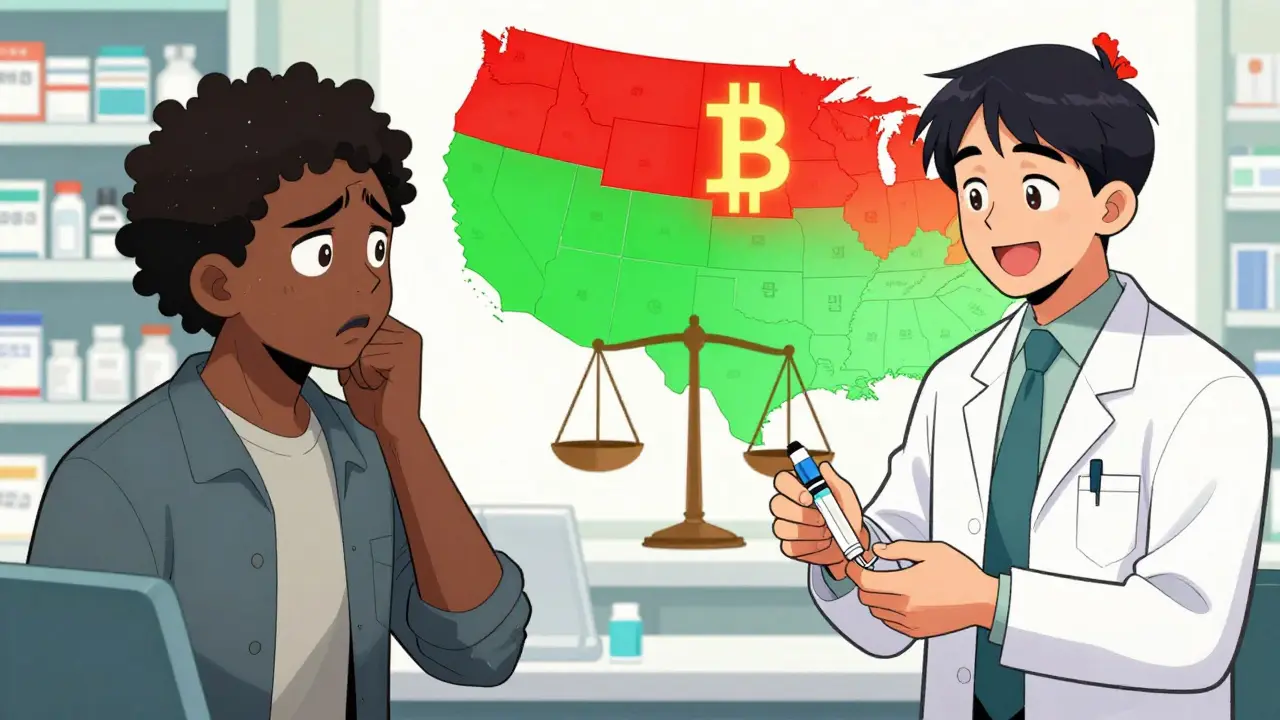
What’s Next for BTC Medications?
The system is growing. In May 2023, the FDA approved LoRez, a low-dose naltrexone for alcohol use disorder, as the first BTC opioid treatment. That’s a big deal-it opens the door for more mental health and chronic condition meds to move into this category. Experts predict 5-7 more prescription drugs will shift to BTC status by 2027. Candidates include:- Low-dose atorvastatin (for cholesterol)
- 150mg mifepristone (for certain gynecological conditions)
- Some nasal corticosteroids
By 2026, the BTC market is expected to hit $8.5 billion-7% of the entire OTC drug market. That’s not small change.
But there’s a catch. Right now, there are 28 different state rules governing BTC sales. One state might let you buy 10 boxes of Sudafed. Another might cap you at 3. The FDA wants standardization. Without it, the system becomes a confusing patchwork that hurts more than it helps.
How to Navigate BTC Medications Smarter
Here’s how to make your experience smoother:- Know your limits. You can buy 3.6 grams of pseudoephedrine per day. That’s usually 6-12 tablets. If you’re buying for multiple people, you’ll need to make separate trips.
- Carry ID. Always have a photo ID. Even if you’ve bought from that pharmacy before, they’re required to check every time.
- Ask questions. Don’t just take the medicine. Ask: “Is this safe with my other meds?” “What side effects should I watch for?” Pharmacists are trained to answer this stuff.
- Check prices. ReliOn insulin is $25. Generic pseudoephedrine is often cheaper than brand-name Sudafed. Don’t assume the first option is the best.
- Know your rights. If you’re over 17 and asked for ID for Plan B, you’re entitled to it. If you’re refused, ask to speak to a manager. You can also report the pharmacy to the FDA.
Final Thought: It’s Not Broken-It Just Needs Fixing
The behind-the-counter system isn’t perfect. It’s slow, inconsistent, and sometimes unfair. But it works. It keeps meth labs from turning pharmacies into chemical supply stores. It gives people access to life-saving meds without a doctor’s appointment. It lets pharmacists do what they’re trained for: protect your health. The real problem isn’t the system. It’s the lack of national rules. If every state followed the same limits, used the same tracking system, and trained staff the same way, BTC medications would be a model of smart public health policy. Until then, know your rights. Know your limits. And don’t be afraid to ask the pharmacist-they’re the only person between you and a medicine that could help, hurt, or even save your life.Can I buy pseudoephedrine without an ID?
No. Federal law requires a government-issued photo ID for every pseudoephedrine purchase. Pharmacies must verify your identity and log the transaction in the NPLEx system. If you don’t have ID, you won’t be able to buy it.
Why is Plan B behind the counter if it’s not a prescription?
Plan B is behind the counter because the FDA required age verification to prevent misuse by minors. While anyone 17 or older can buy it without a prescription, pharmacists must confirm your age. This was a compromise to ensure access while addressing safety concerns. It’s not a prescription, but it’s not fully shelf-accessible either.
Can I buy more than one type of BTC medication in one visit?
Yes, but each product has its own limits. You can buy pseudoephedrine and Plan B in the same trip, but you’ll still hit the 3.6-gram daily cap on pseudoephedrine and must meet age requirements for Plan B. Each item is tracked separately in the system.
Why is ReliOn insulin behind the counter?
Walmart placed ReliOn insulin behind the counter to ensure customers get proper guidance on usage, storage, and dosage. Even though it’s available without a prescription, insulin is a high-risk medication. Pharmacists can help prevent dangerous mistakes, like mixing up types or misusing doses.
Are there any BTC medications that are banned in some states?
Yes. While pseudoephedrine and Plan B are legal nationwide under federal rules, some states restrict codeine-containing cough syrups. For example, Oregon and Mississippi allow low-dose codeine syrups (up to 12.8 mg per dose) behind the counter, but most other states require a prescription for any codeine product. Always check your state’s rules before buying.