

Why Bulk Buying Generic Drugs Saves Real Money
Every year, Americans fill over 4 billion prescriptions. Ninety percent of them are for generic drugs. Yet, most clinics, urgent care centers, and even small hospitals still pay full list price - often without realizing they could cut costs by 20% or more just by changing how they buy.
It’s not magic. It’s math.
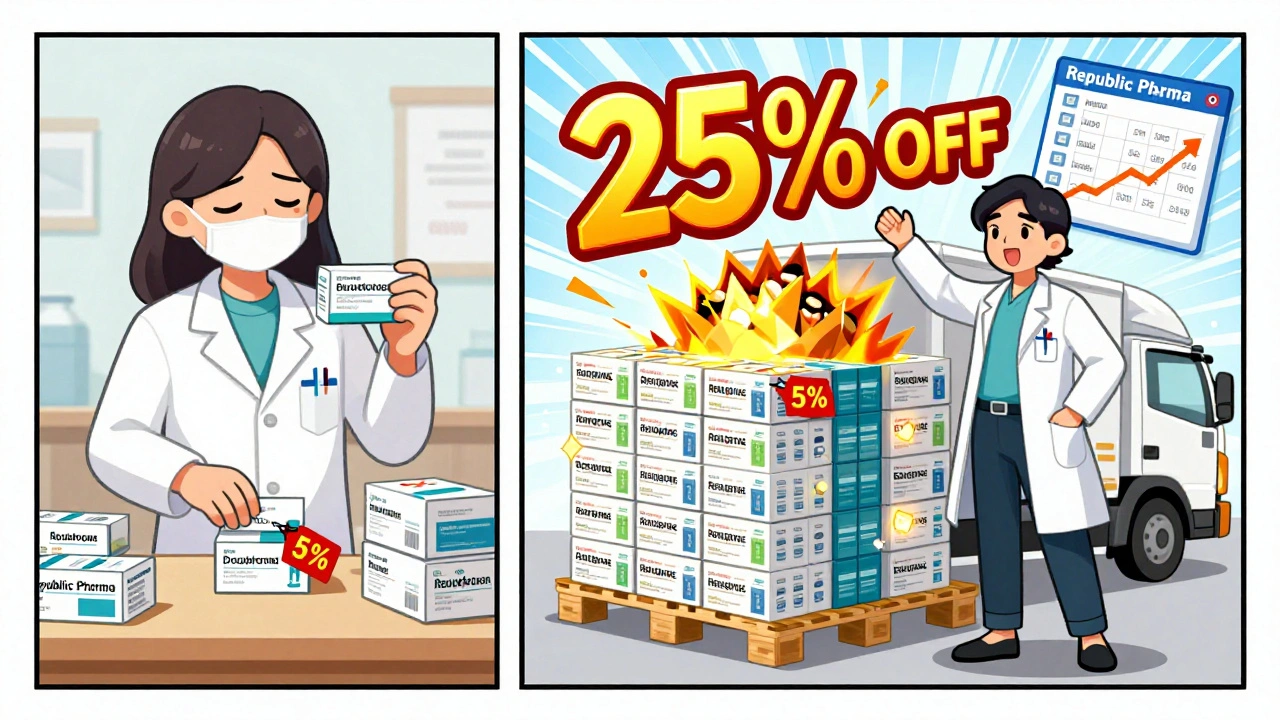
Generic drugs cost less to make. But that doesn’t mean they’re cheap to buy if you’re ordering small batches every week. When you buy in bulk - think thousands of pills or vials at once - manufacturers and distributors offer real discounts. Not just 5%. Sometimes 25% or more. And those savings add up fast.
How Bulk Purchasing Actually Works
Bulk purchasing isn’t just about buying more. It’s about negotiating based on volume. The bigger the order, the bigger the discount. For example, if you normally buy 100 units of amoxicillin a month, switching to a quarterly order of 300 or 400 units can drop your price by 10-15%. Order 10,000 units? You’re looking at 20-30% off.
These discounts come in a few forms:
- Direct volume discounts - You order more than 1,000 units of a drug, and the supplier knocks a few percent off the invoice.
- Rebates - You agree to buy a certain amount over time, and the manufacturer pays you back later. This is common with pharmacy benefit managers (PBMs), but here’s the catch: not all of that rebate makes it to you. Sometimes only half does.
- Short-dated stock - Medications with 6-12 months left before expiration. These are sold at 20-30% off because the supplier wants to move them before they expire. If you use a lot of a drug - like lidocaine, antibiotics, or saline - this can be a goldmine.
One urgent care center in Texas switched 60% of its injectable purchases to short-dated stock and cut its drug costs by 20% in just two months. No change in prescriptions. No change in patients. Just smarter buying.
Who’s Getting the Best Deals?
Not everyone has the same access to discounts. It depends on who you buy from.
The big three wholesalers - McKesson, AmerisourceBergen, and Cardinal Health - control about 85% of the U.S. generic drug market. They’re reliable, but their discounts are small. Usually 3-8% for bulk orders.
Then there are secondary distributors like Republic Pharmaceuticals. They don’t have the same reach, but they specialize in bulk deals for smaller providers. Their discounts? Often 20-25%. Why? Because they buy in huge volumes themselves and pass the savings along. They also handle short-dated stock, which the big wholesalers rarely touch.
State Medicaid programs have another trick: pooling. Instead of negotiating alone, states team up. The National Medicaid Pooling Initiative, the Top Dollar Program, and the Sovereign States Drug Consortium let states buy together. The result? An extra 3-5% off compared to single-state deals. That’s millions in savings across the country.
But here’s the problem: PBMs - the middlemen between insurers and pharmacies - often negotiate huge rebates (15-40%) on generics. Yet, studies show only 50-70% of those rebates ever reach the actual plan sponsor. The rest gets kept as profit. That’s why a patient might pay $5 for metformin at the counter, even though the drug costs pennies to make.
What Drugs Benefit Most From Bulk Buying?
Not every generic drug is worth buying in bulk. You need volume. High-use, low-cost medications are the sweet spot.
- Antibiotics - Amoxicillin, azithromycin, ciprofloxacin
- Pain and inflammation - Ibuprofen, naproxen, corticosteroids
- Chronic disease - Metformin, atorvastatin, lisinopril
- Injectables - Lidocaine, epinephrine, saline solutions
These are the drugs you use every day. If your clinic fills 50 prescriptions a week for metformin, buying 6,000 pills at once saves you hundreds per month. That’s not theoretical. It’s real money.
On the flip side, don’t bulk buy low-use drugs. If you only prescribe one or two vials of a specialty injection per month, you’re better off sticking with regular orders. You risk waste, storage issues, and cash flow problems.
Hidden Risks and Common Mistakes
Bulk buying isn’t risk-free. Many practices jump in without planning - and pay the price.
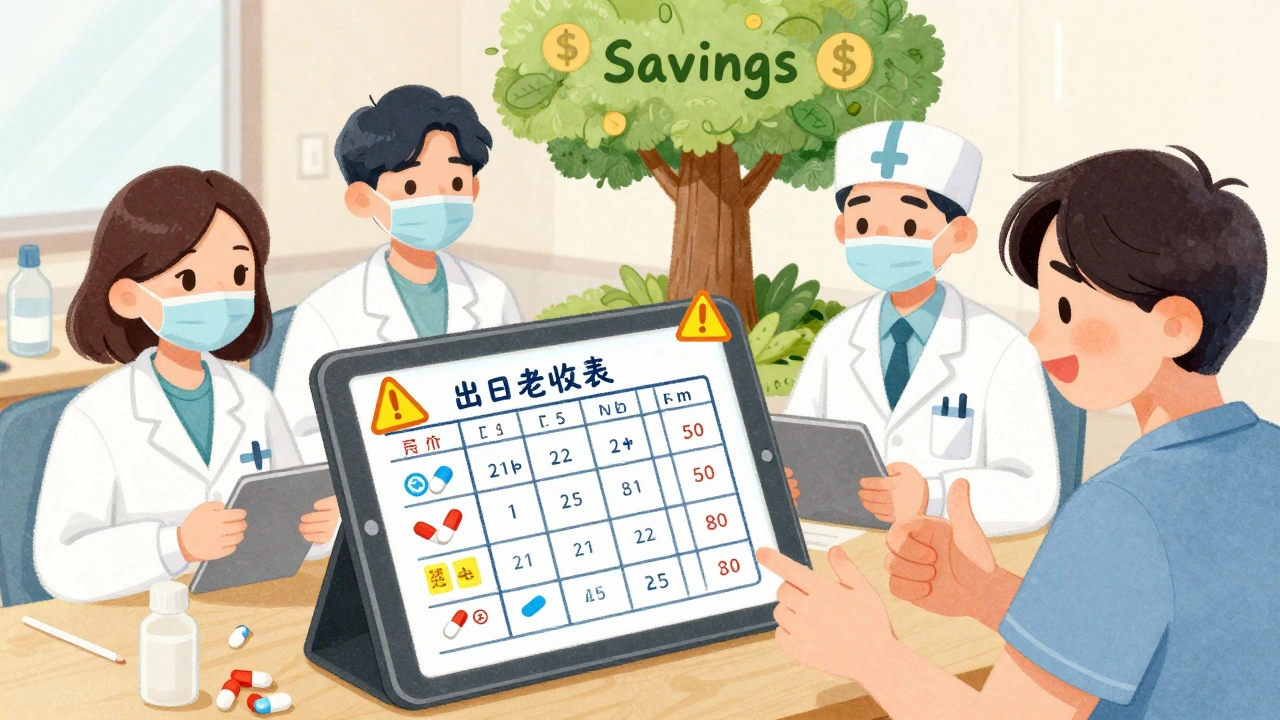
Short-dated stock sounds great - until you end up with expired medication. One Ohio clinic saved 25% on injectables using short-dated stock, but only because they tracked expiration dates closely. They used a simple spreadsheet to flag items with less than 6 months left. They rotated stock like groceries. No waste. No losses.
Another mistake? Minimum order requirements. Some suppliers force you to buy 5,000 units of a drug you only use 1,000 of. That ties up cash and fills your storage closet with pills you don’t need. Always negotiate flexibility. Ask for split shipments or staggered delivery.
And don’t ignore drug shortages. As of November 2023, there were 298 active shortages of generic drugs in the U.S. If you’ve committed to buying 10,000 units of a drug that suddenly becomes scarce, you’re stuck. Build relationships with multiple suppliers. Don’t rely on just one.
How to Start - Step by Step
You don’t need a pharmacy degree to start saving. Here’s how to begin:
- Track your top 15-20 drugs - Use your EHR or billing system to find which generics you use most. These make up 60-70% of your drug spending.
- Calculate your monthly volume - How many pills, vials, or packs do you use per month? Multiply by 3 or 4 for a quarterly order.
- Reach out to secondary distributors - Companies like Republic Pharmaceuticals specialize in bulk deals for small providers. Ask about volume discounts and short-dated stock options.
- Compare pricing - Get quotes from your current supplier and at least one new one. Don’t just look at the per-unit price. Factor in shipping, minimums, and return policies.
- Start small - Pick one drug. Order a bulk quantity. Track the savings. If it works, expand.
- Set up inventory alerts - Use a simple system to flag items nearing expiration. Even a color-coded spreadsheet works.
Most clinics see results in 4-6 weeks. One urgent care center in Florida reported saving $1,200 in the first month after switching just three drugs to bulk purchasing. They didn’t change a single patient’s treatment. They just changed how they bought.
The Bigger Picture
Bulk purchasing isn’t a cure-all. It won’t fix broken drug pricing. It won’t stop manufacturers from hiking list prices. It won’t force PBMs to share rebates fairly.
But it’s one of the few tools small providers have right now to fight back. In 2022, generics made up 90% of prescriptions but only 25% of total drug spending. That means 75% of the money spent on drugs goes to branded medications, middlemen, and markups.
Bulk buying lets you take back a little of that. It turns your pharmacy budget from a cost center into a savings engine.
And with new laws like the Inflation Reduction Act - which lets Medicare negotiate prices on 10 drugs in 2026, with savings projected at $6 billion - the pressure is growing on the whole system. The more providers save through bulk buying, the less they’ll tolerate inflated prices.
What’s Next?
The market is changing. Secondary distributors are growing. Point-of-sale discount programs are rolling out - so when you fill a prescription for atorvastatin, the discount is applied automatically. No coupons. No paperwork.
But if you wait for someone else to fix it, you’ll keep paying more than you should. The tools are here. The data is clear. The savings are real.
Start with one drug. Track the difference. Then do it again.
Can small clinics really save money with bulk purchasing?
Yes. Even small practices can save 15-25% on high-use generics by switching to bulk orders or short-dated stock. One urgent care center in Texas cut its injectable costs by 20% in two months by ordering lidocaine and antibiotics in quarterly batches instead of monthly. The key is focusing on drugs you use regularly - not trying to bulk buy everything.
What’s the difference between primary and secondary pharmaceutical distributors?
Primary distributors - like McKesson and Cardinal Health - handle most of the U.S. drug supply. They’re reliable but offer small discounts, usually 3-8%. Secondary distributors, like Republic Pharmaceuticals, focus on bulk deals for smaller providers. They often offer 20-25% off, especially on short-dated stock, but may have fewer drug options. They’re ideal for clinics that want deeper savings and don’t need every single drug in the catalog.
Are short-dated drugs safe to use?
Absolutely. Medications are tested to remain effective and safe until their expiration date. Many drugs remain stable well beyond that date. Short-dated stock simply means the manufacturer is close to the printed expiration. As long as you use the product before it expires and store it properly, there’s no safety risk. The only danger is if you don’t track expiration dates and end up with expired inventory.
Why don’t more providers use bulk purchasing?
Many don’t know it’s an option. Others are afraid of upfront costs or inventory management. Some think they’re locked into contracts with big wholesalers. But the biggest barrier is inertia. Switching suppliers takes time. It requires learning new systems. But once providers try it, most report immediate savings and say they wish they’d started sooner.
Do bulk discounts work for all generic drugs?
No. Bulk buying works best for high-volume, low-cost generics like antibiotics, pain relievers, and chronic disease meds. It doesn’t make sense for low-use drugs, specialty injectables, or during shortages. If you only use 10 units a month, ordering 5,000 is a waste. Always match your order size to your actual usage.
How long does it take to see savings from bulk purchasing?
Most providers see savings within the first billing cycle after switching - usually 4-6 weeks. The Texas urgent care center saw a 20% drop in drug costs after just two months. The key is starting with one or two high-use drugs. Don’t try to overhaul everything at once.
Is bulk purchasing legal?
Yes. Bulk purchasing is a legal and widely used practice across the U.S. healthcare system. Secondary distributors are regulated by state pharmacy boards - 37 states have specific rules governing them as of 2024. The 340B program, Medicaid Best Price rules, and federal antitrust laws all allow and encourage volume-based pricing to reduce costs.
James Kerr
December 2, 2025 AT 23:29Still can't believe we didn't do this sooner.
Rashmin Patel
December 4, 2025 AT 08:05Also, short-dated stock? We call it ‘time-sensitive meds’ and rotate them like bread in the kitchen. No waste. Just wisdom.
Cindy Lopez
December 6, 2025 AT 00:40bobby chandra
December 7, 2025 AT 02:13I’ve seen clinics go from $15k/month in drug spend to $8k - with zero impact on care. That’s not a win. That’s a revolution.
shalini vaishnav
December 8, 2025 AT 00:12vinoth kumar
December 8, 2025 AT 04:19And guess what? Our staff actually *liked* the system. It felt like we were doing something real. Not just paperwork.
Kara Bysterbusch
December 9, 2025 AT 01:44Archie singh
December 9, 2025 AT 17:27Gene Linetsky
December 11, 2025 AT 16:09Ignacio Pacheco
December 11, 2025 AT 23:26Jim Schultz
December 13, 2025 AT 18:23