
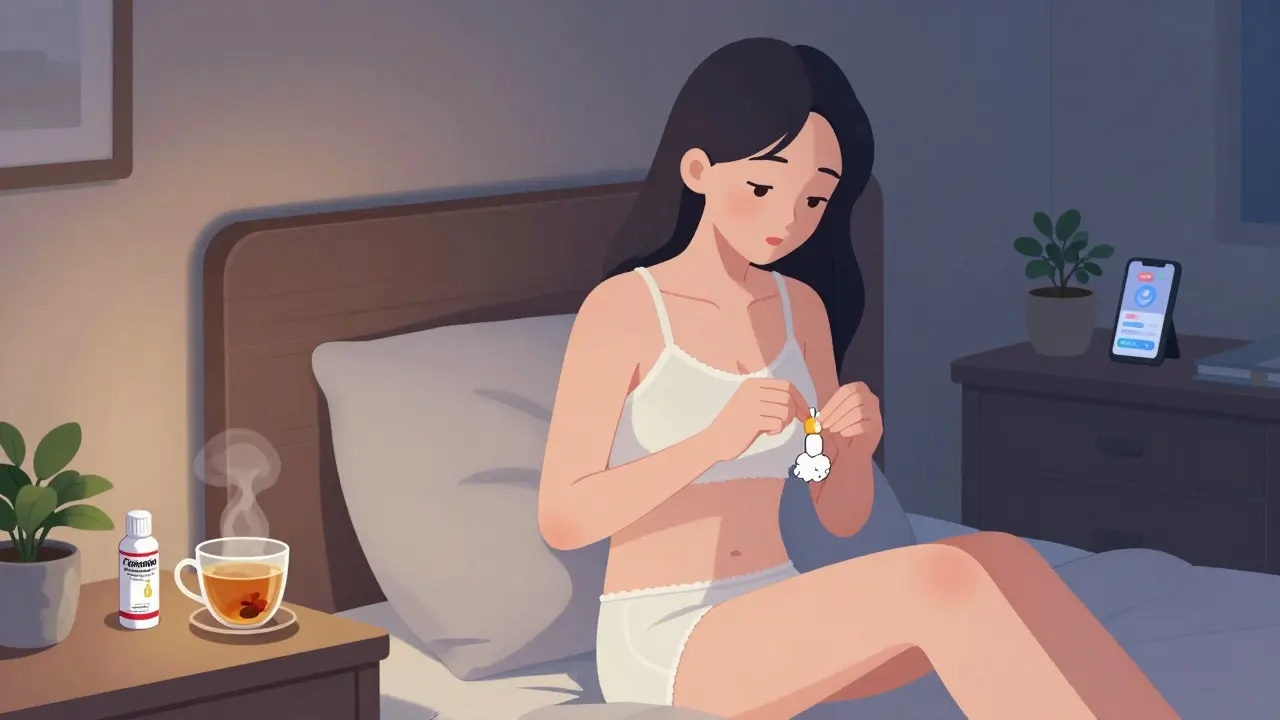
One in four women will experience a yeast infection at some point in their lives. It’s not rare. It’s not embarrassing. But it’s often misunderstood. If you’re dealing with intense itching, thick white discharge, or burning during urination, you might be tempted to grab the first OTC treatment you see on the shelf. But jumping straight to medication without knowing what you’re treating can make things worse - not better.
What Exactly Is a Yeast Infection?
Candida vaginitis, also called vulvovaginal candidiasis, is a fungal infection caused by an overgrowth of Candida, usually Candida albicans. This yeast naturally lives in small amounts in the vagina, along with good bacteria like Lactobacillus. When something disrupts that balance - antibiotics, hormones, diabetes, or even tight synthetic underwear - Candida multiplies and triggers inflammation. That’s when symptoms show up.
It’s not a sexually transmitted infection. You don’t catch it from a partner. It’s your own body’s microbiome going off-track. About 75% of women will have at least one episode. Nearly half will get it more than once. And if you’re pregnant, have diabetes, or take steroids, your risk goes up.
How Do You Know It’s a Yeast Infection?
Not all vaginal discomfort is a yeast infection. Bacterial vaginosis, trichomoniasis, or even skin irritation can mimic the same symptoms. But there are clear signs that point to Candida:
- Intense itching in and around the vulva (happens in 97% of cases)
- Thick, white, clumpy discharge that looks like cottage cheese
- Burning during urination or sex
- Redness, swelling, or cracked skin on the vulva
- Occasional soreness or a rash-like feeling
The discharge is usually odorless. If it smells fishy, it’s probably bacterial vaginosis. If it’s green or frothy, it could be trichomoniasis. Self-diagnosing based on symptoms alone is risky - studies show that 50% to 70% of women who treat themselves for yeast infections are wrong. That means they’re using antifungals for something they don’t have, while the real problem keeps growing.
When Should You See a Doctor?
Don’t reach for an OTC treatment if:
- This is your first time experiencing symptoms
- You’re pregnant
- Your symptoms are severe - deep redness, cracks, or open sores
- You’ve had four or more infections in a year
- Symptoms don’t improve after 3 days of OTC treatment
- You have a fever, pelvic pain, or nausea
These are red flags. A first-time infection could be something else. Pregnancy means you can’t take oral fluconazole. Recurrent infections might mean you have a resistant strain like Candida glabrata, which doesn’t respond well to standard treatments. Skipping a doctor’s visit when you need one can delay proper care and lead to complications.

What OTC Treatments Actually Work?
For uncomplicated cases - mild to moderate symptoms, no pregnancy, no history of recurrence - OTC antifungals are effective. The CDC and American Family Physician both confirm that topical azoles cure 80-90% of cases when used correctly.
Here are the three main types you’ll find on pharmacy shelves:
- Clotrimazole: Available as 1% cream (apply twice daily for 7-14 days), 2% cream (once daily for 3 days), or vaginal tablets (100mg or 200mg, once daily for 3-7 days)
- Miconazole: 2% cream (once daily for 7 days) or 100mg suppositories (once daily for 7 days)
- Tioconazole: 6.5% ointment - a single-dose application
Studies show no major difference in cure rates between 1-day, 3-day, or 7-day regimens - all hover around 85%. But patient preference matters. Many women find the single-dose options easier to stick with. Others prefer creams because they soothe external itching better.
Amazon reviews for Monistat 7 (clotrimazole 1% cream) show a 4.2/5 rating from over 8,700 users. Common feedback: “Itching started easing by day two.” But users who rushed the treatment or stopped early often reported relapses.
How to Use OTC Treatments Right
Even the best medication fails if used wrong. Here’s what actually works:
- Apply at bedtime. This gives the medicine time to dissolve without leaking out. A Johns Hopkins study found 85% of successful users applied treatment before sleep.
- Finish the full course. Even if you feel better after 2 days, keep going. Only 65% of people complete the full treatment, and that’s why 35% of cases come back.
- Avoid sex during treatment. Intercourse can push the medication out and reduce effectiveness by up to 30%.
- Insert suppositories properly. Push them in as far as your finger can reach. A 2022 analysis found 70% of treatment failures were due to poor placement.
- Don’t use douches, scented soaps, or feminine sprays. These disrupt the natural pH and make yeast worse.
Many packages include diagrams, but a 2023 University of Michigan study showed 40% of first-time users still inserted suppositories incorrectly. Watch a short video on the manufacturer’s website if you’re unsure.
Why Some Treatments Don’t Work
If you’ve tried OTC treatments and nothing helped, it’s not you - it’s likely the type of yeast. Candida albicans responds well to azoles. But Candida glabrata, which makes up 5-10% of infections, is often resistant. Cure rates drop from 85% to 50-60% with standard OTC drugs.
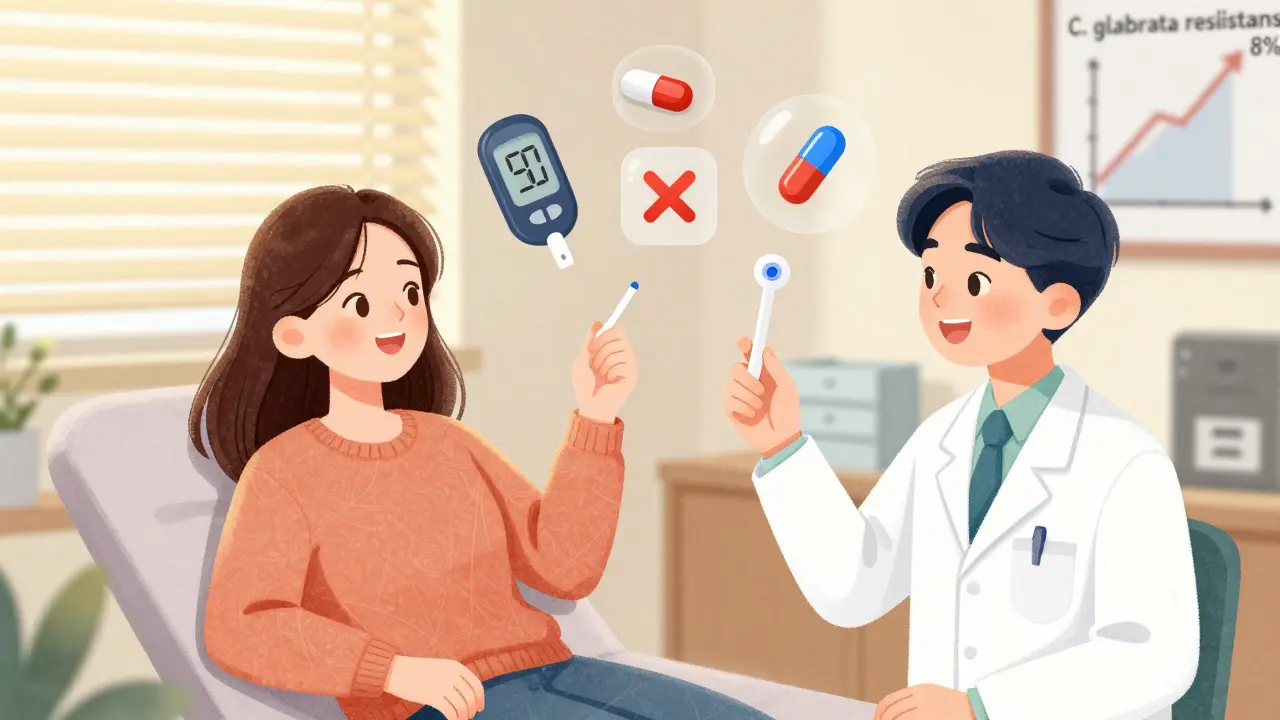
Antifungal resistance is rising. A 2023 study in the Journal of Antimicrobial Chemotherapy found clotrimazole resistance in 8% of C. glabrata cases - up from 3% in 2018. That’s why recurrent infections need lab testing. A simple vaginal swab can tell your doctor if it’s resistant yeast.
Also, if you’ve had four or more infections in a year, you’re not just unlucky - you might have an underlying issue. Uncontrolled diabetes, a weakened immune system, or even chronic antibiotic use can keep yeast coming back. Treating symptoms without fixing the root cause is like putting a bandage on a leaky pipe.
What’s New in Yeast Infection Treatment?
Pharmaceutical companies are responding to resistance and misuse. In June 2023, Bayer got FDA approval for a new clotrimazole bioadhesive tablet called Gyne-Lotrimin BV. It sticks to the vaginal wall and releases medicine for 24 hours. In trials, it achieved a 92% cure rate - higher than older versions.
Telehealth platforms are also helping. Virtus Medical’s AI symptom checker guides users through CDC diagnostic criteria before recommending treatment. It cut misdiagnosis rates from 50% to 28%. That’s a big step toward smarter self-care.
But long-term, experts warn: if misuse continues, OTC antifungals might become prescription-only. The WHO predicts that by 2028, resistance could force tighter controls on current products.
Preventing Future Infections
Once it’s gone, you want to keep it gone. Here’s what helps:
- Wear cotton underwear and avoid tight pants
- Change out of wet swimsuits or workout clothes ASAP
- Don’t use scented tampons, pads, or bubble baths
- If you take antibiotics, consider a probiotic with Lactobacillus strains (like L. rhamnosus or L. reuteri)
- Keep blood sugar under control if you have diabetes
- Consider sleeping without underwear - airflow helps
There’s no magic pill or supplement that prevents yeast infections. But small, consistent habits reduce your risk. And if you get one every few months, talk to your doctor. You might need a maintenance plan - like a low-dose antifungal taken weekly for six months.
Final Thoughts
Yeast infections are common, treatable, and rarely dangerous. But they’re also easy to misread. OTC products work - if you use them right. They’re not a cure-all. They’re a tool for a specific problem. If you’re unsure, see a provider. If you’ve had it before and know the signs, OTC treatment is fine. But never ignore recurring symptoms or worsening pain. Your body is telling you something. Listen.
Can I treat a yeast infection while pregnant?
Yes - but only with topical antifungals like clotrimazole or miconazole cream or suppositories. Oral fluconazole is not safe during pregnancy and can harm the baby. Always check with your OB-GYN before using any product, even if it’s OTC. They may recommend a specific brand or duration based on your trimester.
How long does it take for OTC yeast infection treatments to work?
Most women notice itching and burning improve within 24 to 72 hours. But full relief usually takes 3 to 7 days, depending on the product. Don’t stop treatment just because you feel better. Completing the full course prevents recurrence. If symptoms get worse after 72 hours, stop and see a doctor - you might have the wrong diagnosis.
Can men get yeast infections too?
Yes - though it’s less common. Men can develop candidal balanitis, which causes redness, itching, or a rash on the penis, especially under the foreskin. It’s often triggered by unprotected sex with a partner who has an active yeast infection. Treatment is simple: topical antifungal cream applied twice daily for 7 days. No need for oral meds unless it’s recurrent or severe.
Are probiotics helpful for yeast infections?
Some evidence suggests probiotics with Lactobacillus strains (like L. rhamnosus GR-1 and L. reuteri RC-14) may help prevent recurrent infections when taken orally or inserted vaginally. But they’re not a treatment for an active infection. Think of them as support, not a cure. Look for products with at least 1 billion CFUs and clinical backing. Don’t rely on yogurt - it doesn’t contain the right strains in high enough doses.
Why do I keep getting yeast infections?
Recurrent yeast infections (four or more per year) are a sign something else is going on. Common causes include uncontrolled diabetes, frequent antibiotic use, hormonal birth control, a weakened immune system, or even stress. A doctor can test for non-albicans Candida strains, which are harder to treat. If you’re getting them often, you may need a maintenance plan - like taking a low-dose antifungal once a week for six months. Don’t just keep buying OTC meds - get to the root cause.
Jane Wei
December 17, 2025 AT 01:23Been there, done that. Bought Monistat, used it for two days, felt better, stopped. Got it back a week later. Learned my lesson the hard way.
Salome Perez
December 17, 2025 AT 07:04As a women’s health educator, I can’t stress enough how vital it is to distinguish between yeast infections and bacterial vaginosis. The odor clue is critical-fishy means BV, not yeast. And yes, douching is like pouring gasoline on a fire. I’ve seen too many patients worsen their condition because they thought ‘cleaning’ would help. Stick to water and cotton. Your microbiome will thank you.
Josh Potter
December 18, 2025 AT 07:43Y’all act like yeast infections are some kind of secret club. Newsflash: they’re common as dirt. I got one last month after antibiotics. Used the 1-day tioconazole. Done. No drama. Stop overcomplicating it. Also, stop judging women who use OTC stuff. It’s not rocket science.
Kaylee Esdale
December 18, 2025 AT 15:00Probiotics aren’t magic but they’re my best friend after antibiotics. I take L. rhamnosus every day now. Not because I’m scared of yeast, but because I don’t want to fight it every other month. Also, sleep naked. It’s weird at first but your lady parts breathe better. No shame in it.
Victoria Rogers
December 20, 2025 AT 04:14Who even cares if it’s Candida glabrata? The FDA’s just pushing pharma profits. OTC meds work fine. If you’re getting infections every few months, maybe stop having sex or get off birth control. It’s not a mystery. Stop buying into the medical industrial complex.
Naomi Lopez
December 22, 2025 AT 02:36Interesting how the article mentions telehealth AI reducing misdiagnosis-but ignores that most people still don’t trust tech over their own instincts. Also, why is the only ‘new’ treatment a Bayer product? Coincidence? Or just another corporate win disguised as medical progress? I’ll take my 7-day clotrimazole over a ‘bioadhesive tablet’ any day.
Steven Lavoie
December 23, 2025 AT 01:47Men get yeast infections too, and it’s rarely discussed. My partner had a persistent rash after I had one. We both treated it. No shame. No stigma. Just biology. And yes, unprotected sex can transfer it. But it’s not an STI. It’s a microbial imbalance. We need more open dialogue-not shame. Also, cotton underwear isn’t a luxury, it’s a necessity.
Meghan O'Shaughnessy
December 25, 2025 AT 00:16I’ve had four yeast infections this year. Went to my OB. Turned out I had prediabetes. No one told me that could be the cause. I lost 20 pounds, cut out sugar, and haven’t had one in 8 months. It’s not about the cream. It’s about your body. Listen to it. Get tested. Don’t just buy another box of Monistat.