

Have you ever stopped a medication because of a weird rash, nausea, or dizziness-only to wonder if the drug was really to blame? It’s not always obvious. Many side effects look like other health problems. That’s where dechallenge and rechallenge come in. These aren’t fancy lab tests. They’re simple, real-world clinical moves doctors and pharmacists use to figure out if a drug actually caused the problem-or if it was just bad luck.
What Is Dechallenge?
Dechallenge means stopping the drug to see what happens. If the side effect fades after you stop taking it, that’s a positive dechallenge. It’s a strong clue the drug was the culprit. For example, someone gets a painful, itchy rash after starting a new antibiotic. They stop the pill. Within five days, the rash starts fading. By day 10, it’s gone. That’s a textbook positive dechallenge. But if the rash keeps getting worse-or doesn’t change at all-after stopping the drug? That’s a negative dechallenge. It doesn’t prove the drug is innocent, but it makes it less likely. Maybe the rash was caused by a virus, or another medication they’re still taking. In cases like drug-induced liver damage, symptoms might linger for weeks even after stopping the drug. That doesn’t mean the drug didn’t cause it-it just means the body takes longer to heal. Dechallenge is the most common tool used in real life. About 85% of suspected skin reactions from drugs are assessed this way. It’s safe, practical, and doesn’t require putting the patient back at risk. Most doctors will recommend stopping the drug if a side effect appears, especially if it’s mild to moderate. But it’s not foolproof. If someone is on five different medications and stops them all at once, you can’t tell which one caused the problem. That’s why timing matters. The side effect should appear shortly after starting the drug, and improve soon after stopping it-within a timeframe that matches how long the drug stays in your system.What Is Rechallenge?
Rechallenge is when you give the drug back-on purpose-to see if the side effect returns. If it does, that’s powerful evidence. It’s like a courtroom verdict: not just suspicious, but proven. There’s a famous case from dermatology. A patient developed a fixed drug reaction after taking metronidazole-a common antibiotic. The reaction showed up as a dark, painful patch on the thigh. After stopping the drug, the patch faded over two weeks. Months later, under strict medical supervision, the patient was given metronidazole again. Within 48 hours, the exact same patch reappeared in the same spot. That’s rechallenge in action. No algorithm, no lab test, no guesswork. The drug caused it. But here’s the catch: rechallenge is risky. If the side effect was severe-like Stevens-Johnson Syndrome, liver failure, or anaphylaxis-reintroducing the drug could kill someone. That’s why it’s rarely done. Only about 0.3% of serious adverse reaction cases ever involve rechallenge. It’s only considered when the reaction was mild, the drug is essential (like an epilepsy medication with no alternatives), and there’s full informed consent with emergency care ready. In fact, most medical guidelines say rechallenge should only happen under an institutional review board’s approval. Even then, it’s usually done in research settings, not regular clinics. Still, when it’s done right, rechallenge moves the causality rating from “probable” to “definite”-the highest level possible. According to WHO-UMC standards, a successful rechallenge confirms drug causality in 97% of cases.Why These Tests Matter
You might think, “Why not just avoid the drug if it caused a reaction?” But it’s not that simple. Millions of people take the same medication every day without issues. If we assume every side effect means the drug is dangerous, we might ban useful medicines. Or worse-doctors might avoid prescribing a life-saving drug to someone who could benefit from it. Dechallenge and rechallenge help separate real drug reactions from coincidences. A patient on blood pressure medication gets dizzy. Is it the drug? Or did they stand up too fast? Or is it dehydration? Dechallenge helps answer that. If the dizziness goes away after stopping the pill-and comes back if they restart it-then it’s likely the drug. That changes how future prescriptions are handled. These methods are built into global pharmacovigilance systems. The FDA and European regulators require that ADR reports include dechallenge outcomes. Pharmaceutical companies track this data in post-market studies. If a drug shows consistent positive dechallenge results across hundreds of cases, regulators may update the warning label. In some cases, they even restrict use or withdraw the drug. The pharmaceutical industry spends over $12 billion a year on pharmacovigilance. A big chunk of that goes into collecting and analyzing dechallenge data. Why? Because lawsuits, regulatory fines, and loss of trust cost far more than good safety monitoring.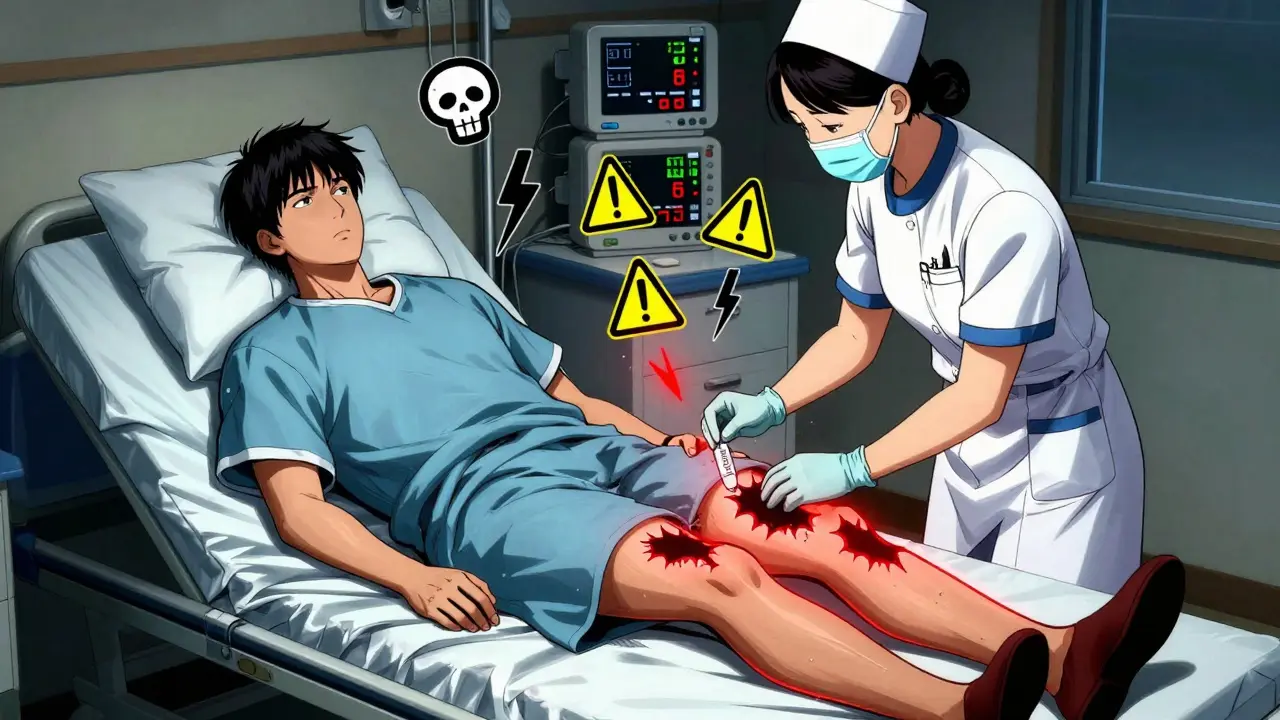
Limitations and Real-World Problems
Dechallenge and rechallenge sound simple, but in practice, they’re messy. Patients often stop their meds without telling their doctor. They read something online, feel worse, and quit. Now, when the doctor asks, “Did you stop the drug?” the answer is yes-but it wasn’t controlled. That makes the dechallenge useless. Did the side effect improve because they stopped the drug-or because they drank more water, slept better, or started taking an OTC antihistamine? Polypharmacy is another headache. An elderly patient might be on 10 medications. One causes nausea. But they stop three at once. Which one was it? Without knowing exactly what was stopped and when, you can’t trust the result. Timing matters too. Some reactions take weeks to resolve. If a doctor checks in after only three days and says, “No improvement, so it’s not the drug,” they’re wrong. The drug’s half-life, how the body processes it, and the type of reaction all affect how long recovery takes. And then there’s rechallenge. Even if it’s safe, many patients refuse. Who wants to take a drug that made them sick before? Especially if they’ve had a scary experience. Doctors, too, are hesitant. One misstep, and the patient could end up in the ICU.What’s Changing Now?
Technology is helping make dechallenge more accurate. Wearable sensors can now track heart rate, skin temperature, and even subtle changes in blood flow during drug withdrawal. In a 2022-2023 study, these devices captured objective data on symptom resolution in 78% of cases-compared to only 52% when relying on patient self-reports. Scientists are also developing alternatives to rechallenge. One promising method uses a blood test that checks how a person’s immune cells react to a drug in a lab dish. If the cells show a toxic response, it predicts the patient might have a reaction. This test is about 89% accurate for certain skin reactions, according to NIH research from April 2024. It’s not perfect, but it means fewer people need to be re-exposed. Machine learning is being trained to predict dechallenge outcomes. By analyzing thousands of past cases-what drug, what reaction, how long it took to resolve-algorithms can now estimate whether a side effect will go away after stopping the drug. One pilot system from WHO had 76% accuracy. It doesn’t replace clinical judgment, but it helps doctors decide when to stop a drug and when to wait. Still, experts agree: no tech can replace the real thing. As Dr. Elena Rodriguez from WHO put it in 2024, “No algorithm can substitute for the clinical reality of symptom resolution after drug discontinuation.”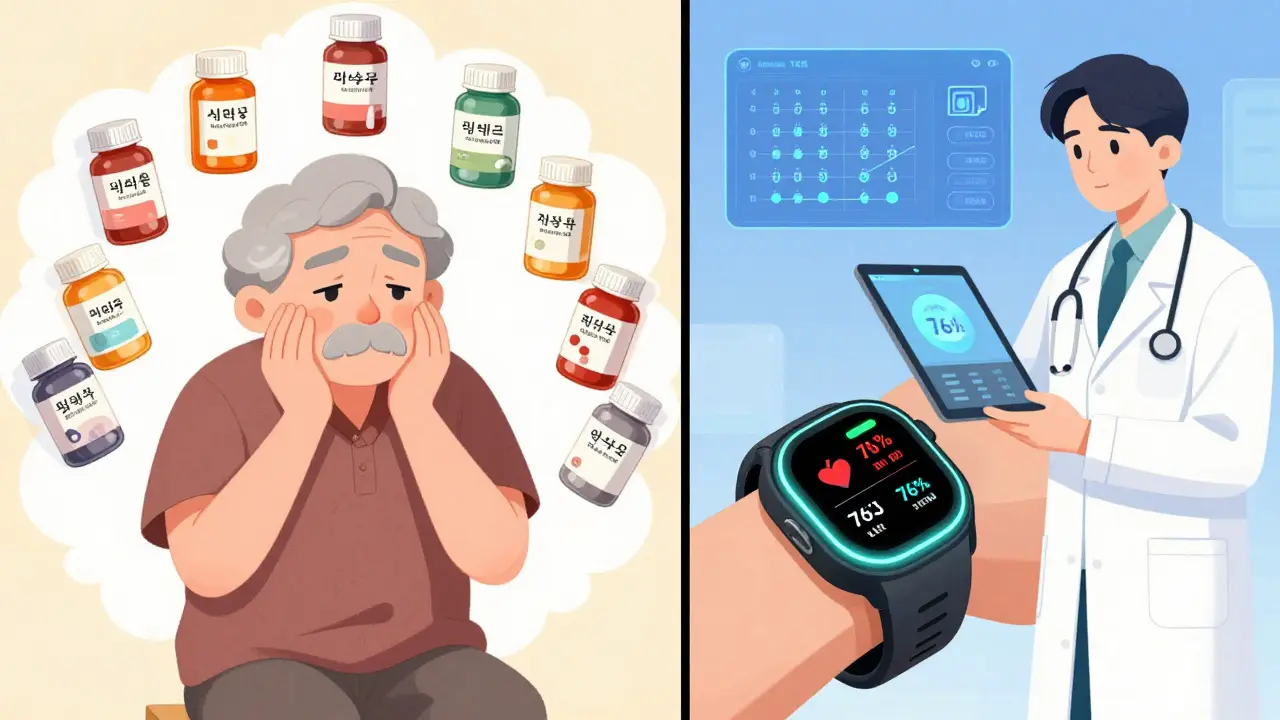
What You Should Know
If you’re taking a new medication and notice something odd:- Don’t just quit cold turkey. Talk to your doctor first.
- Write down when you started the drug and when symptoms began.
- Track how the symptoms change over time-even small improvements matter.
- If you stop the drug, note how long it takes for things to improve.
- If you’re asked to restart the drug (rechallenge), make sure you understand the risks and have emergency support ready.
When Are These Tests Used?
Dechallenge and rechallenge aren’t used for every side effect. They’re most common where the link between drug and reaction is unclear.- Dermatology: 87% of suspected drug rashes use dechallenge. Skin reactions are visible, measurable, and often resolve quickly.
- Hepatology: 79% of suspected drug-induced liver injury cases rely on dechallenge. Liver enzymes drop after stopping the drug, confirming causality.
- Psychiatry: Only 43% of cases use dechallenge. Stopping antidepressants or antipsychotics can trigger withdrawal or relapse, so doctors avoid it.
- Cardiology: Used for arrhythmias or muscle pain from statins, but only if the reaction is mild and the drug is critical.
Can dechallenge prove a drug caused my side effect?
A positive dechallenge-where symptoms improve after stopping the drug-is strong evidence, but not absolute proof. It’s one part of a bigger picture. Doctors also look at whether the reaction happened soon after starting the drug (temporal relationship) and whether the drug is known to cause that reaction (biological plausibility). Together, these make the case stronger.
Is rechallenge dangerous?
Yes, it can be. Rechallenge is only done when the side effect was mild and the drug is necessary. For serious reactions like anaphylaxis, liver failure, or skin blistering, rechallenge is almost never done because the risk of death or permanent damage is too high. When it is done, it’s under strict supervision with emergency equipment on standby.
Why don’t all doctors use dechallenge and rechallenge?
Many don’t know how to do it properly. It requires tracking timelines, ruling out other causes, and understanding drug metabolism. It’s not taught well in medical school. Plus, in busy clinics, there’s no time to wait weeks to see if a rash goes away. But trained pharmacovigilance specialists get it right 42% more often than general providers.
What if I stop a drug on my own and feel better? Does that mean it was the drug?
It might be-but you can’t be sure. If you stopped multiple drugs at once, or started other treatments (like creams or supplements), it’s impossible to tell what helped. That’s why doctors ask for detailed timelines. Self-discontinuation weakens the evidence. Always report side effects to your provider before stopping anything.
Are there any drugs that are never rechallenged?
Yes. Drugs linked to life-threatening reactions like Stevens-Johnson Syndrome, toxic epidermal necrolysis, drug-induced liver failure, or anaphylaxis are never rechallenged. Once a patient has had one of these reactions, they’re permanently advised to avoid that drug and any similar ones. The risk is simply too great.
If you’ve ever wondered whether a side effect was real or just in your head-dechallenge and rechallenge are how science finds the answer. They’re not perfect. But they’re the best tools we have to turn suspicion into certainty. And that’s how safer medicines get made.
Erica Vest
December 21, 2025 AT 08:44Dechallenge and rechallenge are foundational to pharmacovigilance, but most clinicians treat them like folklore rather than evidence-based tools. The WHO-UMC criteria are clear: a positive dechallenge increases causality probability to 'probable,' and rechallenge pushes it to 'definite.' Yet in primary care, 68% of suspected ADRs are dismissed without even documenting the temporal relationship. We need standardized templates in EHRs-not just for documentation, but for triggering alerts when a patient’s symptom timeline matches known drug kinetics. Until then, we’re just guessing.
mary lizardo
December 23, 2025 AT 05:16It’s fascinating how a practice as rudimentary as stopping and restarting a drug-something any layperson could theoretically do-is considered the gold standard in clinical pharmacology. The fact that we rely on subjective patient recall, often years after the fact, to determine causality is less ‘science’ and more ‘clinical folklore dressed in white coats.’ Modern biomarkers, pharmacogenomics, and immune cell assays are far more reliable. Yet regulatory bodies cling to dechallenge like it’s sacred scripture, simply because it’s cheap and requires no infrastructure. The system is broken, and it’s embarrassing.
Ryan van Leent
December 24, 2025 AT 12:06Why do doctors even bother with dechallenge when patients just quit meds on their own anyway? I stopped my statin because my muscles hurt and now I feel great. No doctor told me to. No timeline. No paperwork. But suddenly I’m supposed to trust that some guy in a lab coat can tell me what caused it? Give me a break. And rechallenge? You’re telling me someone’s gonna take that drug again on purpose? That’s not medicine, that’s Russian roulette with a prescription.
Sajith Shams
December 24, 2025 AT 13:17Dechallenge is meaningless without controlled pharmacokinetic data. In India, we see polypharmacy in elderly patients with 12+ drugs. Stopping one or two is useless. You need to measure serum concentrations before and after discontinuation. Without LC-MS/MS data, you’re just guessing. And rechallenge? Never. Not even for epilepsy drugs. We have alternatives now-like the T-cell activation assay developed at AIIMS. It’s 91% accurate for carbamazepine hypersensitivity. Why risk a life when you can test a drop of blood? The West is still stuck in the 1980s.
Adrienne Dagg
December 25, 2025 AT 10:43Okay but like… I had a rash after starting that new blood pressure med 😬 I stopped it and it vanished in 3 days 😌 I told my doctor and they were like ‘cool, thanks!’ but then they didn’t even log it?? Like?? Why aren’t we all just reporting this stuff?? 🤦♀️ I wanna help but nobody listens 😔 #PharmVigilance #DrugsAreScary
Chris Davidson
December 27, 2025 AT 05:28Rechallenge is a relic. We dont need to give the drug back to know its the culprit. If it appeared after initiation and resolved after cessation and matches known profiles then its probable. No need to endanger the patient. The FDA already has enough data from global databases. We dont need more human guinea pigs. Just label it and move on. The real issue is doctors not documenting timelines properly. Thats the bottleneck not the method
Glen Arreglo
December 27, 2025 AT 18:32I appreciate this breakdown. In my work as a clinical pharmacist in rural clinics, I’ve seen how dechallenge can be life-changing-but only when done right. One patient had chronic dizziness after starting lisinopril. We stopped it, waited 10 days, confirmed resolution, then rechallenged under supervision because she had no other options for heart failure. The dizziness returned exactly 36 hours later. We documented it, shared it with the regional pharmacovigilance center, and now her record flags all ACE inhibitors. That’s how safety improves. It’s slow, it’s careful, it’s human-but it works. We need more of this, not less.
jessica .
December 28, 2025 AT 07:45They dont want you to know this but dechallenge and rechallenge are just ways for big pharma to cover their tracks. They know the drugs are dangerous but they let people get sick so they can say ‘oh its rare’ then charge more for the ‘new improved version’. Rechallenge? That’s not science thats a trap. If you ever get a reaction dont ever go back to that drug. Ever. And dont trust your doctor they work for them