
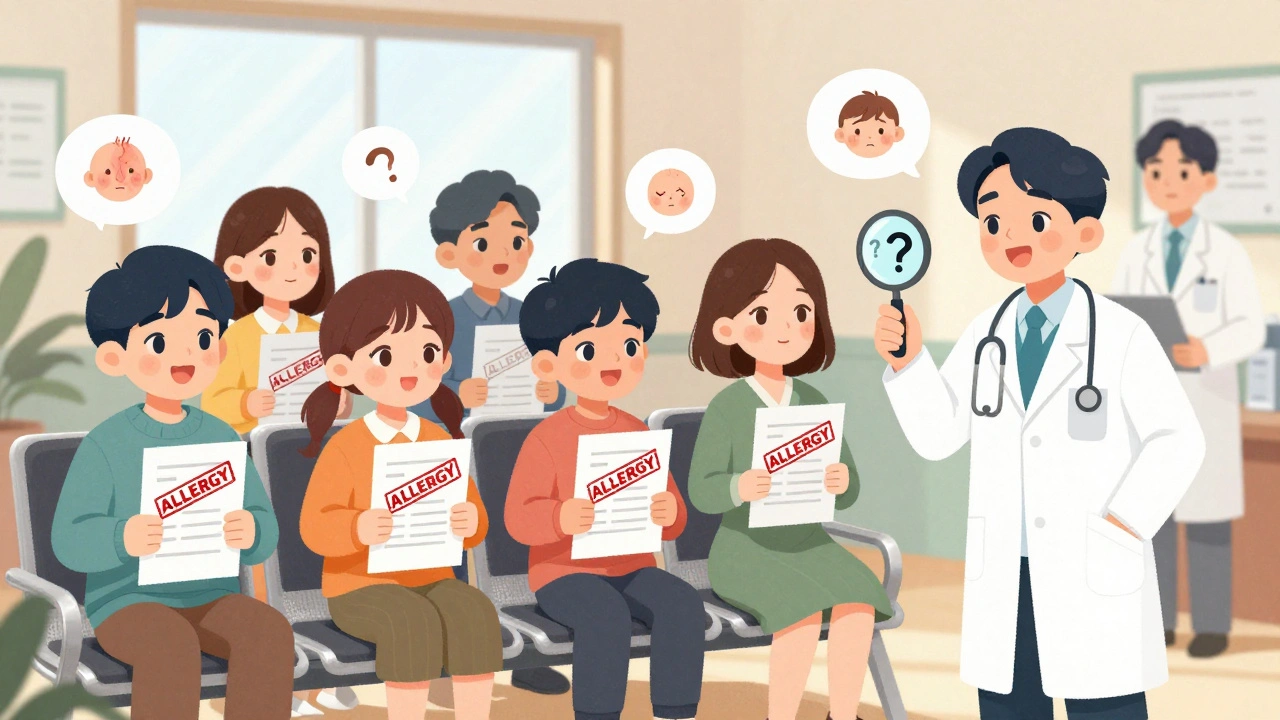
More than 95% of people who think they’re allergic to penicillin aren’t. Yet millions of patients across North America and beyond still avoid one of the safest, cheapest, and most effective antibiotics on the planet-just because they were labeled allergic years ago, often after a mild rash as a child. This isn’t just a minor inconvenience. It’s a public health crisis hiding in plain sight.
Why Your Penicillin Allergy Label Might Be Wrong
If you’ve ever been told, "You’re allergic to penicillin," chances are that label stuck without ever being properly tested. Many people get labeled allergic after a rash, stomach upset, or even a headache that had nothing to do with an immune reaction. A true IgE-mediated penicillin allergy-where your body produces antibodies that trigger a life-threatening reaction-is extremely rare. Only about 1-2% of the population actually has it. But in hospitals in the U.S., 10-15% of patients carry that label. That’s a massive mismatch. The problem? Once a label is in your medical record, it stays there. Doctors assume it’s accurate. So instead of prescribing penicillin or amoxicillin-antibiotics that work fast, target the infection precisely, and cost pennies-they reach for broader-spectrum drugs like vancomycin, clindamycin, or fluoroquinolones. These alternatives are more expensive, harder on your gut, and worse for the planet: they fuel antibiotic resistance. CDC data shows that false penicillin allergy labels lead to 30% higher rates of antibiotic resistance. They also increase the risk of dangerous infections like C. diff by 50,000 cases every year in the U.S. alone. And it’s not just about bugs-it’s about money. Each mislabeled patient adds about $1,000 in extra healthcare costs annually. For a hospital treating thousands, that’s millions.How Do You Know If You’re Really Allergic?
The only way to know for sure is to get tested. And it’s not as scary as you might think. The gold standard is a two-step process: skin testing followed by a controlled oral challenge. First, a tiny drop of penicillin is placed on your skin and lightly pricked. If there’s no reaction after 15-20 minutes, a small amount is injected just under the skin. Again, no swelling or redness? You’re cleared for the next step. Then comes the challenge. You swallow a small dose of amoxicillin-usually 250 mg-and wait under observation for an hour. If nothing happens, you take a full therapeutic dose. In over 94% of cases, people pass without a single symptom. Less than 2% have even a mild reaction, and almost none require emergency care. For people with low-risk histories-like a rash that appeared days after taking the drug, or a reaction that wasn’t itchy or involved breathing trouble-some clinics skip the skin test entirely and go straight to the oral challenge. Studies show this is just as safe for low-risk patients, and it’s faster and cheaper.What Happens If You’re Actually Allergic?
If you do have a true allergy, testing confirms it-and that’s a good thing. Knowing for sure means you can avoid penicillin and its close relatives (like amoxicillin or cephalexin) without guessing. You’ll get the right alternative, and your doctors won’t waste time second-guessing your history. But here’s the catch: many people who test positive aren’t allergic to all penicillins. Cross-reactivity isn’t as simple as once thought. You might react to amoxicillin but tolerate penicillin V. Or you might be fine with cefdinir, even if you’re allergic to amoxicillin. That’s why modern guidelines say: don’t just label someone "allergic to penicillin." Be specific. Document the exact drug and the reaction. That way, you keep your options open.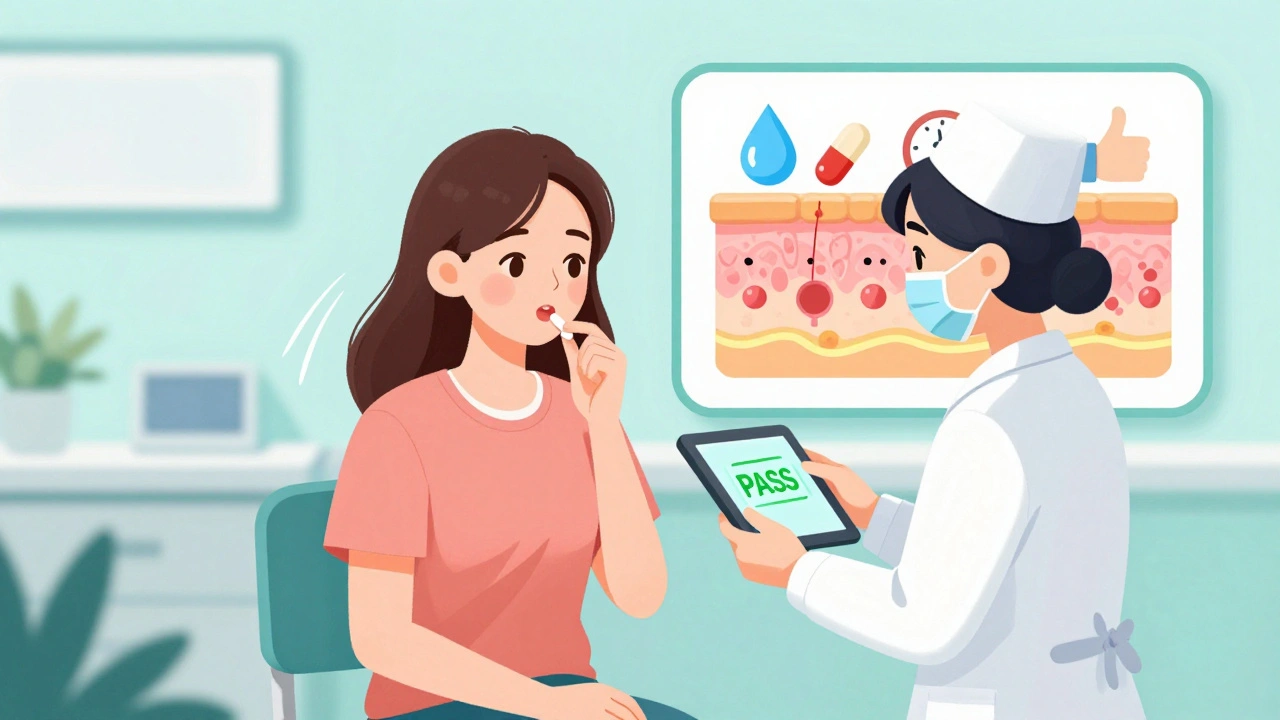
Why So Few People Get Tested
You’d think with all this evidence, testing would be routine. But it’s not. Fewer than 40% of eligible patients ever get evaluated. Why? Three big reasons. First, access. Most allergy testing requires an allergist. And there aren’t enough of them. In rural areas, you might need to drive 200 miles to find one. The average wait time for an appointment is over 14 weeks. Second, fear. Patients worry they’ll have a reaction during testing. But the reality? You’re monitored closely. Emergency equipment is right there. And the risk is far lower than the risk of taking the wrong antibiotic for a serious infection. Third, inertia. Doctors don’t always bring it up. They assume the label is correct. And patients don’t question it-they’ve lived with it for decades. That’s changing. Hospitals like Mayo Clinic, Massachusetts General, and the University of Pennsylvania have launched formal de-labeling programs. Primary care doctors are being trained to do the testing themselves. Electronic health records now have built-in alerts that flag patients with penicillin labels and suggest testing. Epic Systems, which powers 84% of U.S. hospitals, has already helped remove 198,000 false labels since 2021.What You Can Do Right Now
If you’ve been told you’re allergic to penicillin-or any antibiotic-here’s what to do:- Check your medical records. What exactly was the reaction? Was it a rash? Nausea? Did it happen more than 10 years ago?
- Ask your doctor: "Could this have been a side effect, not an allergy?"
- Request a referral to an allergist or ask if your clinic offers a penicillin de-labeling program.
- If you’re low-risk (no anaphylaxis, no breathing issues, no reaction in the last 10 years), ask about direct oral challenge. It’s safe, fast, and free of needles.
- If you test negative, make sure your allergy label is updated in every system-your pharmacy, your hospital, your primary care record.
Real Stories: What Testing Changed
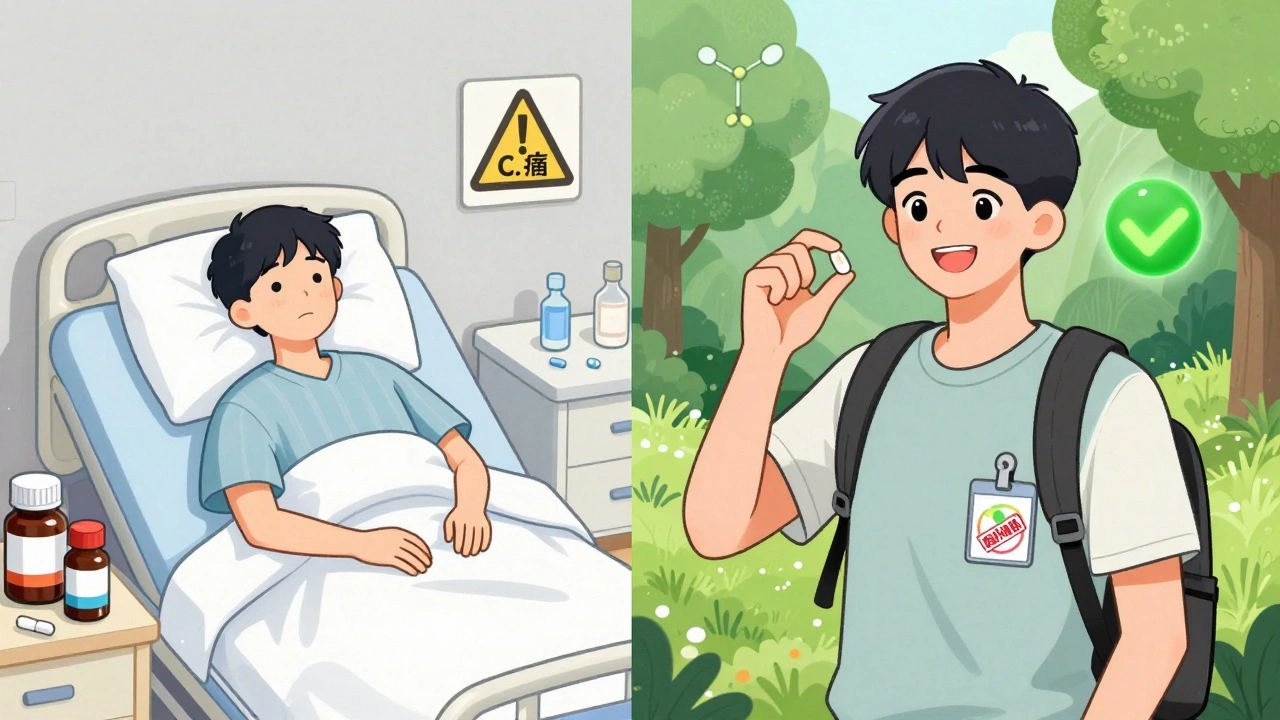
One patient from Toronto, a 68-year-old woman, had avoided penicillin since childhood after a rash at age 5. She spent years battling urinary tract infections with stronger antibiotics that gave her stomach pain and yeast infections. After testing at a local clinic, she passed the challenge. Within months, she was taking amoxicillin for every infection. Her doctor told her: "You’ve saved yourself at least $28,000 in avoided hospital stays and extra meds." Another Reddit user, "PenicillinCurious22," had been on Z-Pak every time she got a sinus infection. It never worked well. After testing at Mayo Clinic, she learned she wasn’t allergic. She switched to amoxicillin. "No more stomach issues. No more antibiotics that don’t work. I feel like I got my health back." But not everyone has a smooth experience. One patient on HealthUnlocked had a mild wheezing reaction during a direct challenge-without skin testing. They were correctly labeled allergic afterward, but wish they’d done the skin test first. That’s why proper risk assessment matters.The Bigger Picture: This Isn’t Just About Penicillin
Penicillin is the poster child for false allergy labels, but it’s not the only one. Labels for sulfa drugs, NSAIDs, and even chemotherapy agents are often wrong. The same principles apply: test before you assume. Don’t let a label from 1995 dictate your treatment in 2025. The CDC, the Infectious Diseases Society of America, and the American Academy of Allergy all agree: de-labeling should be part of every antibiotic stewardship program. Starting in 2025, hospitals in the U.S. will be measured on how many false penicillin labels they remove. Insurance companies are starting to pay for testing. It’s no longer optional-it’s becoming standard.Final Thought: Your Label Doesn’t Define You
A drug allergy label is not a life sentence. It’s a hypothesis. And like any hypothesis, it can be tested, proven wrong, and corrected. If you’ve been avoiding penicillin or amoxicillin for years, don’t just accept it. Ask for a test. You might be surprised. You might save money. You might avoid a dangerous infection. And you might help reduce antibiotic resistance in your community. This isn’t about being brave. It’s about being informed. And the science is clear: if you think you’re allergic, get tested. Your body-and your healthcare system-will thank you.Can I outgrow a penicillin allergy?
Yes, most people do. Studies show that 80% of people who had a true penicillin allergy in childhood lose it within 10 years. That’s why even if you were labeled allergic as a kid, you should still get tested as an adult. The label doesn’t mean you’re allergic forever-it just means you were reactive once. Time, not permanence, is the norm.
Is penicillin allergy testing safe?
Extremely safe when done properly. Skin testing has a near-zero risk of serious reaction. Oral challenges are monitored and done in controlled settings. In over 300,000 cases tracked by U.S. hospitals, fewer than 2% had any reaction-and nearly all were mild, like a rash or upset stomach. Severe reactions are rarer than being struck by lightning.
What if I’m scared of needles during skin testing?
You don’t need skin testing if your history is low-risk. Many clinics now skip it entirely for people who had a mild rash years ago, with no breathing issues or swelling. They go straight to an oral challenge with a single dose of amoxicillin. No needles. No pain. Just a pill and an hour of waiting. It’s the same safety profile, just simpler.
Can my family doctor do this test, or do I need an allergist?
More and more, family doctors and nurses are trained to do it. After just 10 supervised cases, primary care providers achieve over 90% accuracy following official guidelines. Many clinics now offer in-house de-labeling programs. Ask your doctor if they’ve been trained. If not, they can refer you to a hospital program-many are free and covered by insurance.
Will my insurance cover the test?
Yes, in most cases. Since 2023, Medicare and most private insurers cover penicillin allergy testing when ordered by a provider. Some hospitals even offer it at no cost as part of their antibiotic stewardship programs. If you’re told it’s not covered, ask for a written explanation-chances are it’s outdated policy.
What if I test negative but still feel nervous taking penicillin?
That’s normal. Many people feel anxious even after testing. Start with a small dose under supervision. Take it at home with someone nearby. Keep a note in your phone: "I tested negative on [date] at [clinic]." Over time, confidence builds. The goal isn’t just to remove the label-it’s to rebuild trust in your body’s response.
What happens if I have a reaction during testing?
If you react, the test stops immediately. You’ll be treated with antihistamines or epinephrine if needed. Then, you’ll be properly labeled as allergic to that specific drug. That’s not a failure-it’s success. You now know for sure what to avoid. The goal of testing isn’t to force you to take a drug you can’t tolerate. It’s to give you accurate information so you can make informed choices.
Ashish Vazirani
December 6, 2025 AT 10:08Max Manoles
December 7, 2025 AT 15:39Katie O'Connell
December 9, 2025 AT 04:47Arjun Deva
December 9, 2025 AT 09:44Inna Borovik
December 9, 2025 AT 10:37Jackie Petersen
December 10, 2025 AT 19:29Annie Gardiner
December 12, 2025 AT 15:29Rashmi Gupta
December 12, 2025 AT 20:51Kumar Shubhranshu
December 14, 2025 AT 01:19Mayur Panchamia
December 14, 2025 AT 09:49olive ashley
December 14, 2025 AT 20:39Ibrahim Yakubu
December 14, 2025 AT 20:51