
Antibiotic-NSAID Risk Calculator
How This Calculator Works
Based on clinical studies, combining fluoroquinolone antibiotics (ciprofloxacin, levofloxacin) with NSAIDs (ibuprofen, naproxen) increases kidney damage and neurological side effect risks. Enter your details below to see your personalized risk level.
Your Risk Assessment
Critical Recommendations
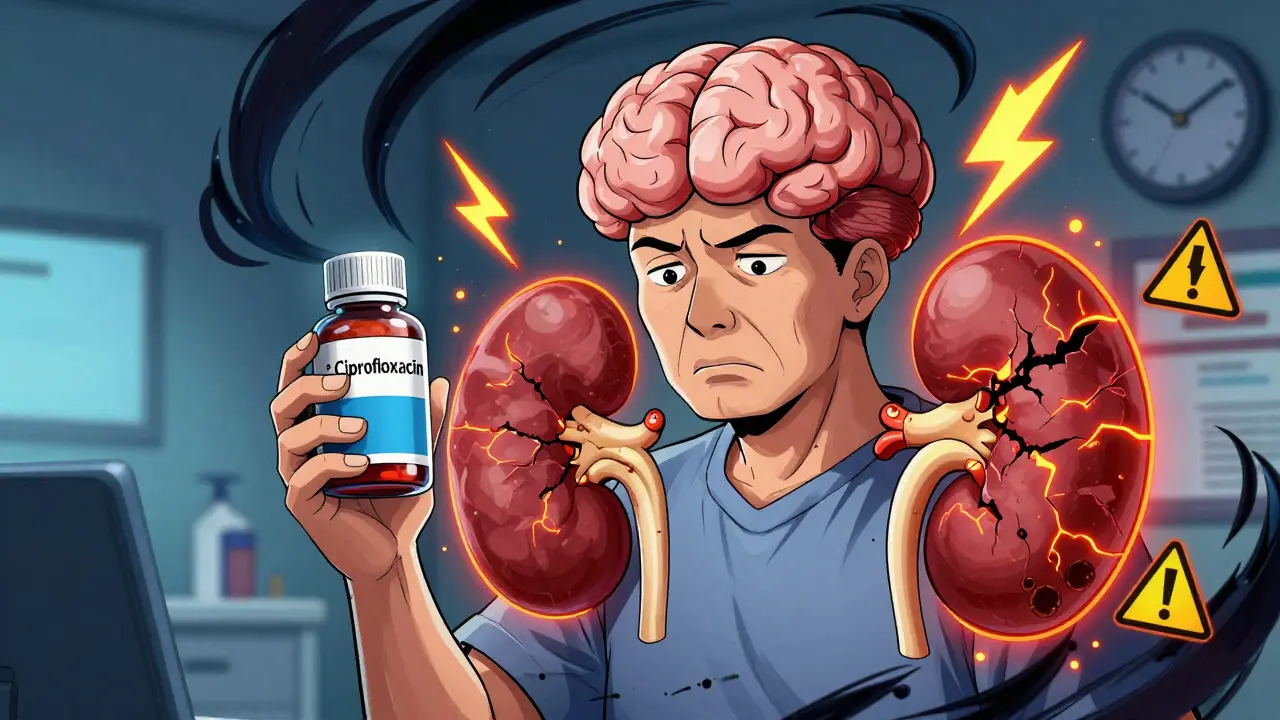
When you’re sick with a urinary tract infection or a stubborn respiratory bug, your doctor might reach for a fluoroquinolone antibiotic like ciprofloxacin or levofloxacin. It’s fast, powerful, and often works when other antibiotics don’t. But if you’re also taking ibuprofen or naproxen for pain or inflammation, you could be putting yourself at risk-without even knowing it.
What fluoroquinolones actually do to your body
Fluoroquinolones are a class of antibiotics that include ciprofloxacin, levofloxacin, moxifloxacin, and others. They’ve been used for decades to treat everything from bladder infections to pneumonia. But behind their effectiveness is a darker side. These drugs don’t just kill bacteria-they interfere with your body’s own cellular machinery. They bind to enzymes that help repair DNA, which is great for bacteria, but can also mess with human cells, especially in tendons, nerves, and the brain. The most common side effects are tendon pain and nerve damage. But the real danger comes from what happens when these drugs hit the brain. Fluoroquinolones block GABA receptors-the brain’s natural calming system-and overstimulate NMDA receptors, which are linked to excitement and stress. This imbalance can trigger confusion, hallucinations, seizures, and even psychosis. People with kidney problems are at higher risk because their bodies can’t clear the drug efficiently. In moderate kidney impairment, fluoroquinolone levels can spike by 50% to 100%, turning a standard dose into a neurotoxic one.NSAIDs aren’t harmless either
NSAIDs like ibuprofen, naproxen, and diclofenac are everywhere. You grab them for headaches, back pain, or menstrual cramps. But they’re not just painkillers. They work by shutting down prostaglandins, chemicals your kidneys need to maintain blood flow. When you take NSAIDs, your kidneys get less blood, and your glomerular filtration rate drops. That’s fine for a healthy person taking it occasionally. But for someone with reduced kidney function, diabetes, or dehydration, it’s a red flag. The problem gets worse when NSAIDs are taken with fluoroquinolones. Both drugs are cleared by the kidneys. When you take them together, they compete for the same cleanup pathways. This causes both drugs to linger longer in your bloodstream. And because fluoroquinolones are already neurotoxic and nephrotoxic, stacking them with NSAIDs doesn’t just add risk-it multiplies it.The perfect storm: kidney injury when both drugs are used
A 2013 study in JAMA Internal Medicine found that elderly patients taking fluoroquinolones and NSAIDs together had a 3.5 times higher risk of acute kidney injury requiring hospitalization. That’s not a small increase. That’s a major red flag. How does this happen? Fluoroquinolones can cause acute interstitial nephritis-a type of kidney inflammation where immune cells invade the tissue. NSAIDs reduce blood flow to the kidneys. Together, they create a double hit: one damages the structure, the other starves it of blood. The result? A sudden spike in creatinine, fluid buildup, and sometimes permanent kidney damage. One case from the UK’s Yellow Card system involved a 58-year-old man who took ciprofloxacin and ibuprofen for a UTI. Within days, his creatinine jumped from 82 to 287 μmol/L-clear signs of kidney failure. He also developed severe nerve pain that lasted 18 months after stopping both drugs. He wasn’t elderly. He wasn’t diabetic. He just took two common medications at the same time.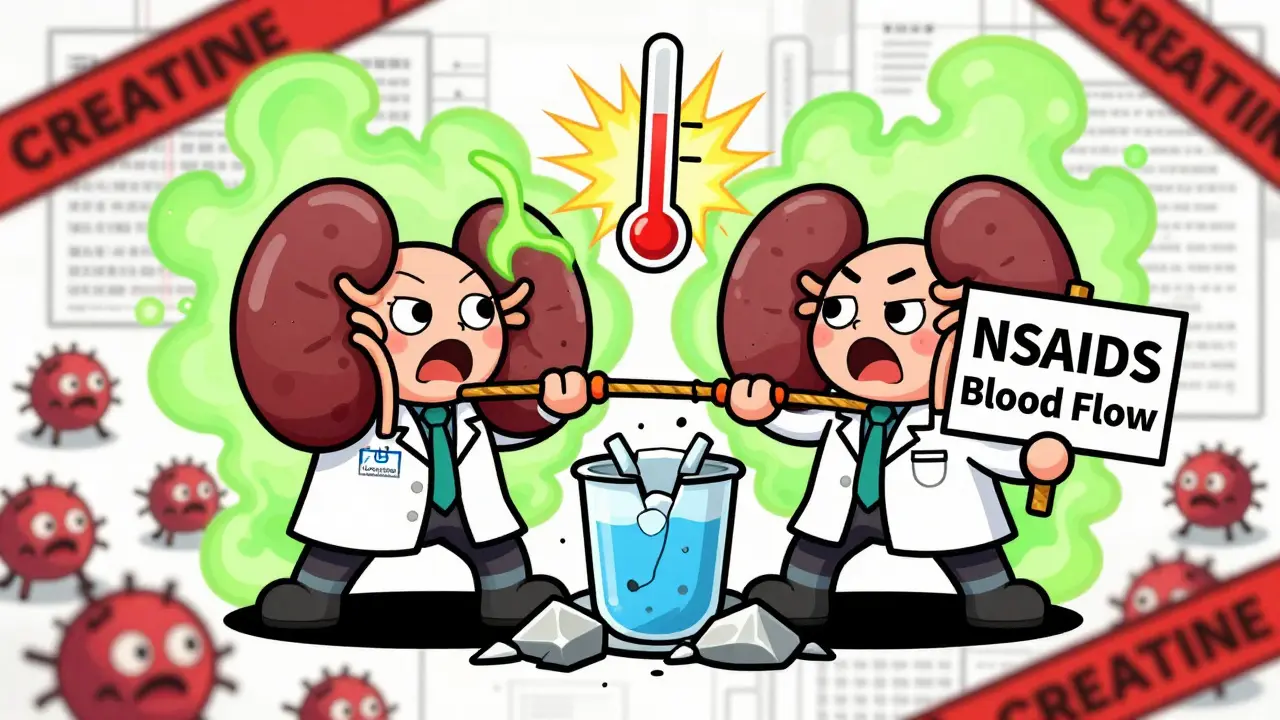
Neurological damage: more than just a headache
Most people know NSAIDs can cause dizziness or headaches. But few realize they can trigger aseptic meningitis-a dangerous inflammation of the brain’s protective lining-especially with ibuprofen and naproxen. Fluoroquinolones are even more concerning. They’re linked to seizures, delirium, tremors, and even Tourette-like movements. Levofloxacin is especially notorious for causing confusion and hallucinations. Ciprofloxacin can make you feel “out of it” for days. When your kidneys slow down, these drugs build up. And when they build up, your brain gets flooded. The blood-brain barrier, which normally keeps toxins out, becomes leaky under stress or inflammation. That’s when a simple prescription turns into a neurological emergency. A 2020 study found that neurological side effects from fluoroquinolones accounted for nearly 30% of the $1.8 billion annual cost of adverse drug events tied to these antibiotics in the U.S. That’s not just hospital bills-it’s lost wages, long-term care, and disability claims.Who’s most at risk?
You’re not equally vulnerable if you’re 25 and healthy. But if you’re over 60, have diabetes, high blood pressure, or any kidney issues, your risk skyrockets. After age 40, kidney function drops about 1% per year. By 70, you’re operating at 30% less capacity than you did at 30. That means even small doses of these drugs can become dangerous. People with epilepsy, anxiety disorders, or a history of psychiatric conditions are also at higher risk. Fluoroquinolones can trigger relapses or worsen symptoms. Even if you’ve taken them before without issue, your body changes. What was safe last year might not be safe this year.What doctors are doing differently now
Regulators around the world are waking up. Health Canada issued a safety review in 2017, warning that fluoroquinolone side effects can be “persistent and disabling.” The European Medicines Agency found 286 disabling cases over 21 years-enough to restrict these drugs to only the most serious infections with no alternatives. The UK’s MHRA followed suit in 2019. The FDA has issued multiple warnings and is planning new label updates in 2026 to highlight mitochondrial damage as a possible root cause of long-term neurological and kidney injury. Doctors are changing their habits. For a simple UTI, nitrofurantoin or fosfomycin are now preferred over ciprofloxacin. For sinus infections, amoxicillin-clavulanate is often safer than levofloxacin. And for pain? Acetaminophen (paracetamol) is the go-to alternative. It doesn’t hurt your kidneys or interfere with antibiotics.
Jenci Spradlin
January 9, 2026 AT 13:12just took cipro last week for a UTI and ibuprofen for my back-didn’t think twice. now i’m paranoid every time i get a headache. why the hell is this not on the bottle??
Aron Veldhuizen
January 9, 2026 AT 16:42Let’s be clear: this isn’t a ‘risk’-it’s a systemic failure of pharmaceutical oversight. The FDA has known about fluoroquinolone neurotoxicity since the 1990s. The fact that these drugs remain on shelves while acetaminophen is demonized as ‘ineffective’ speaks volumes about who controls medical narratives. The real crime isn’t the combination-it’s that we’ve normalized poisoning ourselves for convenience.
Heather Wilson
January 11, 2026 AT 16:25It’s fascinating how people treat medical advice like a buffet. You take the antibiotic because it’s ‘strong,’ then grab the NSAID because it’s ‘fast,’ and then wonder why your body implodes. The data is overwhelming. The warnings are in bold. Yet we still treat our kidneys like disposable batteries. It’s not just ignorance-it’s a cultural addiction to quick fixes.
Diana Stoyanova
January 11, 2026 AT 23:39OMG I had this happen to me last year 😭 Took cipro for a sinus infection and naproxen for my period cramps. Within 48 hours I was vibrating with anxiety, couldn’t sleep, and my ankles swelled like balloons. My doctor just said ‘it’s probably stress.’ I cried for 3 hours after I read this post. I’m 31 and healthy-how is this not common knowledge?? 🤯
Patty Walters
January 13, 2026 AT 18:53my nephrologist told me to avoid all NSAIDs if i’m on any antibiotic-she said even tylenol is safer. i didn’t know why until now. thanks for laying it out like this. i’m gonna print this and bring it to my next doc visit.
tali murah
January 15, 2026 AT 00:06Oh wow, so people are finally noticing that Big Pharma doesn’t care if you turn into a walking nervous system glitch? Groundbreaking. Next you’ll tell me that sugar is bad for your liver. 🙄
Ian Long
January 16, 2026 AT 11:08Look, I get the fear. But let’s not throw the baby out with the bathwater. I had a life-threatening pneumonia three years ago. Cipro saved my life. Yes, I got some weird tingling-but I also lived. We need these drugs for emergencies. The problem isn’t the drugs-it’s that doctors prescribe them like candy. We need better guidelines, not fearmongering.
Micheal Murdoch
January 18, 2026 AT 02:56There’s a deeper truth here: we’ve outsourced our health to pills because we’re too busy, too tired, or too disconnected from our bodies. We don’t ask why we’re sick-we just want the symptom gone. Fluoroquinolones and NSAIDs are symptoms of a broken system. We treat the body like a machine that needs a quick fix, not a living ecosystem that needs balance. Maybe the real question isn’t ‘what’s in the pill?’ but ‘why are we so desperate to take it?’
Maggie Noe
January 19, 2026 AT 16:49my mom took cipro + naproxen for a UTI and ended up in the ER with acute kidney failure. she’s 68. she’s fine now-but her creatinine’s still elevated. i’m never letting anyone in my family touch these drugs again. 💔
Darren McGuff
January 20, 2026 AT 03:20UK GPs have been steering clear of fluoroquinolones for years. We use nitrofurantoin for UTIs, amoxicillin for chest infections. It’s not that we’re ‘behind’-we’re just not willing to gamble with people’s brains and kidneys. Shame the US still treats antibiotics like magic bullets.
Gregory Clayton
January 21, 2026 AT 00:20bro i took cipro and advil for a week after my wisdom teeth came out. i thought i was just tired. turns out i had nerve damage in my jaw. still can’t chew properly. now i’m mad at my dentist. and my doctor. and the FDA. and probably the moon too. 🌕
Catherine Scutt
January 21, 2026 AT 10:01if you’re taking NSAIDs with antibiotics, you’re either lazy or dumb. stop being a medical tourist and learn your body. your kidneys aren’t a vending machine.
Elisha Muwanga
January 23, 2026 AT 00:54These drugs are dangerous? Newsflash: America is full of weak, over-medicated zombies who can’t handle a little pain. Back in my day, we took aspirin and walked it off. Now people cry because their knee hurts. Grow up. And stop blaming Big Pharma for your lack of discipline.
Alicia Hasö
January 23, 2026 AT 15:58Thank you for sharing this. I’m a nurse practitioner and I’ve seen too many patients with permanent nerve damage from these combos. I now have a printed handout I give out with every fluoroquinolone prescription: ‘Here’s why we’re not giving you ibuprofen. Here’s what to use instead.’ Knowledge is power-but only if it’s shared. Let’s keep talking.