

Half of all Americans take at least one prescription drug. One in four takes three or more. Yet, medication instructions are often unclear - and that’s not just annoying. It’s dangerous. A single misread dose, a misunderstood timing rule, or a confusing abbreviation can lead to serious harm. The Institute for Safe Medication Practices reports that unclear drug directions contribute to over 1.5 million medication-related injuries each year in the U.S. That’s not a statistic. That’s someone’s parent, sibling, or neighbor.
Why Medication Instructions Get So Confusing
You’d think a doctor’s prescription would be simple: take one pill, twice a day. But it’s rarely that easy. The problem starts with how instructions are written - and who writes them. Pharmaceutical manufacturers create their own labeling for the same drug. Two different brands of the same medication - say, generic ibuprofen - might have conflicting directions. One says "take with food," another says "take on an empty stomach." The FDA requires Medication Guides for high-risk drugs like opioids, isotretinoin, or oral contraceptives. But for most other medications? No such requirement. That means you might get instructions from the pharmacy that don’t match what your doctor told you. Abbreviations make it worse. "QD" for daily? That could be mistaken for "QID" (four times a day). "IN" for intranasal? Sounds like "IV" (intravenous). The Institute for Safe Medication Practices (ISMP) banned these shortcuts years ago. They say: write out "daily," not "q.d." Use "5" instead of "V." Say "intranasal," not "IN." But not every prescriber follows this. And if you’re reading a handwritten note or a poorly formatted electronic record? You’re left guessing. Even the word "as needed" is risky. "Take one tablet as needed for pain" sounds harmless - until you realize you don’t know if "as needed" means once a day, three times a day, or only if the pain is severe. Is there a daily maximum? What if you take two in one day? You’re not supposed to guess.What You Should Do When Instructions Don’t Make Sense
The best defense? Ask. Not just once. Ask again if you’re still unsure. Start with your pharmacist. They’re the last person to see your prescription before you walk out with it. They’re trained to spot confusing instructions. If the label says "take 2 tablets PO BID," ask: "What does BID mean?" "Is that twice a day?" "Should I take them 12 hours apart?" Don’t assume the doctor already explained it. A 2023 Harvard Health article says it plainly: "If you’re unsure exactly how to take a medication, even if it was already explained to you, ask for clarification." That’s not being difficult. That’s being smart. Here are specific questions to ask:- What is this medication supposed to do? (Not just "for blood pressure" - what does that mean for you?)
- What happens if I miss a dose? Should I double up? Skip it? Take it late?
- Is there a maximum daily amount? What if I accidentally take too much?
- Should I take it with food? On an empty stomach? At a specific time of day?
- Are there any foods, drinks, or other medications I should avoid while taking this?
- What side effects are normal? Which ones mean I should call my doctor?
How Timing Affects Your Medication’s Effectiveness
It’s not just about how much you take. It’s about when. Cholesterol-lowering statins? They’re usually taken at bedtime. Why? Because your liver produces most cholesterol overnight. Taking the drug when your body is making the most gives it the best shot at working. Antibiotics like amoxicillin? If the label says "take every 8 hours," that doesn’t mean "when you wake up, after lunch, and before bed." It means roughly every 8 hours - so 7 a.m., 3 p.m., and 11 p.m. Skipping the nighttime dose reduces effectiveness and increases the risk of resistant bacteria. Blood pressure meds? Some are best taken in the morning. Others work better at night. The timing can change how well they control your numbers. The CDC recommends setting phone reminders. Use alarms. Write it on your calendar. Put a sticky note on your mirror. If you’re taking four or more medications, a pill organizer with labeled times (morning, afternoon, evening, bedtime) helps more than you think.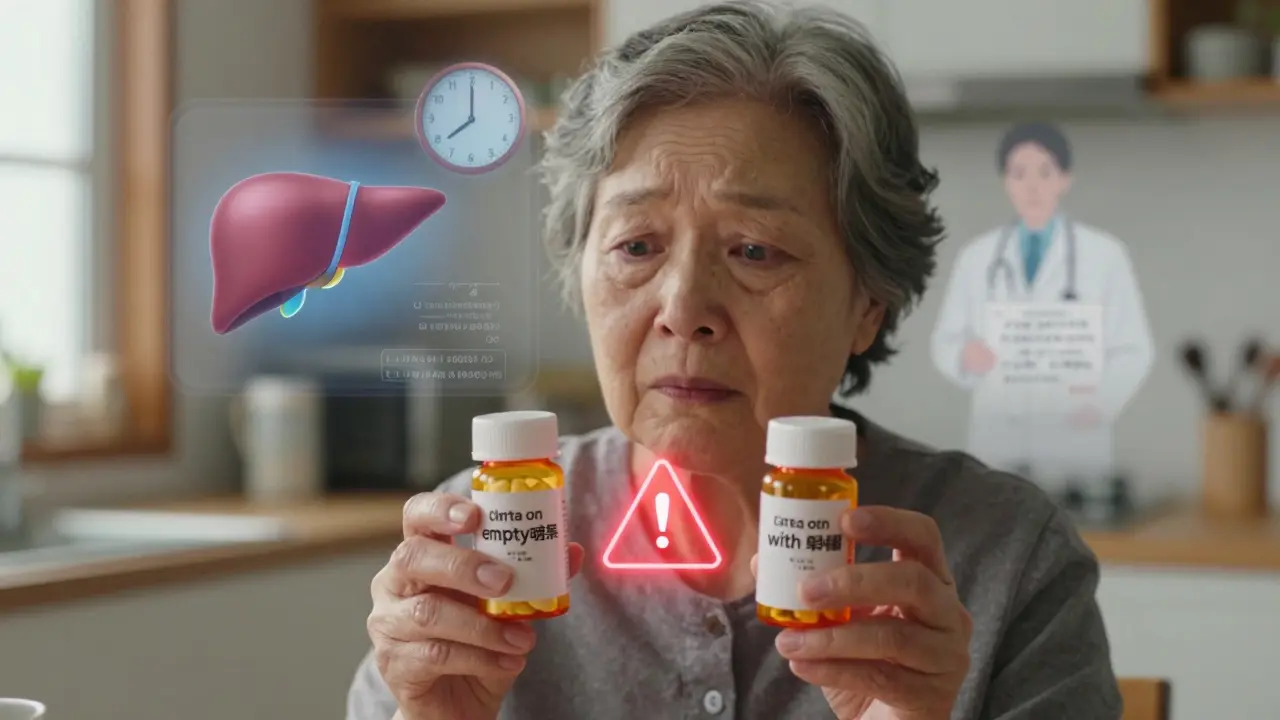
What Pharmacies and Hospitals Are Required to Do
In outpatient settings - like your local pharmacy - the FDA requires that Medication Guides be handed to you every time you pick up a high-risk drug. These are printed, easy-to-read sheets that explain risks, side effects, and how to take the drug safely. You can ask for them in digital form, but they must be available. But in hospitals? No such rule. Instead, nurses and pharmacists must verbally explain the medication to you before you take it. They’re supposed to tell you: what it is, why you’re taking it, what side effects to watch for, and how to take it correctly. Still, gaps exist. A 2019 Montana Department of Public Health guideline says: "Compare the medication you picked up to your copy of the prescription." That means: check the name, dose, and instructions on the bottle against what your doctor wrote. If they don’t match? Don’t take it. Call the pharmacy or your doctor. The National Coordinating Council for Medication Error Prevention and Reporting (NCC MERP) says: "The name, purpose, and intended effects of the medication must be discussed with the patient and/or caregiver." That’s not optional. It’s a standard.When Different Manufacturers Give Different Instructions
This is one of the most overlooked dangers. Two companies make the same generic drug. One says: "Take with food." The other says: "Take on an empty stomach." The FDA allows this. The NIH says this inconsistency can affect how well the drug works - especially for drugs with narrow therapeutic windows, like thyroid meds or seizure drugs. If you switch brands and notice a change - you feel more tired, your symptoms return, or you get new side effects - that’s not in your head. Talk to your doctor. Ask: "Is this the same drug?" Show them the two labels. The NIH recommends that prescribers review instructions from all manufacturers of the same drug before prescribing. You shouldn’t have to do this yourself - but if you notice a change, speak up.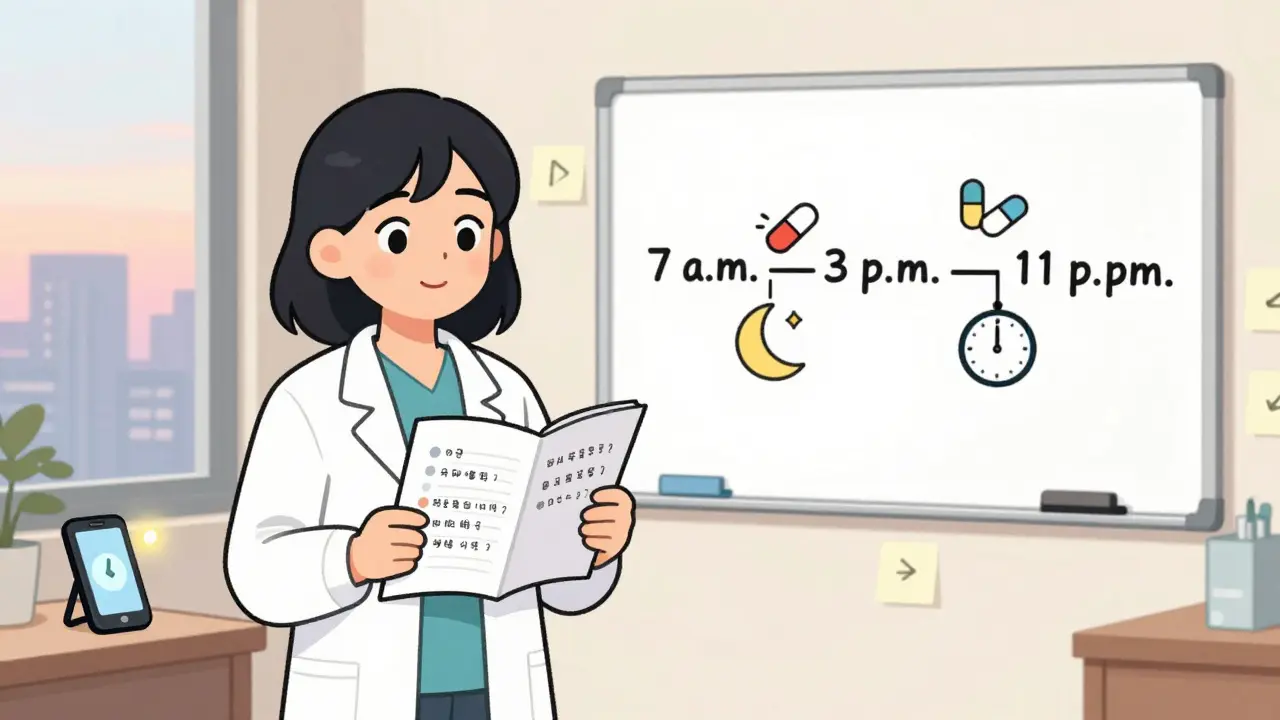
What to Do If You’re Still Confused
If you’ve asked your pharmacist, checked the label, and you’re still unsure - don’t wing it. Call your doctor’s office. Ask to speak with a nurse or pharmacist on staff. Many clinics have medication therapy management services just for this. You can also use the National Library of Medicine’s MedlinePlus website (no link needed) to look up your drug and see its official FDA-approved instructions. Write down your questions. Bring them to your next appointment. Bring the actual pill bottles. Don’t rely on memory. If you’re helping an older parent or a loved one with memory issues, go with them. Take notes. Ask the doctor to write the instructions clearly on a piece of paper - no abbreviations, no jargon.Final Reminder: Your Safety Is Your Responsibility
No one will check your understanding better than you. You’re the one who takes the pills. You’re the one who knows if something feels off. If a label says "take daily" and you’re not sure if that means once a day or every day for a week - ask. If the timing seems off - ask. If the dose feels too high or too low - ask. If the instructions on your new bottle don’t match the old one - ask. The system isn’t perfect. Instructions are messy. Manufacturers don’t always agree. But you have the right to clear, simple, accurate information. Don’t let confusion become a risk.What should I do if my medication label doesn’t match what my doctor said?
Stop taking the medication. Call your pharmacy and ask them to verify the prescription with your doctor’s office. Don’t assume the pharmacy made a mistake - or that your doctor did. The discrepancy could be in how the prescription was written, how it was transcribed, or how the manufacturer’s instructions differ. Always get clarification before continuing.
Can I ask my pharmacist to explain my medication even if I didn’t have questions?
Yes. Pharmacists are trained to counsel patients on medications. You don’t need to have a specific concern to ask. Many pharmacies offer free medication reviews, especially if you take multiple drugs. Ask if they have time to go over all your prescriptions together. This can catch interactions or confusing instructions you didn’t even know to look for.
Are generic drugs always the same as brand-name drugs in how they should be taken?
The active ingredient is the same, but the instructions can vary. Different manufacturers may list different timing, food requirements, or warnings. For example, one generic version of a thyroid medication might say "take on an empty stomach," while another says "take 30 minutes before breakfast." Always check the label on the bottle you receive. If you switch brands and notice changes in how you feel, tell your doctor.
Why do some medications need to be taken at specific times of day?
Your body works in cycles. Cholesterol is made mostly at night - so statins are taken at bedtime. Blood pressure naturally dips at night - so some BP meds are taken in the morning to match the body’s rhythm. Cortisol levels rise in the morning, so steroid medications are often taken then to mimic natural hormone patterns. Timing affects how well the drug works and how many side effects you get.
What’s the most common mistake people make when taking medication?
Skipping doses or doubling up when they forget. People think missing one pill won’t matter - but for antibiotics, blood thinners, or seizure meds, it can. Others take "as needed" drugs too often because they don’t know the daily limit. The safest move? Always know the maximum daily dose and the minimum time between doses. If you’re unsure, ask before you take it.