

Waking up at 3 a.m. with a burning sensation in your chest is almost a rite of passage for many expecting parents. Between the surge of progesterone relaxing your esophageal sphincter and a growing baby pushing your stomach upward, heartburn medications in pregnancy is a topic that affects up to 80% of people during their journey. While the discomfort is common, the anxiety about what is safe for the baby can be overwhelming. You aren't just looking for relief; you're looking for peace of mind.
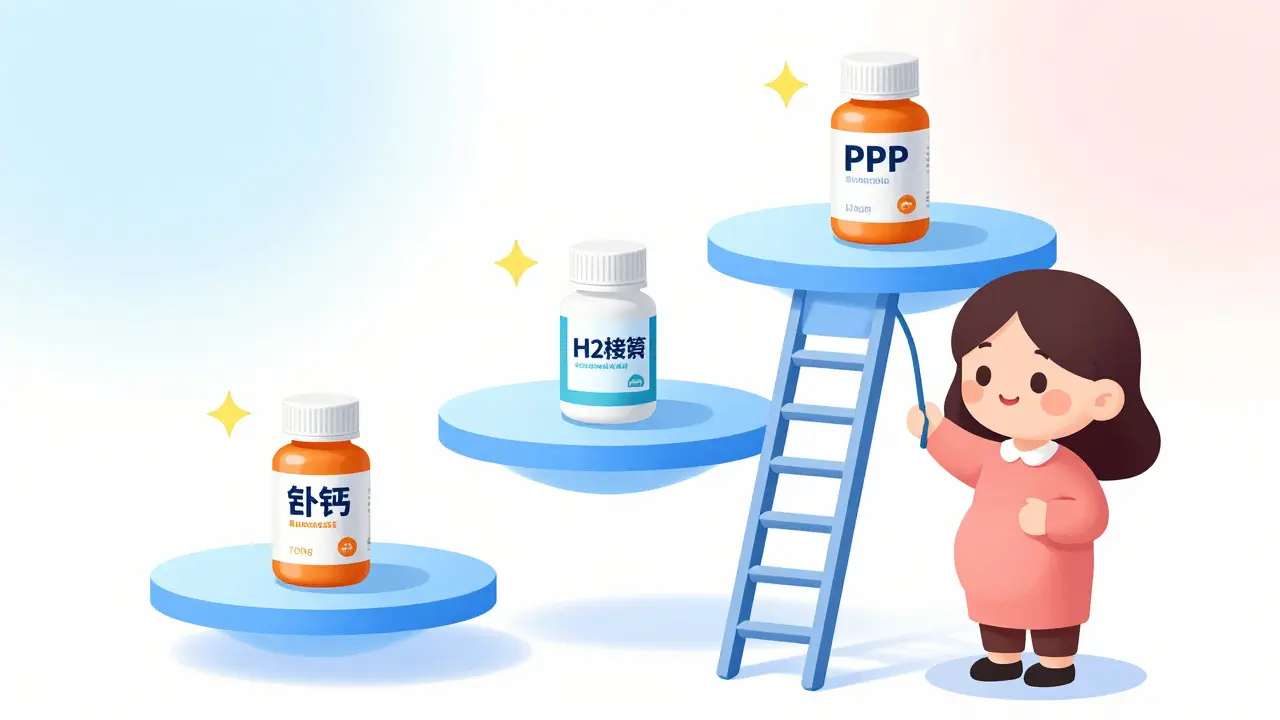
The good news is that there is a clear, tiered approach to managing acid reflux that balances your comfort with fetal safety. Most healthcare providers follow a "ladder" strategy: start with the gentlest option and only move up to stronger medications if the first ones don't work. However, it is vital to remember that the first 14 weeks of pregnancy are the most sensitive period for fetal development, so the caution level is higher during the first trimester.
Quick Guide to Pregnancy Acid Relief
| Medication Type | Example | How it Works | Duration | Typical Status |
|---|---|---|---|---|
| Antacids | Tums | Neutralizes existing acid | 1-2 Hours | First-line (Safest) |
| H2 Blockers | Pepcid (Famotidine) | Reduces acid production | 10-12 Hours | Second-line |
| PPIs | Prilosec (Omeprazole) | Blocks acid pumps | 24+ Hours | Third-line (Medical Supervision) |
The First Line of Defense: Calcium-Based Antacids
When you first feel that sting, Antacids is a type of medication that provides immediate relief by neutralizing the acid already present in your stomach. They don't stop acid from being made; they just cancel out the acid that's already there. Because they work quickly, they are the gold standard for occasional relief.
Not all antacids are created equal. Calcium carbonate, found in brands like Tums, is generally considered the safest choice. There is a double benefit here: you get relief from heartburn, and you provide a bit of extra calcium that both you and your baby need for bone development. You can typically take 500-1500 mg every 4-6 hours, but don't overdo it, as too much calcium can sometimes cause constipation.
Be careful with other formulations. Some antacids contain aluminum or magnesium trisilicate, which some doctors advise against. While Mylanta or Rolaids are often listed as safe, keep an eye on the ingredients. Magnesium-based options can lead to diarrhea, while aluminum-based ones might make you more constipated-a problem most pregnant people are already dealing with!
Stepping Up: H2 Blockers for Longer Relief
If you find yourself chewing Tums like candy every two hours, it's time to move to the second tier. H2 Blockers is a class of drugs that block histamine receptors in the stomach to reduce the amount of acid produced. Unlike antacids, these don't just neutralize acid; they tell your stomach to stop making so much of it.
Famotidine, known by the brand name Pepcid, is the preferred choice in this category. It generally takes 1-3 hours to kick in, but the relief lasts much longer-usually 10 to 12 hours. This makes it a great option to take before bed so you can actually sleep through the night without waking up in a panic.
You might remember Ranitidine (Zantac), but that's a thing of the past. The FDA withdrew it in 2020 due to contamination concerns (NDMA), so you won't see it recommended in modern pregnancy guides. While H2 blockers are generally safe for short-term use, a small percentage of users might experience mild dizziness or headaches.
The Heavy Hitters: Proton Pump Inhibitors (PPIs)
For those dealing with severe GERD (Gastroesophageal Reflux Disease) that doesn't budge with the first two options, Proton Pump Inhibitors is a potent group of medications that irreversibly inhibit the enzyme system that pumps acid into the stomach. These are the strongest tools in the shed.
Omeprazole (Prilosec) is the most extensively studied PPI for use during pregnancy. Because these medications provide 24-hour relief, they are incredibly effective. However, they should only be used under the direct supervision of your doctor. Why? Because long-term use of PPIs can potentially interfere with how your body absorbs calcium and magnesium.
There is also a bit of a debate in the medical community. A 2019 study in JAMA Pediatrics suggested a possible link between using PPIs in the first trimester and a higher risk of childhood asthma. While a direct cause-and-effect hasn't been proven, it's a reason why your OB-GYN will likely want you to try every other option before moving to a PPI, especially before the second trimester.
The Danger Zone: What to Absolutely Avoid
When you're desperate for relief, it's easy to grab the first pink liquid you see on the pharmacy shelf. But there is one major red flag: Pepto-Bismol. You must avoid this medication during pregnancy. It contains bismuth subsalicylate, which is a derivative of aspirin. Aspirin and other salicylates can cause complications for the baby and may affect fetal clotting.
Similarly, avoid any "multi-symptom" stomach relief products that include ingredients you haven't cleared with your doctor. Stick to the simple, single-ingredient medications listed by your provider. If a product says it "treats everything," it's usually a sign to put it back on the shelf and call your clinic.

Lifestyle Tweaks to Reduce Medication Use
Medication is great for the "fire" of heartburn, but lifestyle changes can prevent the fire from starting. Since your stomach is physically being squeezed, gravity is your best friend (or enemy). Try waiting at least three hours after your last meal before lying down for the night. Propping yourself up with a wedge pillow can also keep acid from creeping back up into your throat while you sleep.
Watch your triggers. Fried foods, spicy curries, and highly acidic citrus or tomato-based sauces are common culprits. Instead of three large meals, try eating five or six smaller snacks throughout the day. This prevents your stomach from getting too full, which reduces the pressure on the valve that keeps acid down.
Is it safe to take Tums every day during pregnancy?
Calcium carbonate antacids like Tums are generally considered safe for daily use in moderation. However, taking them excessively for long periods can lead to hypercalcemia (too much calcium in the blood) or constipation. Always follow the dosage on the bottle and check with your doctor if you need them every single day.
When should I be worried about my heartburn?
While most heartburn is normal, you should contact your doctor if you have difficulty swallowing, unexplained weight loss, or if the pain is so severe that you cannot eat. Additionally, if you feel a sharp pain in the upper right quadrant of your abdomen accompanied by nausea, it could be something other than heartburn, such as preeclampsia or gallbladder issues.
Can I take Pepcid if Tums aren't working?
Yes, famotidine (Pepcid) is typically the second-line recommendation when antacids fail. It is generally considered safe for short-term use. However, it is always best to send a quick message to your OB-GYN to confirm the dose is appropriate for your specific health history.
Are PPIs like Prilosec safe in the first trimester?
Doctors generally recommend avoiding strong medications like PPIs during the first 14 weeks of pregnancy unless absolutely necessary. Because this is a critical time for organ development, they prefer you use non-drug methods or simple calcium antacids first.
Why does heartburn get worse in the third trimester?
It's a combination of two things: hormones and physics. Progesterone relaxes the lower esophageal sphincter (the muscle that acts as a door between your esophagus and stomach), allowing acid to leak upward. Meanwhile, your growing uterus physically pushes your stomach upward, forcing acid out of the stomach and into the esophagus.
Next Steps for Relief
If you're currently struggling with acid reflux, start by tracking your triggers for three days. Note which foods cause the most pain and what time of day it hits hardest. Use this log when you talk to your doctor; it helps them decide if an H2 blocker or a PPI is necessary.
If you've tried lifestyle changes and first-line antacids but still can't sleep or eat, don't suffer in silence. Reach out to your healthcare provider and ask specifically about famotidine. Your mental health and ability to get nutrients into your body are just as important for the baby as avoiding unnecessary medications.