
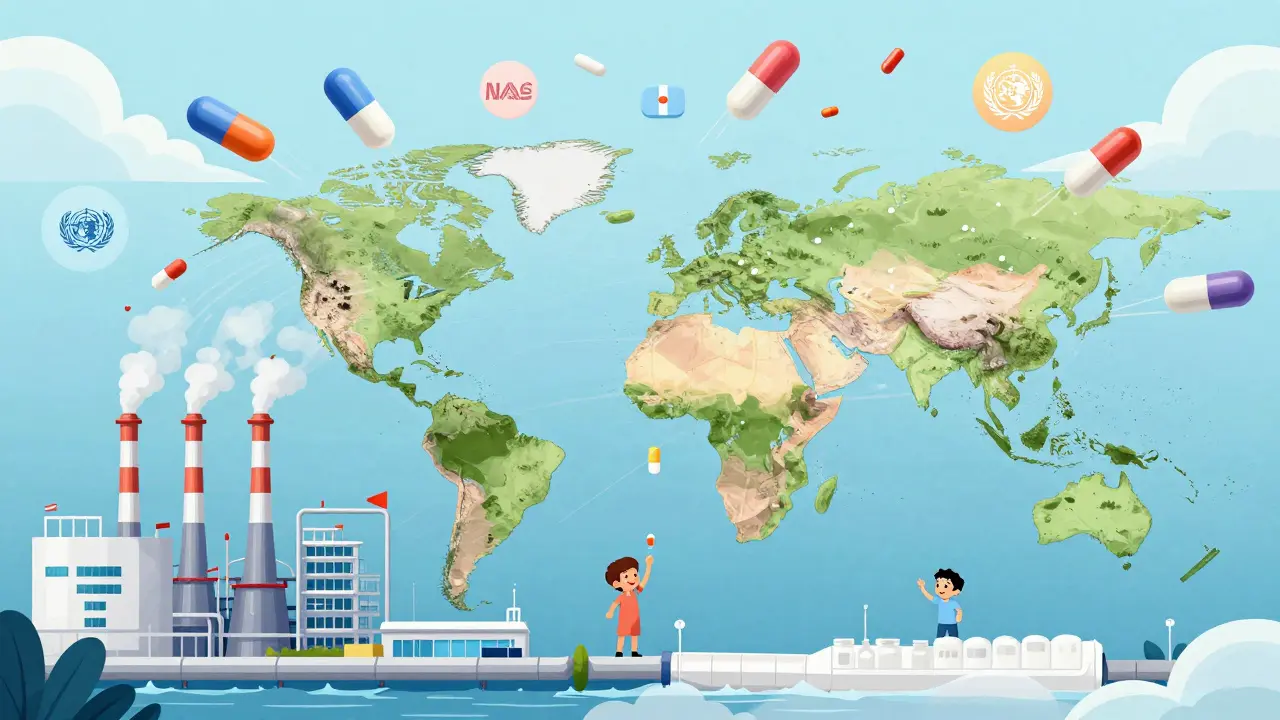
When you take a generic pill for high blood pressure, antibiotics, or diabetes in the U.S., Europe, or Africa, there’s a better than 1 in 5 chance it came from India. That’s not a guess-it’s fact. India produces 20% of the world’s generic medicines by volume and supplies over half the vaccines used globally. It’s the reason why life-saving HIV drugs dropped from $10,000 a year to under $100 in the early 2000s. This isn’t luck. It’s the result of decades of strategic policy, disciplined manufacturing, and an unmatched ability to make quality medicine cheaply.
How India Became the Pharmacy of the World
The story starts in the 1970s. Back then, most medicines were patented and priced beyond reach in developing countries. India changed the game by rewriting its patent laws. Instead of protecting the final drug product, the law only protected the process to make it. That opened the door for Indian companies to copy branded drugs, reverse-engineer them, and sell them at a fraction of the cost. No one else did this on such a scale. By the 1990s, Indian firms were exporting generic antiretrovirals to Africa, HIV treatments to Latin America, and antibiotics to Southeast Asia. The world noticed. So did the WHO, the U.S. government, and global health NGOs. By 2024, India had over 10,000 manufacturing units and more than 650 FDA-approved plants-the most outside the U.S. That’s more than China, more than Europe, more than any other country. These aren’t small labs. These are high-tech facilities producing everything from simple tablets to complex injectables and transdermal patches. Sun Pharma, Cipla, and Dr. Reddy’s aren’t just big names-they’re global suppliers with billions in annual revenue and R&D teams working on biosimilars, not just copies.What Makes Indian Generics So Affordable
The cost difference isn’t magic. It’s math. Indian manufacturers pay less for labor, have streamlined supply chains, and benefit from economies of scale. A generic version of a heart medication that costs $150 in the U.S. might cost $12 in India. That’s not because the quality is lower-it’s because the overhead is. The same pill, made in the same FDA-approved plant, sold under the same regulatory standards, just without the brand markup. Indian companies don’t just copy old drugs. They’ve mastered complex formulations. Extended-release tablets that last 12 hours. Inhalers with precise dosing. Sterile injectables for ICU use. These aren’t easy to make. They require tight control over temperature, humidity, and purity. Yet Indian plants consistently pass inspections from the FDA, EMA, and WHO. In 2024, compliance rates hit 87%-up from just 60% in 2015. That’s not a fluke. It’s a system.Who Uses Indian Generic Drugs?
In the United States, Indian generics make up 40% of all generic prescriptions dispensed. That’s 9 out of every 10 prescriptions filled with generics-nearly half come from India. The NHS in the UK gets 33% of its generic medicines from Indian manufacturers. In Sub-Saharan Africa, the number is even higher: 50% of all medicines are sourced from India. For countries with limited budgets, that’s not an option-it’s a lifeline. Doctors Without Borders has called Indian antimalarials and antibiotics “game-changers.” In refugee camps and rural clinics, these drugs are the difference between life and death. A single vial of insulin made in India can cost less than $3. In the U.S., the same vial can cost over $100. Patients don’t always know where their pills come from, but they feel the impact-lower co-pays, fewer skipped doses, better health outcomes.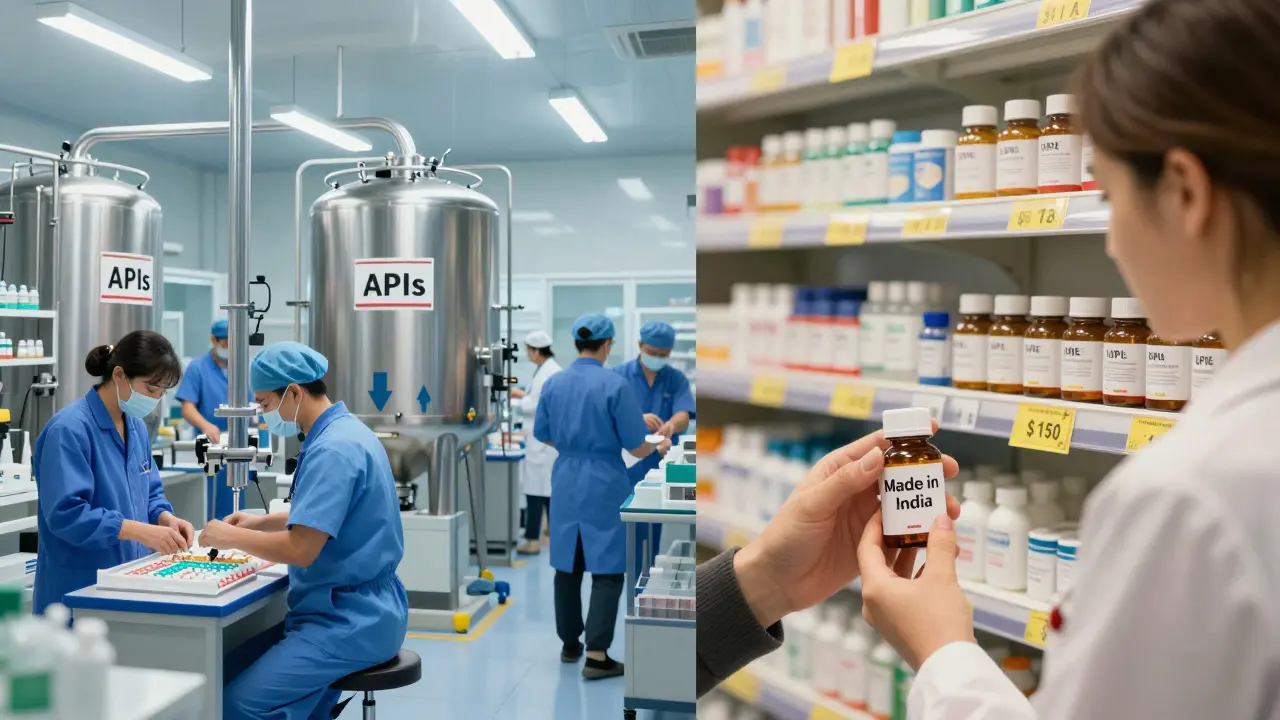
The Hidden Weakness: Dependence on China
Despite its strengths, India has a critical vulnerability: active pharmaceutical ingredients (APIs). These are the actual drug molecules that make medicine work. India imports 70% of its APIs from China. That’s a problem. When China restricts exports-whether for political, environmental, or economic reasons-Indian manufacturers face shortages. The 2020 pandemic exposed this. Lockdowns in China slowed API shipments. Some Indian plants had to pause production. Hospitals in the U.S. and Europe saw delays in generic antibiotics and painkillers. The Indian government is trying to fix this. A ₹3,000 crore ($400 million) Production Linked Incentive (PLI) scheme is pushing domestic API production. The goal? Self-sufficiency by 2026. But building API plants takes time. It’s not like assembling tablets. It requires chemical engineering expertise, strict environmental controls, and massive upfront investment. Even with government support, replacing Chinese imports won’t happen overnight.Quality Concerns: Myth or Reality?
There are stories. A bad batch of levothyroxine. A shipment with inconsistent packaging. A patient reporting a strange taste. These aren’t myths-they happen. But they’re rare. Out of billions of pills shipped every year, the number of verified quality failures is tiny. The FDA issued over 1,200 warning letters to global manufacturers in 2023. Indian firms made up less than 15% of those. The majority came from other countries. Patient reviews on PharmacyChecker.com show an 87% satisfaction rate for Indian generics. The NHS reports an average rating of 4.2 out of 5. The main complaints? Shipping delays and packaging differences-not effectiveness. In fact, a 2024 study by the WHO found Indian-sourced antimalarials had a 95% efficacy rate in field conditions. That’s on par with branded versions. The real issue isn’t quality. It’s perception. Some doctors still assume “generic” means “inferior.” That’s outdated. Indian generics meet the same standards as U.S. or German brands. The difference is price, not potency.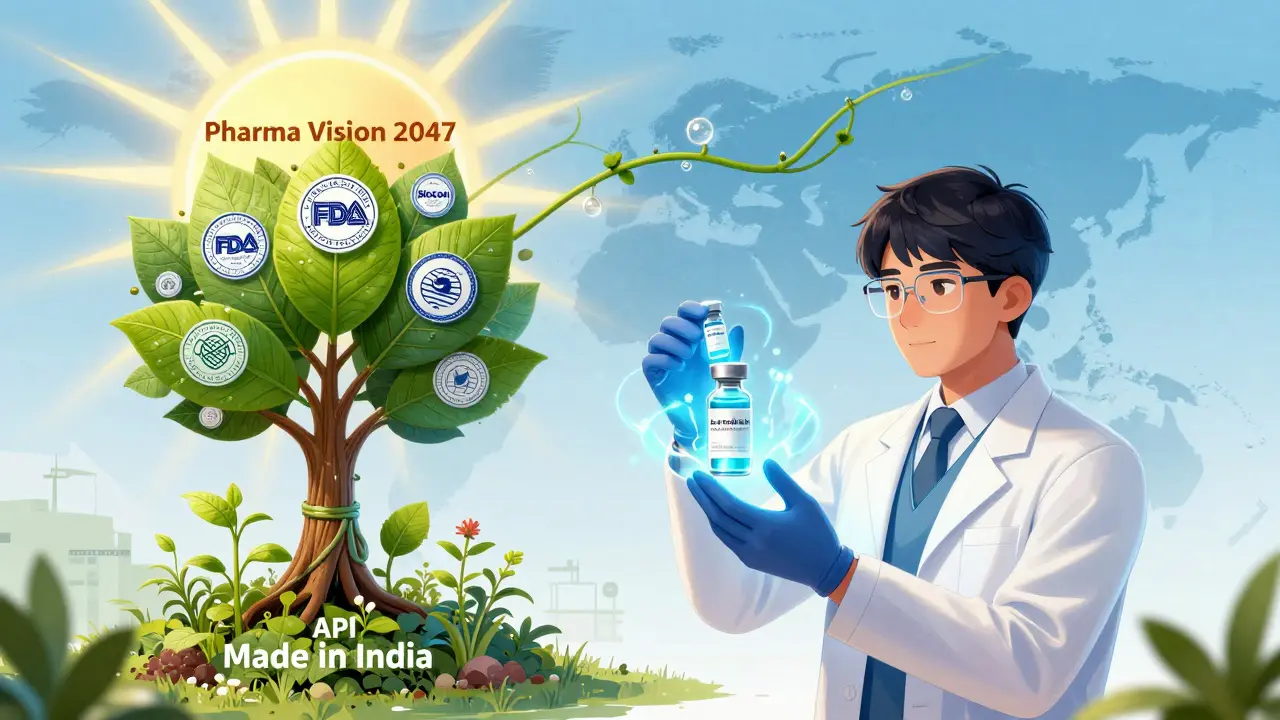
The Future: From Copies to Innovations
India isn’t just making copies anymore. It’s moving up the value chain. Biosimilars-complex, biologic drugs that mimic expensive cancer and autoimmune treatments-are now 8% of India’s export value, up from 3% in 2020. Companies like Biocon and Dr. Reddy’s are investing over $500 million a year in biologics. These aren’t cheap pills. They’re high-tech, patent-challenging therapies that can sell for thousands per dose. The government’s Pharma Vision 2047 aims for $190 billion in exports by 2047. That’s ambitious. It requires three things: ending API dependence, becoming a leader in biosimilars, and hitting 95%+ regulatory compliance. Right now, India is the world’s pharmacy because it makes medicine cheap. The next step? Becoming the world’s innovator because it makes medicine better.Why This Matters to Everyone
Whether you live in New York, Nairobi, or New Delhi, Indian generics touch your life. They keep prescription costs down. They ensure supply chains don’t collapse during crises. They give low-income countries access to treatments that would otherwise be out of reach. The world depends on India not because it’s the biggest, but because it’s the most reliable source of affordable, high-quality medicine. The next time you pick up a generic pill, check the label. If it says “Made in India,” you’re holding a piece of global health infrastructure. It’s not perfect. But it’s working. And right now, no other country can match its scale, speed, or affordability.Are Indian generic drugs safe?
Yes, Indian generic drugs are safe when produced by compliant manufacturers. Over 650 Indian facilities are approved by the U.S. FDA, and more than 2,000 meet WHO-GMP standards. Compliance rates for inspections have risen from 60% in 2015 to 87% in 2024. While isolated quality issues occur, they represent a tiny fraction of total exports. The vast majority of Indian generics meet or exceed international safety standards.
Why are Indian generic drugs so much cheaper than branded ones?
Indian manufacturers avoid the high costs of drug discovery, marketing, and brand promotion that branded companies pay. They focus on producing established drugs after patents expire, using low-cost labor, large-scale production, and efficient supply chains. This allows them to offer the same active ingredients at 30-80% lower prices without sacrificing quality.
Does the U.S. rely on Indian generic drugs?
Yes. India supplies about 40% of all generic drugs dispensed in the United States. That includes common medications for blood pressure, cholesterol, diabetes, and infections. Indian generics are a backbone of the U.S. healthcare system, helping keep prescription costs down for millions of patients.
Is India self-sufficient in producing active pharmaceutical ingredients (APIs)?
No. India still imports about 70% of its APIs from China, making it vulnerable to global supply disruptions. To fix this, the Indian government launched a ₹3,000 crore ($400 million) incentive program to boost domestic API production. The goal is to reach 53% self-sufficiency by 2026, but full independence will take longer due to the complexity and cost of building chemical manufacturing capacity.
What are biosimilars, and why is India investing in them?
Biosimilars are highly similar versions of expensive biologic drugs used to treat cancer, rheumatoid arthritis, and other chronic diseases. Unlike traditional generics, they’re not simple chemical copies-they’re complex biological products. India is investing heavily because biosimilars have higher profit margins and less competition. Companies like Biocon and Dr. Reddy’s are now among the world’s top biosimilar developers, helping make these life-saving treatments affordable globally.
How does India compare to China in generic drug production?
China produces more APIs and at lower costs, but India leads in regulatory compliance. India has 650 FDA-approved plants compared to China’s 153. Indian manufacturers are better at navigating complex international regulations, making them preferred partners for Western markets. While China dominates volume in raw materials, India dominates in finished, export-ready medicines that meet global quality standards.
Joy F
January 4, 2026 AT 06:36Let’s be real-India’s generic drug empire is the only thing keeping the global healthcare system from collapsing under its own greed. Big Pharma’s pricing models are a joke. $100 for insulin? That’s not capitalism, that’s extortion. India didn’t just break the system-they rebuilt it with dignity. And yet, nobody talks about how the West still treats Indian manufacturers like second-class citizens while sucking their blood for cheap meds. Hypocrisy is the new American pastime.
Palesa Makuru
January 4, 2026 AT 09:56Interesting how we romanticize India’s ‘affordability’ but never ask who’s really bearing the cost-environmental degradation, worker exploitation, and the quiet collapse of local pharma ecosystems in Africa that can’t compete. It’s not charity, it’s neo-colonialism with a better marketing team. The FDA approvals? Sure. But who’s auditing the sewage outflow from those 650 plants?
Lori Jackson
January 6, 2026 AT 09:33Ugh. Another ‘India saves the world’ op-ed. Let’s not pretend this is altruism. It’s profit-driven, state-subsidized, patent-avoidance capitalism with a humanitarian veneer. And don’t get me started on how the U.S. government benefits from this while simultaneously demonizing China for the same exact thing. Double standards aren’t just alive-they’re thriving.
Sarah Little
January 6, 2026 AT 12:04API dependency on China is the elephant in the room. If there’s a war, a pandemic, or even a bad monsoon in Guangdong, we’re all screwed. And no one’s talking about the fact that India’s PLI scheme is basically throwing money at a problem that needs decades of R&D, not subsidies.
innocent massawe
January 7, 2026 AT 20:33Respect to India 🙏. We get our malaria meds from them here in Nigeria. No one’s dying because they couldn’t afford treatment. That’s more than I can say for some places. Let’s not overcomplicate it-good medicine, cheap price, life saved. That’s the win.
erica yabut
January 7, 2026 AT 23:02Oh sweet merciful heavens, another ‘India is the pharmacy of the world’ love letter. Let’s not forget the 2018 tainted heparin incident. Or the 2021 FDA import alert on Sun Pharma’s facility in Hyderabad. Or the fact that 87% compliance means 13% still got slapped with warnings. This isn’t a miracle-it’s a statistical anomaly with a PR team.
Vincent Sunio
January 8, 2026 AT 00:51While the narrative of India as a benevolent global pharmaceutical provider is aesthetically pleasing, it is analytically unsound. The assertion that quality equals that of U.S. or European counterparts is not empirically substantiated. Regulatory compliance rates are not equivalent to clinical equivalence. Furthermore, the economic model relies on externalized environmental and labor costs, rendering the ‘affordability’ argument ethically dubious. One must question the sustainability of a system predicated on asymmetrical regulatory arbitrage.
Haley Parizo
January 8, 2026 AT 07:09India didn’t just make drugs cheaper-they made healthcare a human right instead of a luxury. While the West was busy patenting oxygen, India was shipping it to dying villages. This isn’t just about pills-it’s about sovereignty. The fact that you’re surprised by their success means you’ve been drinking the Big Pharma Kool-Aid. The real scandal isn’t that India does it well-it’s that the rest of the world refuses to replicate it.
Angela Fisher
January 9, 2026 AT 12:58Okay but what if the FDA inspections are rigged? What if the Indian government is bribing inspectors? What if the ‘87% compliance’ is just a numbers game? I read somewhere that the same plant that got approved in 2022 had a 300% spike in worker injuries last year. And don’t get me started on the Chinese API connection-what if China is poisoning our meds on purpose? I mean, think about it. Who benefits? 🤔 #Conspiracy #PharmaGate
Wren Hamley
January 11, 2026 AT 03:55Wait-so if India makes 20% of the world’s generics by volume and 40% of U.S. prescriptions come from them, then technically, every fifth pill you swallow is a Made-in-India miracle. That’s wild. But the real mind-blower? They’re doing it with 70% of their APIs imported. It’s like building a Ferrari with a Toyota engine and still outpacing everyone. That’s not luck-that’s genius. And now they’re moving into biosimilars? That’s like going from making bicycles to launching rockets. Respect.
Tru Vista
January 11, 2026 AT 11:23India = cheap pills. China = cheap stuff. USA = expensive bills. Done. 🤷♀️
JUNE OHM
January 12, 2026 AT 22:36AMERICA NEEDS TO STOP RELYING ON INDIA AND CHINA FOR OUR MEDS. THIS IS A NATIONAL SECURITY THREAT. 🇺🇸💊 We should be making our own pills. Why are we letting foreign countries control our health? This is why we lost the supply chain war. Bring back American pharma or we’re all gonna die from a shortage of ibuprofen. #MakePillsGreatAgain 🇺🇸🔥