
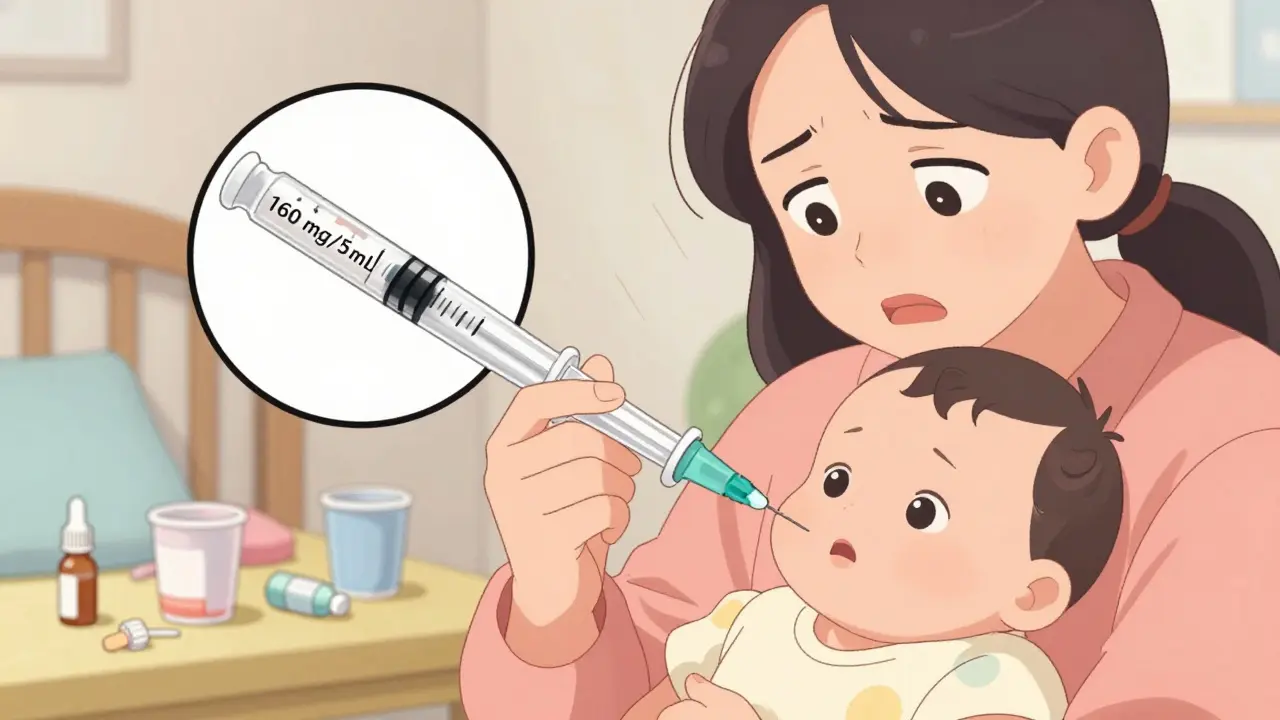
Every year, tens of thousands of infants end up in emergency rooms because someone gave them the wrong dose of medicine. Not because they were careless - but because the system is confusing. A single misread label, the wrong measuring tool, or mixing up infant and children’s formulas can turn a simple remedy into a life-threatening mistake. For parents and caregivers, getting infant medication right isn’t just important - it’s non-negotiable.
Why Infant Medication Errors Are So Dangerous
Babies aren’t small adults. Their bodies process medicine differently. A dose that’s safe for a 2-year-old can be deadly for a 3-month-old. The most common culprit? Acetaminophen. In 2022, nearly 25% of all infant medication poisonings involved this common pain reliever. Why? Because two different concentrations once existed: 80 mg per 1 mL and 160 mg per 5 mL. Parents didn’t know which was which. They used the same dropper, assumed the dose was the same, and gave five times too much. The FDA stepped in back in 2011 and banned the 80 mg/mL version. Now, all infant acetaminophen must be 160 mg per 5 mL. That helped. Poison control calls dropped by over 40% in the next five years. But confusion didn’t disappear. Many parents still grab the children’s version - which is also 160 mg per 5 mL - and think it’s the same. It’s not. The bottle says "children’s," so they assume it’s fine. But the dropper, the cap, the packaging - everything’s different. And if you use a children’s dropper on an infant’s bottle, you’re already off.The Hidden Danger in Droppers and Cups
Most infant medications come with a dropper. It looks simple. Squeeze, drop, done. But here’s the problem: droppers aren’t precise. A 2018 study found that 74% of parents gave the wrong dose using the included dropper. Why? Drop size varies. One person squeezes harder. Another holds it at an angle. The markings on the dropper? Often faded or too small to read. Medicine cups? Even worse. They’re designed for older kids who can drink from them. For a 4-month-old? Useless. A 2020 study at Cincinnati Children’s Hospital showed parents using medicine cups got the dose right only 62% of the time. With an oral syringe? That number jumped to 89%. An oral syringe isn’t fancy. It’s just a plastic tube with a plunger and clear milliliter markings - usually in 0.1 mL increments. That’s the gold standard for babies under six months. It lets you draw up exactly 1.2 mL, not "about a teaspoon." It doesn’t drip. It doesn’t spill. You can even push the medicine gently into the side of the baby’s mouth, avoiding the gag reflex.Concentration Is Everything
Let’s say your pediatrician prescribes 2.5 mL of acetaminophen. Sounds simple. But what if you’re using a bottle labeled "Infant Acetaminophen 160 mg/5 mL" and you accidentally pick up the "Children’s Acetaminophen 160 mg/5 mL"? They look almost identical. The concentration is the same - but the bottle size, the dropper, the cap - they’re different. You might think you’re giving the right amount. But if you use the children’s dropper - which is bigger - you could give 5 mL instead of 2.5 mL. That’s a 100% overdose. Ibuprofen for infants is another trap. It’s sold as 50 mg per 1.25 mL. Children’s ibuprofen is 100 mg per 5 mL. Same active ingredient. Different concentration. If you mix them up, you’re giving twice the dose - or half. Both are dangerous. The rule is simple: always check the concentration on the label. Write it down. Don’t assume. Don’t rely on color or packaging. The label says "160 mg per 5 mL"? That’s the number you need. Not the bottle size. Not the brand. Not the "infant" sticker.How to Calculate the Right Dose
Dosing for infants isn’t based on age. It’s based on weight. That’s why your pediatrician asks for your baby’s weight in kilograms - not pounds. If you don’t know your baby’s weight in kg, convert it: divide pounds by 2.2. A 15-pound baby is about 6.8 kg. For acetaminophen, the safe dose is 10 to 15 mg per kilogram of body weight, every 4 to 6 hours - no more than five doses in 24 hours. So for that 6.8 kg baby? The dose is between 68 mg and 102 mg per dose. Now, the medication is 160 mg per 5 mL. That means each mL has 32 mg. So 68 mg divided by 32 mg/mL = 2.1 mL. 102 mg divided by 32 = 3.2 mL. So your dose range is 2.1 to 3.2 mL. Use your oral syringe. Draw up 2.5 mL. That’s in the middle of the safe range. Don’t round up. Don’t guess. If you’re unsure, call your pediatrician. Or use the National Poison Control Center’s free tool at poison.org - they’ll walk you through it in under a minute.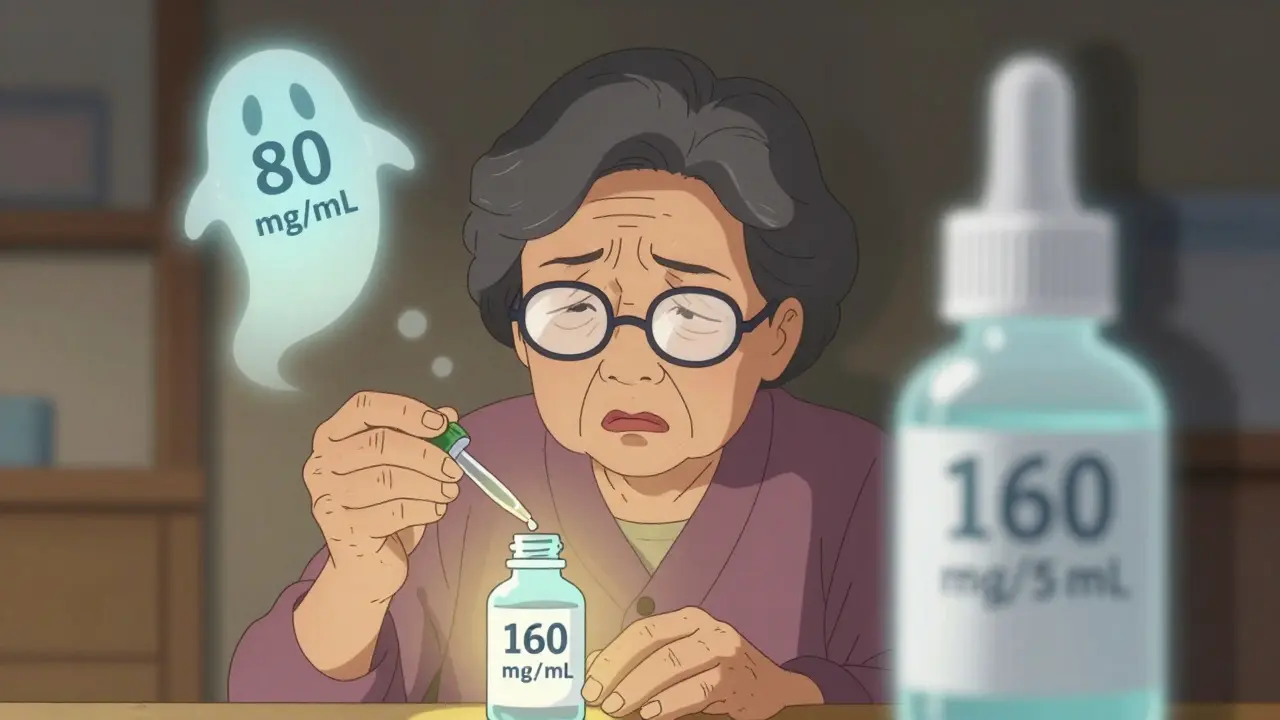
The Five-Step Safety Checklist
Here’s what every parent and caregiver should do every single time before giving medicine to an infant:- Confirm weight - in kilograms. Write it down.
- Calculate the dose - use 10-15 mg/kg for acetaminophen, or follow your doctor’s exact instructions.
- Check the concentration - look at the bottle. Is it 160 mg/5 mL? 50 mg/1.25 mL? Don’t move forward until you’re 100% sure.
- Use an oral syringe - not a dropper, not a cup, not a kitchen spoon. Get one from the pharmacy. They’re cheap. They’re clean. They’re accurate.
- Double-check with someone else - partner, grandparent, friend. Say out loud: "Baby is 7 kg. Dose is 105 mg. Medicine is 160 mg/5 mL. So that’s 3.3 mL. Syringe says 3.3 mL. Yes. Go."
Who’s at Highest Risk?
It’s not just new parents. Grandparents are the most likely to make mistakes. A 2023 study found caregivers over 65 made over three times as many dosing errors as parents under 30. Why? Outdated knowledge. Vision problems. They remember when medicine came in drops that were 80 mg/mL. They don’t know it’s gone. They use the same dropper they used 20 years ago. Kitchen spoons? Still a problem. A 2021 survey found 44% of parents used teaspoons or tablespoons to measure infant medicine. A teaspoon holds 5 mL. But if you’re supposed to give 1.8 mL? You’re giving over 2.5 times too much. And kitchen spoons vary wildly in size. One person’s "teaspoon" is 4.5 mL. Another’s is 6.2 mL. That’s a 38% difference. In medicine? That’s dangerous.What About Cough and Cold Medicine?
Don’t give it. Not even a drop. The FDA banned over-the-counter cough and cold medicines for children under 2 in 2008. In 2021, they extended that warning to kids under 6. Why? These products often contain multiple active ingredients - antihistamines, decongestants, cough suppressants. A baby’s body can’t handle them. They’ve caused seizures, rapid heart rates, and death. Even "natural" remedies like honey? No. Honey can cause infant botulism. Don’t give it to babies under 12 months. If your baby has a cold, use saline drops and a bulb syringe for the nose. A humidifier helps. Fever? Acetaminophen or ibuprofen - if your doctor says it’s okay. That’s it.
Daniel Pate
January 13, 2026 AT 03:40There's a reason hospitals use oral syringes for NICU babies. It's not because they're fancy-it's because accuracy saves lives. I work in pediatrics and I've seen too many parents panic because they used a teaspoon. The dropper that comes with the bottle? Useless. The cap? Designed to confuse. The label? Often faded. If you're not using a syringe, you're gambling with your kid's life. No exceptions.
Jose Mecanico
January 13, 2026 AT 12:11I used to use the dropper until my daughter threw up half the dose. Now I buy syringes in bulk from Amazon. They're $2 for 10. I label them with masking tape: 'Tylenol - 3.2 mL'. I keep them in the fridge with the meds. Simple. No guesswork. My wife and I both check before we give anything. It's not extra work-it's routine now.
Sonal Guha
January 14, 2026 AT 18:33Why are we still talking about this in 2025? The FDA fixed the concentration issue 14 years ago. The dropper problem was documented in 2018. Parents still use kitchen spoons? That's not ignorance-it's negligence. If you can't follow a 5-step checklist for your child's medicine, maybe you shouldn't be in charge of it. Simple. No drama. Just facts.
Lawrence Jung
January 14, 2026 AT 20:31Let me get this straight-you're telling me the solution to a systemic problem is for every parent to become a pharmacist? We're supposed to calculate mg/kg on the fly while juggling a screaming baby? The system is broken. The labels are designed to be confusing. The droppers are junk. The FDA didn't fix anything-they just changed the numbers. The real problem? Corporate packaging that looks identical. You can't expect parents to outsmart marketing departments.
Alice Elanora Shepherd
January 16, 2026 AT 00:03For anyone reading this and thinking, 'I don't have time for all this'-I hear you. I was there. But here's what helped me: I printed the five-step checklist. Laminated it. Put it on the fridge next to the meds. I keep a few oral syringes taped to the bottle. I tell my mom, 'If you're giving medicine, use the syringe. No exceptions.' It's not about being perfect-it's about being consistent. And if you're unsure? Call Poison Control. They're not judgmental. They just want your baby safe.
Konika Choudhury
January 16, 2026 AT 13:02Why do Americans make everything so complicated? In India we just use the dropper and give the right amount. We don't need syringes or apps. We trust our instincts. This over-engineering is just fear marketing. Your baby will be fine. Stop listening to doctors who want you to buy more stuff.
Darryl Perry
January 16, 2026 AT 21:18Oral syringes are mandatory. End of story. If you're using anything else, you're endangering your child. No nuance. No exceptions. This isn't a debate. It's basic safety. If you can't follow this, don't medicate. Call your pediatrician. Or don't give anything. Either way, stop pretending your teaspoon is accurate.
Windie Wilson
January 17, 2026 AT 00:30So let me get this straight-I’m supposed to calculate milligrams per kilogram while my baby screams, I haven’t slept in 72 hours, and the bottle looks exactly like the children’s version? And if I mess up? I’m a bad parent? Meanwhile, the same company that made the confusing bottle also sells $20 'smart syringes' that connect to your phone. This isn’t safety. It’s a cash grab wrapped in guilt.
Abner San Diego
January 18, 2026 AT 10:00My grandma gave my son Tylenol with a teaspoon. He was fine. My mom gave him ibuprofen with the dropper. He was fine. My wife uses a syringe and writes everything down. She’s stressed out all the time. Who’s right? Maybe the system is the problem, not the parents. Maybe we’re making parents feel guilty for being human.
Eileen Reilly
January 18, 2026 AT 12:31lol i just use the dropper and eyeball it. my kid is 3 months and still alive. also i used a kitchen spoon once and he didnt die. maybe the whole thing is overblown? also why are there so many rules? its just medicine. breathe. its not a nuclear launch code.