
Meclizine Safety Checker
Check if Meclizine Is Safe for You
This tool helps determine if meclizine is appropriate for your condition based on age, medical conditions, and medications. It does not replace professional medical advice.
When vertigo hits-suddenly, out of nowhere-it doesn’t just make you feel dizzy. It makes you feel like the room is spinning, your balance is gone, and you might throw up. For many people, meclizine is the first medicine their doctor recommends. It’s been around for decades, sold under names like Antivert and Dramamine Less Drowsy, and still used daily by millions. But here’s the thing: it works, yes-but not without trade-offs.
How Meclizine Actually Works for Vertigo
Meclizine is a first-generation antihistamine, which means it blocks histamine in your brain, especially in areas that control balance and nausea. But it doesn’t stop there. It also has strong anticholinergic effects, meaning it slows down signals in your nervous system that trigger dizziness and vomiting. This dual action is why it’s so effective for vertigo caused by inner ear problems-like labyrinthitis or benign paroxysmal positional vertigo (BPPV).
Back in 1972, a landmark study published in Archives of Neurology showed meclizine cut vertigo symptoms in half compared to placebo. Patients didn’t just feel less dizzy-they had less nausea, less unsteadiness, and fewer episodes of abnormal eye movements (nystagmus). Even more surprising? It worked just as well whether the cause was in the inner ear (peripheral) or the brain (central). That’s rare. Most drugs target one specific type of vertigo. Meclizine? It’s a broad-spectrum fix.
It’s not magic, though. Meclizine doesn’t cure the root problem. It doesn’t fix a damaged inner ear or stop a virus. Instead, it helps your brain adapt. The Cleveland Clinic says it helps your body “maintain its sense of balance”-which is another way of saying it reduces the noise your brain gets from a faulty inner ear. Think of it like noise-canceling headphones for your vestibular system.
The Big Problem: Drowsiness and Brain Fog
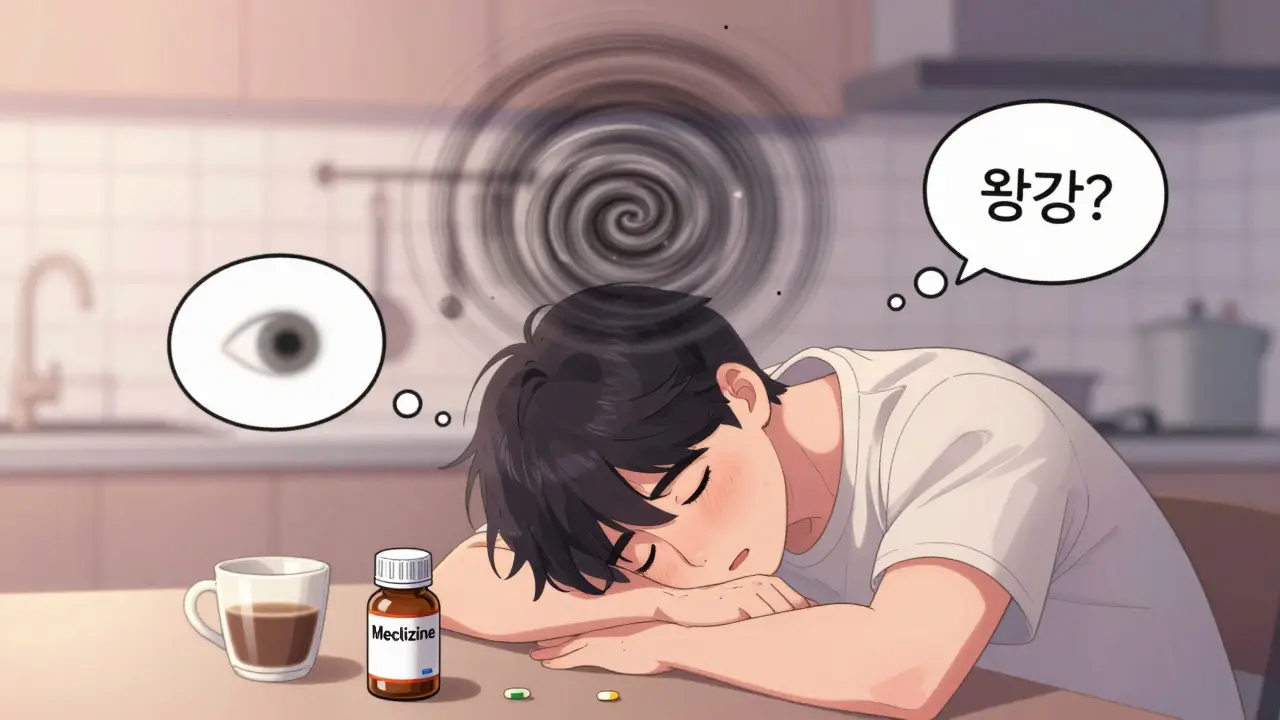
If you’ve ever taken meclizine, you probably know the downside: you feel sleepy. Like, really sleepy. Not just a little tired-enough that you can’t drive, operate machinery, or even read without nodding off.
That’s because meclizine crosses the blood-brain barrier easily. Unlike newer antihistamines like loratadine or cetirizine (which barely touch your brain), meclizine dives right in. The Mayo Clinic warns clearly: “Meclizine may cause some people to become drowsy or less alert than they are normally.” And they’re not sugarcoating it. They tell you not to drive or do anything dangerous until you know how it affects you.
Real people report this. One 68-year-old woman in Toronto said she took meclizine for vertigo after a virus and ended up falling asleep at her kitchen table. Another man, a truck driver, had to quit his job for six weeks because he couldn’t stay awake after taking the 25 mg dose. These aren’t rare cases. In clinical practice, drowsiness is the #1 reason people stop taking it.
And it’s not just sleepiness. Many users report brain fog-slowed thinking, trouble remembering words, feeling “drunk” without alcohol. This is especially risky for older adults. As we age, our bodies process drugs slower, and the anticholinergic effects can mimic early dementia. That’s why doctors are more cautious prescribing it to people over 65.
Other Side Effects You Might Not Expect
Drowsiness gets all the attention, but meclizine has other side effects that can sneak up on you:
- Dry mouth - So common, it’s almost guaranteed. Sipping water helps, but it doesn’t fix the root cause.
- Blurred vision - Blurry eyes aren’t just from tiredness. Meclizine affects muscles in your eyes, making focusing harder.
- Constipation - Slows down your gut. If you’re already prone to it, this can get bad fast.
- Difficulty urinating - Especially in men with enlarged prostates. It’s not just uncomfortable-it can lead to urinary retention.
- Headaches - Surprisingly common. Some people say it helps their vertigo but gives them a daily ache.
These aren’t rare. In fact, in one 2023 survey of 450 vertigo patients using meclizine, over 60% reported at least one of these side effects. And the worst part? They don’t always go away with time. Your body doesn’t always build up a tolerance.

When Meclizine Gets Dangerous
Meclizine isn’t toxic at normal doses. But it gets risky when mixed with other things.
The Mayo Clinic warns: “Do not take meclizine with alcohol, sleeping pills, painkillers, antidepressants, or other antihistamines.” Why? Because all of these depress your central nervous system. Combine them with meclizine, and you’re stacking up the sedation. That’s how people end up in emergency rooms-falling, not waking up, or having trouble breathing.
Even over-the-counter cold medicines can be dangerous. Many contain diphenhydramine or chlorpheniramine-other antihistamines. Taking one for a cold while on meclizine? You’re doubling down on brain fog. One 72-year-old man in Hamilton, Ontario, did exactly that. He took meclizine for vertigo and then took NyQuil for a cough. He was found unconscious the next morning. He survived, but spent three days in the hospital.
Also, don’t use meclizine long-term. It’s meant for short bursts-3 to 7 days for acute vertigo, or 1 hour before travel for motion sickness. Using it for weeks or months? That’s when anticholinergic side effects start damaging your brain. Studies show long-term use in older adults increases the risk of cognitive decline and dementia.
Who Should Avoid Meclizine Altogether?
Some people should never take meclizine. If you fall into any of these categories, talk to your doctor about alternatives:
- Over 65 - Higher risk of confusion, falls, urinary issues.
- Have glaucoma - Meclizine can raise eye pressure.
- Have trouble urinating - Especially if you have prostate problems.
- Have liver or kidney disease - Your body can’t clear the drug properly.
- Are pregnant or breastfeeding - Not enough safety data. Other options exist.
- Take other CNS depressants - Opioids, benzodiazepines, sleep meds, even some antidepressants.
If you’re unsure, ask your pharmacist. They can check for interactions in seconds. Don’t guess.

What Are the Alternatives?
Meclizine isn’t the only option. If side effects are too much, here’s what else doctors use:
- Dimenhydrinate (Dramamine) - Stronger, but even sleepier. Only for short trips.
- Betahistine - Used more in Europe. Less drowsy. Works better for Meniere’s disease.
- Prochlorperazine - For severe nausea. More side effects, but faster.
- Vestibular rehab therapy - Physical therapy for your inner ear. No drugs. Works for BPPV and chronic vertigo.
- Scopolamine patches - For motion sickness. Applied behind the ear. Less drowsy than meclizine.
For many people, especially those with recurring vertigo, physical therapy is the best long-term fix. It trains your brain to compensate for the inner ear damage. No pills. No side effects. Just exercises you do at home.
Dosing and How to Use It Right
Meclizine comes in 12.5 mg, 25 mg, and 50 mg tablets. Most people start with 25 mg once a day. For motion sickness, take it 1 hour before travel. For vertigo, take it daily for 3 to 7 days.
Don’t crush or chew unless it’s labeled chewable. Swallow with water. Don’t take it on an empty stomach if it makes you nauseous. Take it at the same time every day. Don’t skip doses-consistency matters more than higher doses.
And here’s a pro tip: If you feel dizzy the next morning, cut the dose to 12.5 mg. Many people don’t need 25 mg. Lower doses often work just as well-with fewer side effects.
Final Takeaway: Use It Wisely
Meclizine is a powerful tool for vertigo. It works fast. It’s cheap. It’s been tested for over 50 years. But it’s not harmless. The drowsiness isn’t a bug-it’s a feature. And if you ignore that, you’re risking more than just a bad day.
Use it only when you need it. Short-term. Low dose. No alcohol. No other sedatives. And if you’re over 65 or have other health issues, talk to your doctor first.
Vertigo is scary. But you don’t have to live with it-or with the side effects of the medicine meant to help. Sometimes, the best treatment isn’t a pill at all.
Can meclizine make vertigo worse?
No, meclizine doesn’t make vertigo worse. But if you take too much, or take it too long, it can cause dizziness from brain fog or dry inner ear fluid. This isn’t the same as vertigo-it’s a side effect of the drug. If you feel more dizzy after taking it, reduce the dose or stop and talk to your doctor.
Is meclizine safe for seniors?
It’s risky. Older adults are more sensitive to anticholinergic drugs. Meclizine can cause confusion, falls, urinary retention, and even increase dementia risk with long-term use. Many doctors avoid prescribing it to people over 65 unless there’s no other option. Lower doses (12.5 mg) and short use (under 5 days) are safer if used at all.
How long does meclizine last?
The effects last about 12 to 24 hours. Most people take it once daily. The drowsiness usually wears off by the next morning, but not always. If you still feel foggy after 24 hours, you might be taking too much, or your body processes it slowly.
Can I take meclizine with other allergy meds?
No. Many allergy pills (like Benadryl, Claritin-D, Zyrtec-D) contain other antihistamines. Taking them with meclizine can cause extreme drowsiness, confusion, or trouble breathing. Always check labels. If in doubt, ask your pharmacist.
Does meclizine help with nausea from food poisoning?
It can help a little, but it’s not the best choice. Meclizine targets vertigo-related nausea, not stomach bugs. For food poisoning, anti-nausea drugs like ondansetron (Zofran) work better and don’t cause drowsiness. Meclizine might even delay recovery by slowing gut movement.
Is there a non-drowsy version of meclizine?
No. All forms of meclizine-brand or generic-cause drowsiness. That’s how it works. If you need something without sedation, try vestibular rehab therapy, betahistine, or scopolamine patches. They’re not as widely available, but they’re safer for daily use.
Sarah Barrett
February 15, 2026 AT 19:20Meclizine is like that one friend who shows up to every party but leaves you exhausted afterward. It silences the spinning room, sure-but at the cost of your mental clarity. I’ve seen patients on it for weeks, convinced they’re ‘just tired,’ until their spouse mentions they’ve stopped recognizing their own grandchildren. The brain fog doesn’t announce itself with a siren. It creeps in like fog over a lake-quiet, inevitable, and oddly beautiful until you realize you can’t find your keys anymore.
It’s not the drug’s fault. It’s the cultural inertia. We keep prescribing it because it’s cheap, familiar, and the alternatives require effort. But ‘effort’ is the new luxury in modern medicine. Physical therapy? Cognitive retraining? Those take time. A pill? That’s Tuesday.
Still, I’ll take the drowsiness over the fall any day. Vertigo doesn’t care if you’re awake. It just wants you down.
Erica Banatao Darilag
February 17, 2026 AT 18:49i just wanted to say thank you for this post. i’ve been on meclizine for 3 months after my inner ear infection and i didn’t realize how much it was affecting me until i read this. i thought i was just getting old. turns out i was just foggy. i cut my dose to 12.5mg and started vestibular rehab last week. i’m not cured but i’m not falling into the couch anymore. also i didn’t know dry mouth could be this bad. i’ve been drinking water like its my job. lol. thanks for writing this.
ps. i’m so glad you mentioned the nyquil thing. my dad did that and i still think about it.
pps. i’m not a doctor but i’m a nurse and i’ve seen too many people on this stuff for too long.
Michael Page
February 19, 2026 AT 16:31The philosophical irony of meclizine is not lost on me. It is a pharmacological compromise: the brain, a system of exquisite complexity, is asked to tolerate a blunt instrument to restore equilibrium. We do not cure the malfunctioning vestibular apparatus-we merely impose a chemical veil over its noise. This is not medicine. This is sensory suppression. And yet, we call it treatment.
There is a deeper question here: if the mind must be dulled to restore balance, is the balance worth preserving? Or are we merely trading one form of dysfunction for another? The anticholinergic cascade is not an accident-it is the inevitable consequence of a drug designed to override, not heal. We are not treating vertigo. We are sedating its symptoms while pretending the body’s intelligence is irrelevant.
Perhaps the real solution lies not in chemistry, but in re-education. The brain does not need a pill. It needs recalibration. And that, unlike meclizine, cannot be bought in a bottle.
Charlotte Dacre
February 21, 2026 AT 10:51Oh wow, so meclizine is basically the pharmaceutical equivalent of a weighted blanket for your brain? You’re not cured-you’re just drugged into submission. Congrats, you’ve turned vertigo into a sleepy midlife crisis. I’m sure the pharmaceutical reps are doing happy dances right now. ‘Here’s a 50-year-old drug that makes people forget their own names-perfect!’
Meanwhile, people in Europe are doing vestibular rehab like it’s yoga and not some forbidden ritual. We’re so behind. I swear, American medicine is just one big placebo with a side of sedation.
Kapil Verma
February 22, 2026 AT 15:18India has been doing vestibular therapy for centuries. We have ancient yoga practices, Ayurvedic herbs like Ashwagandha, and ear pressure techniques passed down from our ancestors. But no, you Americans need your little white pills. You think science means chemicals? Science means understanding the body, not drowning it in sedatives. This meclizine is just another Western scam. Your bodies are weak because you sit on chairs all day and eat processed food. Fix your lifestyle, not your pharmacy.
My uncle had vertigo for 12 years. He stopped all pills. Started yoga, drank warm water with ginger, slept on the floor. Now he hikes mountains. You think meclizine does that? No. Discipline does.
Mandeep Singh
February 23, 2026 AT 06:32Let me tell you something, this entire post is just a glorified pharmaceutical fear campaign. Meclizine has been used for over 50 years and millions of people take it without issue. You say drowsiness is the #1 side effect? So is sneezing in winter. That doesn’t mean we ban winter. You’re overpathologizing normal drug effects. People have jobs. People drive. They adapt. You think everyone is a 65-year-old with dementia? No. Most of us are 30-year-olds who just need to get through the day. You’re scaring people away from a perfectly safe, effective, affordable medication because you’ve got a blog post and a flair for drama. This isn’t science. This is fearmongering dressed up as education. And don’t even get me started on ‘vestibular rehab’-it’s expensive, time-consuming, and not covered by insurance. Meclizine works. Use it. Stop overthinking.
Also, if you’re taking NyQuil with meclizine, you’re not a patient-you’re an idiot. Don’t blame the drug for your poor choices.
Betty Kirby
February 24, 2026 AT 10:10There’s a reason meclizine is still on the market. Because it works. And because people like it. You want to talk about dementia risk? Fine. But let’s be honest: most people over 65 are already on five other drugs that are worse. Statins. Blood pressure meds. Antidepressants. None of them are clean. Meclizine? It’s a 25 mg pill you take for three days. That’s not a lifetime commitment. That’s a temporary bandage. And sometimes, a bandage is all you need.
Also, if you’re going to lecture people about anticholinergics, maybe start with oxybutynin or diphenhydramine. Those are the real villains. Meclizine is just the middle child-unfairly maligned because it’s cheap and old.
And yes, I’ve taken it. I’m still here. Still driving. Still cooking. And yes, I’m a little sleepy. So what? I sleep better at night. That’s not a bug. That’s a feature.
Josiah Demara
February 24, 2026 AT 19:06You’re all missing the point. This isn’t about meclizine. It’s about the collapse of clinical judgment. Doctors prescribe it because it’s easy. Patients take it because they’re scared. Pharmacies stock it because it’s profitable. And here we are, in 2025, still treating a neurological imbalance with a 1950s antihistamine because nobody had the courage to innovate.
Look at the alternatives. Betahistine? Available in 70 countries. Not FDA-approved. Why? Because it’s generic. No profit margin. Scopolamine patches? Underused because they require a prescription and a pharmacy that actually stocks them. Vestibular rehab? Requires trained therapists. Which we don’t have.
This isn’t a drug problem. It’s a systemic failure. We’ve outsourced care to a pill because we’ve abandoned rehabilitation, education, and prevention. Meclizine is the symptom, not the cause. The real tragedy? We’re still talking about it like it’s a choice between good and evil. It’s not. It’s a compromise we’re too lazy to fix.
Kaye Alcaraz
February 26, 2026 AT 03:07