
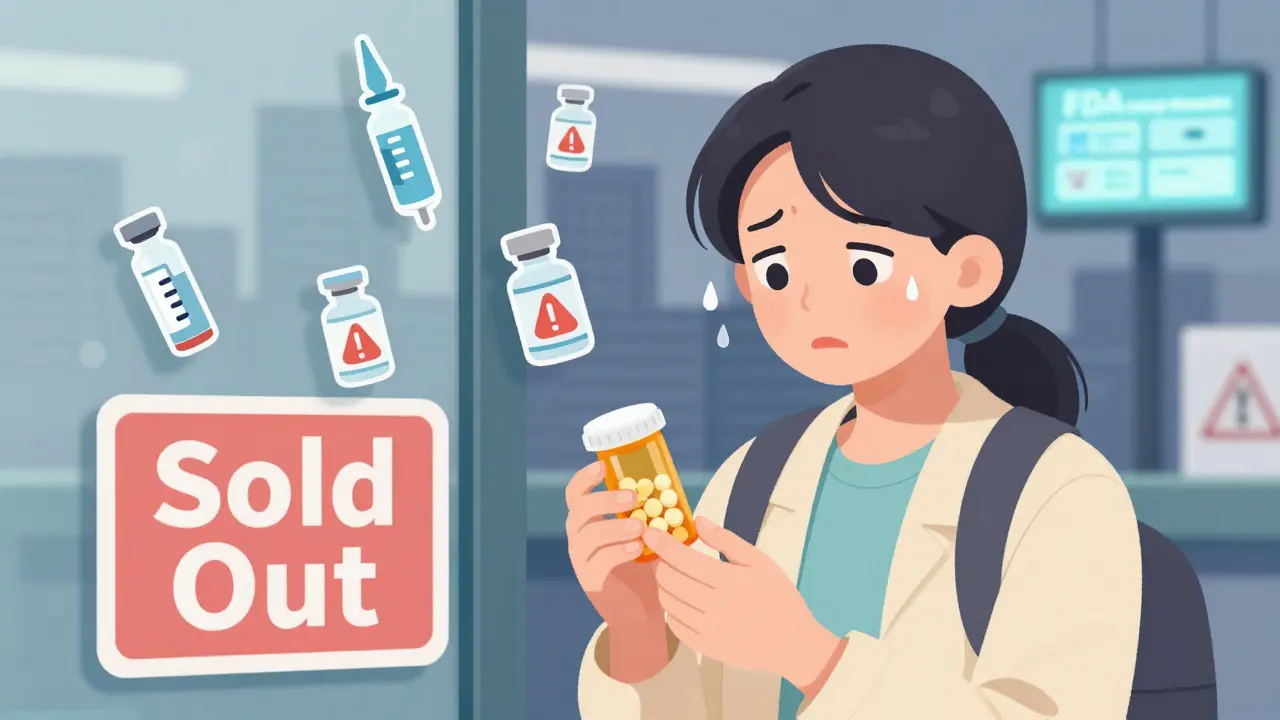
When your prescription runs out and no pharmacy has it in stock, it’s not just inconvenient-it’s dangerous. In 2025, over 258 different active drug ingredients were in short supply across the U.S., affecting nearly 2,000 prescription medications. Some of the most critical shortages involve insulin, antibiotics like amoxicillin, chemotherapy drugs, and injectable pain relievers. These aren’t temporary hiccups. Nearly 75% of current shortages have lasted over a year, and more than half have been going on for two years or longer. If you’re running out of medication and can’t find it, you’re not alone-and you don’t have to panic.
First, check if your drug is actually in shortage
Don’t assume every out-of-stock situation is a nationwide shortage. Sometimes, it’s just your local pharmacy’s inventory issue. The FDA Drug Shortage Database is the most reliable source for confirmed, active shortages. Type in your medication’s generic or brand name. If it shows up as “active,” you’re dealing with a real shortage. If it’s not listed, try calling other pharmacies in your area. Mail-order pharmacies often have different stock than local ones. In March 2025, a patient in North Carolina spent three days calling seven pharmacies before finding Semglee insulin. The key? Don’t give up after one or two calls.Ask your doctor about therapeutic alternatives
Not all drugs have direct replacements, but many do. The goal isn’t to find an identical drug-it’s to find one that works just as well for your condition. For example, when Semglee (a biosimilar to Lantus) ran short, Blue Cross NC allowed pharmacists to switch patients to Lantus without a new prescription. Why? Because they’re therapeutically equivalent. But switching from Lantus to Toujeo or Tresiba? That requires a new prescription because they’re not interchangeable. Your doctor needs to know which substitutions are safe and approved for your specific case.Understand biosimilars and generic equivalents
Biosimilars are not the same as generics, but they’re close. A biosimilar is a highly similar version of a biologic drug-like insulin or rheumatoid arthritis treatments-made from living cells. Semglee is a biosimilar to Lantus. That means they work the same way in your body. The FDA approves them only after proving they’re just as safe and effective. When a brand-name drug is in short supply, biosimilars are often the first alternative. But not all pharmacies or insurers know this. If your pharmacist says they can’t substitute, ask them to check the FDA’s interchangeability list. You might be eligible for a switch without waiting for a new prescription.Call your insurance company
During shortages, insurers often change their formularies to make alternatives more accessible. Blue Cross NC removed prior authorization requirements for Lantus on several plans during the Semglee shortage. That means you could get it without jumping through extra hoops. But you won’t know unless you ask. Call your insurer and say: “My medication is in shortage. What alternatives are covered under my plan without extra approval?” Some insurers even create temporary lists of approved substitutes during crises. Don’t assume your plan won’t cover something-ask before you assume.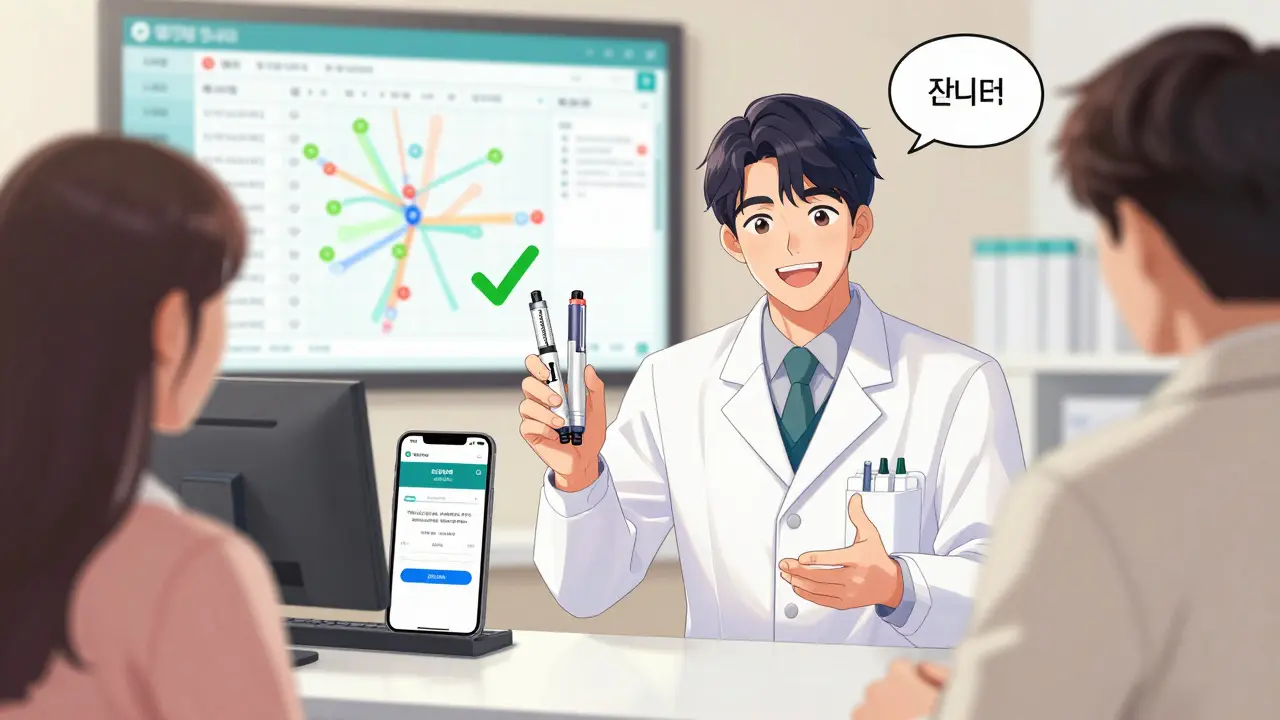
Use your pharmacist as a resource
Pharmacists are on the front lines of shortages. They see what’s in stock, what’s coming in, and what’s being substituted. In 2025, 89% of major pharmacy chains offered dedicated shortage counseling services. You don’t need to be a patient of that pharmacy to ask. Walk in or call and say: “I’m looking for [medication]. Is it available anywhere in your network? Are there alternatives you’d recommend?” Many pharmacists now use real-time inventory tools that show stock across multiple locations. They can often tell you which nearby pharmacy has it-or what else might work.Check state-level solutions
Some states are taking bold steps to fix shortages. In Hawaii, Medicaid now allows pharmacists to dispense drugs approved in other countries-like Canada or the EU-if U.S. versions are unavailable. New Jersey proposed letting pharmacists hand out emergency insulin supplies without a prescription during shortages. California, New York, and Massachusetts have started stockpiling critical drugs like abortion medications and insulin in case federal policies disrupt supply. While you can’t control state policy, you can use it. If you live in one of these states, ask your pharmacist: “Does my state have any emergency access programs for drug shortages?” It could be the difference between getting your medication and going without.What NOT to do during a shortage
Don’t skip doses. Don’t split pills unless your doctor says it’s safe. Don’t buy from random websites. The FDA warns that 96% of online pharmacies selling prescription drugs are illegal. Fake insulin, counterfeit antibiotics, and diluted painkillers are flooding the dark web. A patient in Ohio tried ordering amoxicillin from a “discount pharmacy” during the 2025 shortage-only to find the pills had no active ingredient. That’s not just a waste of money-it’s life-threatening.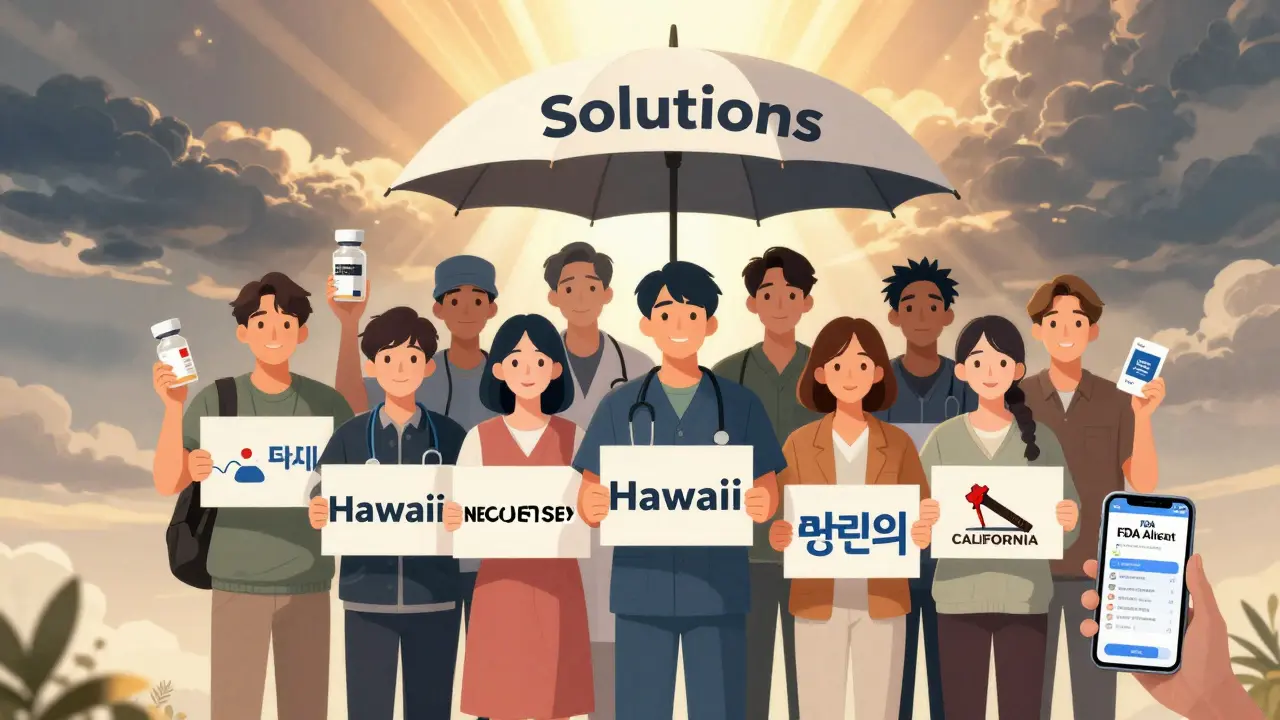
When alternatives aren’t enough
Some drugs, especially chemotherapy agents and pediatric medications, have no safe substitutes. In 2025, 15 oncology drugs were in shortage, and 7 of them were used for children’s cancers. In these cases, doctors may need to delay treatment, adjust dosages, or use off-label alternatives with close monitoring. If you’re in this situation, ask your oncologist or specialist: “What’s the plan if we can’t get this drug? Are there clinical trials or compassionate use programs?” Many hospitals have emergency access protocols for these exact scenarios. Don’t wait until the last minute to ask.How to prepare for the next shortage
Shortages aren’t going away. The FDA increased inspections for critical drug manufacturers from quarterly to monthly in early 2025-and still saw only a 15% drop in new shortages. The root problem? Too many generic drugs are made by just five companies. One factory shutdown can ripple across the country. To protect yourself:- Keep a list of your medications, including generic names and dosages.
- Ask your doctor now: “What are my alternatives if this drug runs out?”
- Set up automatic refills with mail-order pharmacies-they often have better inventory.
- Sign up for alerts from the FDA Drug Shortage page.
- Call your pharmacy weekly during known shortage periods.
Patients who took these steps were 68% more likely to transition smoothly during a shortage, according to a 2025 survey by the Sterling Institute. Those who didn’t-32% of respondents-stopped taking their meds early, risking serious health consequences.
What’s changing in 2026
The good news? Solutions are starting to take shape. Pilot programs at 47 major health systems are using real-time data tools that flag drug shortages at the moment a doctor writes a prescription. One system reduced the time to find an alternative by 28%. New York is pushing for a public, searchable database showing which pharmacies have which drugs in stock. If passed, it could be a game-changer. Until then, your best tools are knowledge, persistence, and asking the right questions.What should I do if my insulin is in shortage?
First, check the FDA’s Drug Shortage Database to confirm the shortage. If you’re on Semglee, ask your doctor or pharmacist if you can switch to Lantus-no new prescription is needed because they’re interchangeable biosimilars. If Lantus isn’t available, call multiple pharmacies, including mail-order services. Some insurers have removed prior authorization for Lantus during shortages. Never substitute with Toujeo or Tresiba without a new prescription, as they’re not interchangeable. If you can’t find any insulin, contact your manufacturer-they often provide shortage timelines and emergency supply programs.
Can I use a drug approved in another country?
In most cases, no-unless you live in a state that allows it. Hawaii’s Medicaid program began permitting foreign-approved drugs in early 2025 under special FDA waivers. This is rare and only applies to specific drugs under strict conditions. You can’t legally import foreign versions on your own. But if you’re on Medicaid in Hawaii or another state with similar rules, ask your pharmacist if it’s an option. Never buy from international websites-they’re often counterfeit.
Are generic drugs more likely to be in shortage?
Yes. About 90% of U.S. prescriptions are for generics, but 85% of them are made by just five manufacturers. If one factory has a quality issue or shuts down, dozens of generic drugs can vanish overnight. That’s why shortages hit antibiotics, injectables, and chemotherapy drugs hardest-they’re mostly generic and made in a handful of plants. Brand-name drugs rarely run out unless they’re discontinued. The system is fragile by design.
How long do drug shortages usually last?
The average shortage lasts 12 to 18 months. About 58% last two years or longer. Some, like certain chemotherapy agents, have been in shortage for over five years. The FDA says manufacturing and quality problems are the top causes-often tied to aging equipment, supply chain delays, or lack of profit incentive for generic makers. There’s no quick fix. Planning ahead is the only reliable strategy.
Should I stockpile my medication?
Only if your doctor approves it. Some medications, like insulin or heart drugs, can’t be safely stored long-term. Others, like antibiotics or thyroid pills, may be okay if kept dry and cool. But stockpiling without medical guidance can be dangerous. Expired or improperly stored drugs lose potency or become unsafe. Instead of hoarding, ask your doctor for a 30- to 90-day extra supply if your condition is stable. Most insurers allow this for chronic conditions during known shortage periods.
Doreen Pachificus
January 5, 2026 AT 10:06Been there. Last month my amoxicillin vanished for three weeks. Called 12 pharmacies. One had it hidden in the back because the manager was hoarding it for his kid’s ear infection. Wild, right? I ended up getting a prescription for cephalexin and it worked fine. Just gotta keep pushing.
Stephen Craig
January 5, 2026 AT 22:19The real issue isn’t the shortage-it’s the consolidation of generic manufacturing. Five factories control 85% of the market. One shutdown, and you’ve got a national crisis. We treat drugs like commodities, not necessities. That’s the flaw in the system.
Ethan Purser
January 7, 2026 AT 12:55THIS IS A SCAM. The government lets these big pharma companies hoard supply to jack up prices. You think the insulin shortage is accidental? Nah. It’s calculated. They want you to panic so you’ll pay $300 for a vial instead of $30. And don’t even get me started on how they bribe the FDA. I’ve seen the emails. It’s not broken-it’s designed this way.
Charlotte N
January 8, 2026 AT 12:36i called my pharmacist like the article said and she actually had a list of nearby stores with semglee in stock?? like?? i didn’t even know that was a thing?? also my insurance just approved lantus without prior auth?? wow??
Connor Hale
January 9, 2026 AT 08:56People don’t realize how fragile the supply chain is. A single power outage in a plant in India can knock out metformin for six months. We’ve outsourced too much and treated drug production like a cost center, not a public good. It’s not about blame-it’s about rebuilding resilience. We need multiple sources, not just five factories holding the country hostage.
Roshan Aryal
January 10, 2026 AT 08:34USA is a joke. You have a nation of people crying about insulin while China and India produce 90% of the world’s generics and you still can’t get your meds? You import everything from your phones to your vitamins but act shocked when the pipeline breaks? This isn’t a shortage-it’s the result of decades of lazy policy and entitlement. Stop blaming corporations and start blaming your own government for outsourcing everything.
Catherine HARDY
January 12, 2026 AT 03:39Did you know the FDA gets pressure from Big Pharma to delay listing shortages until after quarterly earnings? I’ve got a friend who works in regulatory affairs. They sit on data for weeks so stocks don’t dip. And the ‘biosimilar’ switch? That’s just a trick to make you think it’s safe. The FDA approves them on tiny trials. What if your body reacts differently? No one tells you that.
bob bob
January 12, 2026 AT 09:18Just want to say thank you to the pharmacist who helped me last month. Walked in desperate, she spent 20 minutes calling three other locations and found my insulin. She didn’t even charge me for the call. These people are heroes. We forget that.
Jack Wernet
January 13, 2026 AT 16:38Thank you for sharing this comprehensive guide. The emphasis on consulting pharmacists and insurers is particularly valuable. Many patients remain unaware of the extent of their resources during these crises. The data on state-level interventions, such as Hawaii’s foreign-drug policy, demonstrates the potential for localized innovation to mitigate systemic failures. A well-researched and compassionate resource.