
When you're taking strong medications-especially for cancer-your mouth can become one of the most painful places on your body. It’s not just a sore throat or a tiny canker bump. These are deep, open ulcers that make eating, talking, and even swallowing unbearable. They don’t show up overnight. They build slowly, often starting as redness or a burning feeling, then breaking open into raw, bleeding sores. And they’re not rare. Up to 100% of people getting certain chemotherapy or radiation treatments develop them. The good news? You don’t have to just wait for them to happen. There are proven ways to stop them before they start.
Why Medications Cause Mouth Sores
It’s not a coincidence. Chemotherapy and radiation don’t just target cancer cells. They hit every fast-growing cell in your body-including the ones lining your mouth. These cells renew every few days, which is why they’re so vulnerable. When they’re damaged, the protective barrier breaks down. Bacteria move in. Inflammation follows. Then comes the pain. This condition is called oral mucositis, and it’s one of the most common and under-treated side effects of cancer therapy.
Not all medications cause this. But the big ones do: drugs like 5-fluorouracil (5-FU), melphalan, methotrexate, and cisplatin. Radiation to the head and neck area is even more likely to trigger it. The severity can range from mild redness to open sores so deep you can’t eat solid food. The worst cases can force hospital stays, delay treatment, and cost thousands extra in care.
Prevention Is the Only Real Strategy
Once a mouth ulcer forms, it’s hard to heal fast. That’s why every expert agrees: prevention beats treatment. The Multinational Association of Supportive Care in Cancer (MASCC/ISOO) says this clearly: start protecting your mouth before treatment begins. Waiting until you’re in pain means you’re already behind.
Here’s what works-backed by clinical trials and real patient results.
Ice Chips for Certain Chemotherapies
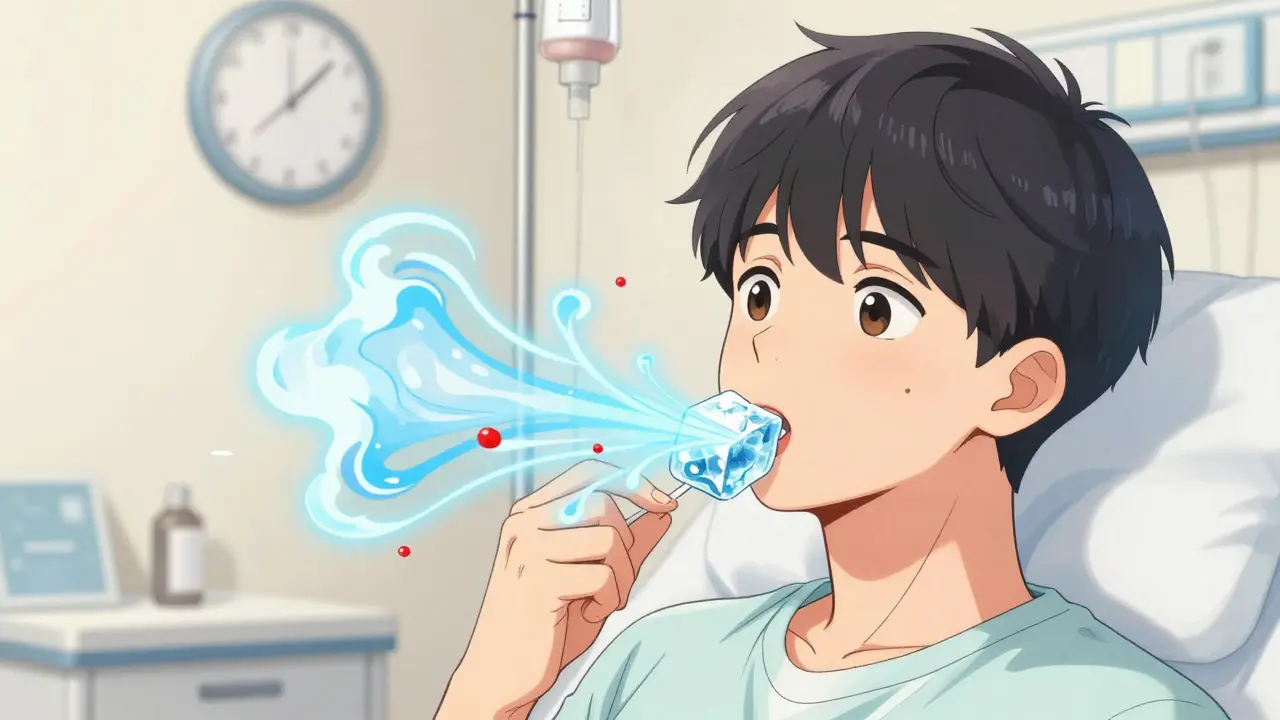
If you’re getting 5-FU or melphalan, ice chips are your best friend. Not just a few bites. You need to suck on them continuously for 30 minutes, starting just 5 minutes before your infusion. The cold narrows blood vessels in your mouth, so less of the drug reaches your oral tissue. A 2015 Cochrane review found this cuts severe mouth sores in half. It’s free, safe, and simple. But 42% of people quit because it’s too cold. If you can’t handle it, talk to your team about alternatives.
Benzydamine Mouthwash for Radiation Patients
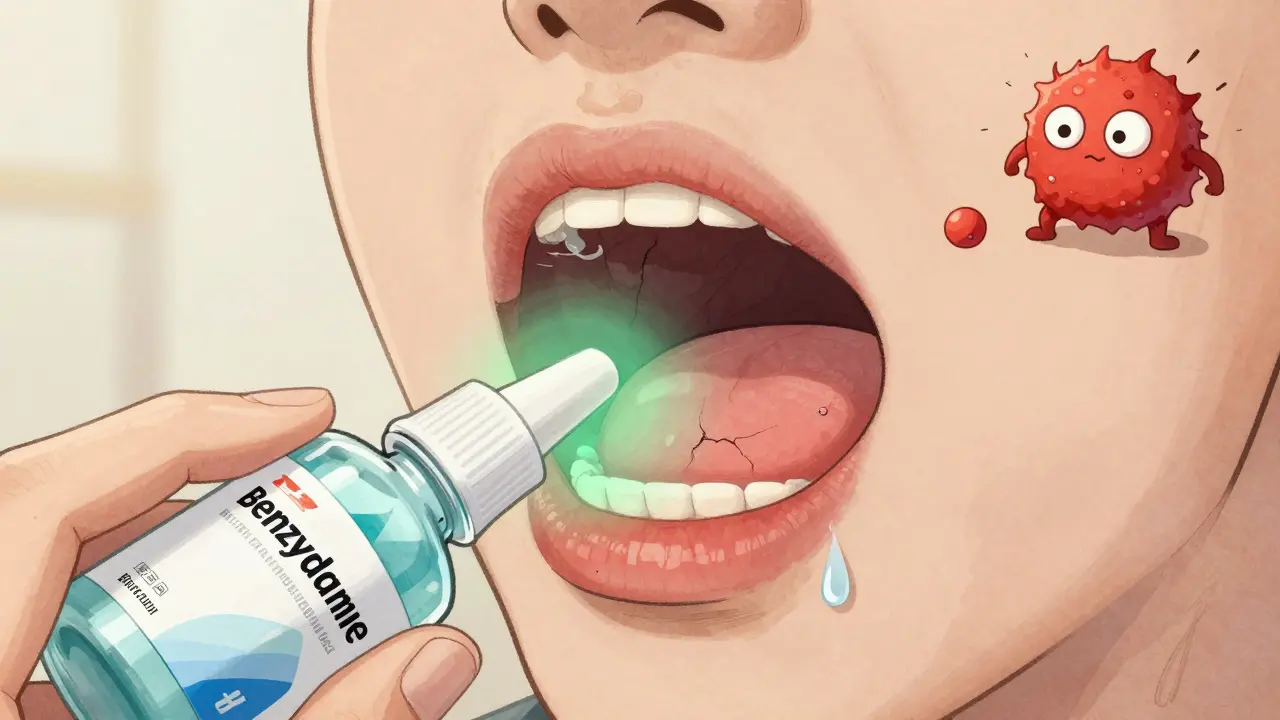
For those getting head and neck radiation, benzydamine hydrochloride 0.15% mouthwash is the gold standard. Used 3-4 times a day, starting before treatment, it reduces severe ulcers by 34%. It’s anti-inflammatory, not antibacterial. That means it doesn’t kill good bacteria-just calms the inflammation. Cost? Around $15-25 per course. Side effects? A brief stinging sensation when you first swish it. But 82% of users keep using it because the pain relief is real. Avoid it if you’re allergic to aspirin or NSAIDs.
Palifermin for Stem Cell Transplant Patients
This is a powerful drug-given as an IV injection before and after high-dose chemo for stem cell transplants. It tells your mouth cells to grow faster, replacing damaged tissue before ulcers form. In studies, it dropped severe mouth sores from 63% to 20%. But it costs over $10,500 per treatment. Most insurance covers it for transplant patients, but if you’re uninsured, it’s out of reach. It’s not for everyone-but if you’re getting a transplant, ask your doctor about it.
Glutamine: Mixed Results, But Worth Trying
Glutamine is an amino acid your body uses to repair tissue. Swishing 15 grams dissolved in water, four times a day, helped some patients in trials-cutting ulcer duration by 43%. But other studies showed no benefit. It seems to work best for people getting radiation for head and neck cancer. If you try it, swish for two full minutes before swallowing. Don’t expect miracles, but it’s low-risk and cheap.
Low-Level Laser Therapy (LLLT)
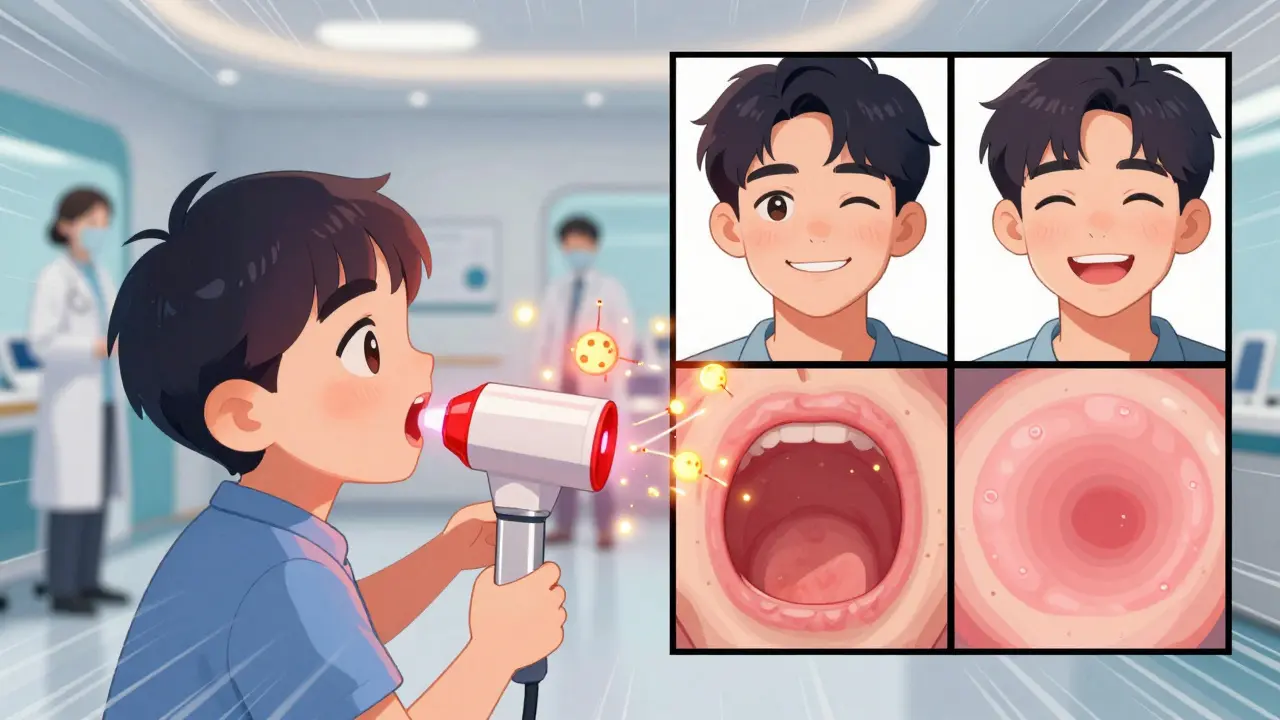
This is new, but promising. A 2023 study in JAMA Network Open showed that using a specific type of red light (650nm wavelength, 40mW power) on the mouth before and during treatment cut severe ulcers from 41% to 18%. It’s painless, non-invasive, and used in over 200 cancer centers now. Ask if your hospital offers it. It’s not everywhere yet, but it’s growing fast.
What Doesn’t Work (and Why)
Many people assume mouthwashes like chlorhexidine help. They don’t-not really. Studies show it only reduces risk by 15%, and it can stain your teeth brown if used too long. It also messes with taste for 28% of users. The American Dental Association says it’s overused. Don’t rely on it.
Antibiotics? Don’t take them to prevent mouth sores. A 2021 JAMA Internal Medicine study found they raise your risk of a dangerous gut infection called C. diff by 27%. Your mouth isn’t infected-it’s inflamed. Antibiotics won’t fix that.
Benzocaine gels? Avoid them. The FDA warns they can cause a rare but serious blood condition called methemoglobinemia, especially in kids. Even adults should avoid them. They numb the pain temporarily but don’t help healing.
Daily Oral Care Routine
Even if you’re using advanced treatments, your daily habits matter. Here’s what to do:
- Brush with a soft-bristle toothbrush (bristles under 0.008 inches) twice a day. Use fluoride toothpaste-no sodium lauryl sulfate (SLS). SLS dries out your mouth and triggers sores.
- Rinse after meals with a baking soda solution: 1 teaspoon in 8 ounces of water. It neutralizes acid and soothes irritation.
- Never use alcohol-based mouthwashes. They burn.
- Stay hydrated. Dry mouth makes sores worse. Use artificial saliva like Biotene or take pilocarpine tablets (5mg, 3 times daily) if your doctor recommends it.
- See a dentist 2-4 weeks before treatment starts. Get cavities filled, remove loose teeth, and clean your mouth thoroughly. 78% of severe cases can be prevented with pre-treatment dental care.
Pain Relief When Sores Are Already There
If you already have ulcers, your goal is comfort and healing. Here’s what helps:
- Gelclair: This gel coats your mouth like a protective film. It’s not a cure, but 71% of users say it gives immediate relief that lasts up to 4 hours. The downside? It feels slimy. You might gag at first, but most get used to it.
- Dexamethasone mouthwash: A prescription rinse (0.5mg/5mL) used 4 times a day cuts pain scores by 37%. It’s a steroid, so use it only as directed. Don’t swallow it.
- Allopurinol mouthwash: Dissolve 500mg in 20mL water and swish 4 times a day. Early studies show it helps with radiation-induced sores. Not proven for chemo yet, but worth asking about.
- Use a children’s toothbrush if your gums are tender. The smaller head and softer bristles cause less irritation.
- Eat soft, cool foods. Avoid spicy, acidic, or crunchy stuff. Smoothies, yogurt, mashed potatoes, and scrambled eggs are good options.
What Patients Are Saying
Real people share what works on forums like CancerCare and Reddit. Common tips:
- "I sucked on ice chips for 30 minutes every day during my 5-FU treatment. I had zero ulcers. My nurse said I was the only one who stuck with it."
- "Gelclair saved my ability to talk. I used it before meetings. It felt weird, but I’d rather be slimy than in pain."
- "I switched to toothpaste without SLS. My sores got better in three days."
- "I tried glutamine. Swished it for 2 minutes, then swallowed. It didn’t stop my sores, but they healed faster."
- "I couldn’t afford palifermin. My insurance denied it. I used benzydamine and ice chips instead. I’m still here."
What’s Coming Next
Researchers are working on better tools. A risk-prediction model from Memorial Sloan Kettering uses 12 factors-like your age, cancer type, and gene markers-to predict who’s most likely to get severe sores. That way, only high-risk patients get expensive treatments like palifermin. It’s 84% accurate.
New drugs like GC4419, a superoxide dismutase mimetic, are in phase 3 trials. Early results show it shortens the duration of severe ulcers by 38%. It could be available within two years.
More hospitals are required to have oral care protocols now. Medicare and Medicaid tie reimbursement to how many patients develop mouth sores. That’s pushing clinics to take prevention seriously.
Final Thoughts
Mouth sores from medication aren’t inevitable. They’re predictable-and preventable. You don’t need to suffer through them. Talk to your oncologist and dentist before treatment starts. Ask about ice chips, benzydamine, or laser therapy. Don’t settle for chlorhexidine just because it’s easy. Don’t use benzocaine. Don’t skip dental visits.
Your mouth is your gateway to nutrition, communication, and comfort. Protect it like you would your heart or lungs. The right steps, started early, can mean the difference between painful weeks and manageable days.
Alfred Schmidt
January 11, 2026 AT 07:23Ice chips? Really? That’s it? You’re telling me the entire medical community can’t do better than freezing your mouth like a popsicle? I’ve seen dogs with more dignity than this. And don’t even get me started on that $10k palifermin-why is it only for transplant patients? My cousin got 5-FU and ended up in the ER because her dentist was ‘too busy.’ This system is a joke.
Alex Smith
January 11, 2026 AT 18:41So let me get this straight-you’re telling me the best way to prevent oral mucositis is to… suck on ice? And that’s the gold standard? I mean, sure, it’s cheap, but it’s also kind of absurd. Like, if we’re this desperate, maybe we should just start giving people mouth-shaped ice cube trays with motivational quotes. ‘You got this, Karen. Brrr.’
Michael Patterson
January 12, 2026 AT 11:45Okay so i read this whole thing and like i get it but honestly the biggest problem isnt even the sores its the fact that no one talks about how it affects your mental health like you cant eat you cant talk you cant even smile without crying and then the nurses just hand you a cup of water and say ‘try not to touch it’ like bro its not a burn its your whole mouth falling apart and why is no one talking about the depression that comes with this? Like i had to stop working because i was too tired from the pain and the shame of looking like a wounded animal at the grocery store and i just want someone to say ‘hey you’re not alone’ but instead we get a list of mouthwashes and ice chips like we’re just some kind of dental experiment
Priya Patel
January 14, 2026 AT 11:33OMG I DID THIS!! I was on 5-FU and I sucked on ice chips like my life depended on it (it did) and I had ZERO ulcers!! My oncologist was shocked-I was the only one who didn’t need Gelclair. I even brought a thermos of ice to chemo and everyone laughed… until they saw me eating a sandwich two weeks later. 😌 I swear, if you can handle the cold, DO IT. It’s free, it’s simple, and it’s magic.
Jennifer Littler
January 16, 2026 AT 00:20While the clinical data on benzydamine and LLLT is compelling, the translational applicability remains constrained by systemic access disparities. The cost-benefit ratio of palifermin, for instance, is heavily skewed toward institutionalized care models, which inherently exclude marginalized populations. Further, the absence of standardized protocols across oncology centers creates significant heterogeneity in preventive outcomes. A multi-institutional registry would be a necessary next step.
Jason Shriner
January 17, 2026 AT 15:15So… we’re giving people ice cubes like they’re toddlers and calling it medicine? I mean, if I had a dollar for every time someone told me ‘just suck on ice’… I could afford palifermin. Also, why is no one talking about how this whole thing makes you feel like a broken robot? Your mouth is supposed to be a gateway to joy-food, kissing, laughing. Now it’s just a raw meat wound with a straw stuck in it. We’ve got lasers and gene therapy but the solution is still… cold.
Sean Feng
January 19, 2026 AT 10:01Ice chips. Benzydamine. Glutamine. LLLT. All these fancy terms and you still end up with a mouth full of blood. Why not just say: ‘Your body is being bombed, you’re gonna hurt, deal with it.’ At least be honest. All this prevention crap is just a distraction while they keep giving you poison.
Priscilla Kraft
January 20, 2026 AT 22:16This is so helpful!! 🙏 I just started chemo last week and was terrified about mouth sores. I already ordered the SLS-free toothpaste and got a thermos of ice ready. I’m trying benzydamine tomorrow too. If anyone else is going through this, you’re not alone. We got this 💪✨
Vincent Clarizio
January 21, 2026 AT 04:12Let’s be real-this entire post is just a glorified marketing brochure for Big Pharma’s latest cash grab. Ice chips? That’s not prevention, that’s desperation. Palifermin? A $10,500 placebo with a fancy name. And don’t even get me started on the ‘low-level laser therapy’-it’s just a fancy red light. You know what really prevents oral mucositis? Not getting cancer in the first place. But hey, keep buying your $25 mouthwashes while the system laughs all the way to the bank.
Sam Davies
January 21, 2026 AT 09:37Ice chips? How quaint. In my day, we just drank saltwater and thanked the gods we weren’t in the 19th century. Honestly, this whole thing reads like a BuzzFeed listicle written by a nurse with a thesaurus. Palifermin? More like ‘pay for it yourself’-min. And why are we still using the word ‘ulcer’? It’s not a gastric thing. It’s mucositis. Please, we’re not in 2003.
Christian Basel
January 22, 2026 AT 23:35LLLT is pseudoscience. Glutamine? Inconclusive. Benzydamine? Only marginally effective. The real issue is the lack of standardized dosing and patient stratification. The entire field is underpowered and overhyped. Also, chlorhexidine is fine if used correctly-your sample bias is showing.
Matthew Miller
January 24, 2026 AT 22:17Wow. So you wrote a 2000-word essay to say ‘suck on ice.’ Congratulations. You just turned a life-or-death side effect into a TikTok hack. Meanwhile, people are dying because their insurance won’t cover the one thing that actually works. You’re not helping. You’re distracting. And you’re making it sound like this is all manageable when it’s not.
Madhav Malhotra
January 26, 2026 AT 03:53This is amazing! In India, most people don’t even know these things exist. My sister went through chemo and suffered so much because no one told her about ice chips or SLS-free toothpaste. I’m sharing this with every cancer support group I know. Thank you for writing this. We need more of this in our languages too.
Roshan Joy
January 27, 2026 AT 11:04Just started radiation next week and I’m trying all of this. I’ve already ordered the baking soda rinse and got a soft brush. I’m also asking my oncologist about LLLT-my hospital doesn’t have it yet, but I’m pushing. If anyone’s curious, I’ll update how it goes. You’re not alone in this. 💪
Adewumi Gbotemi
January 27, 2026 AT 19:05My cousin had this in Nigeria. No ice chips. No special toothpaste. Just water and prayer. But she survived. Maybe the real secret is not the medicine-it’s not giving up.