
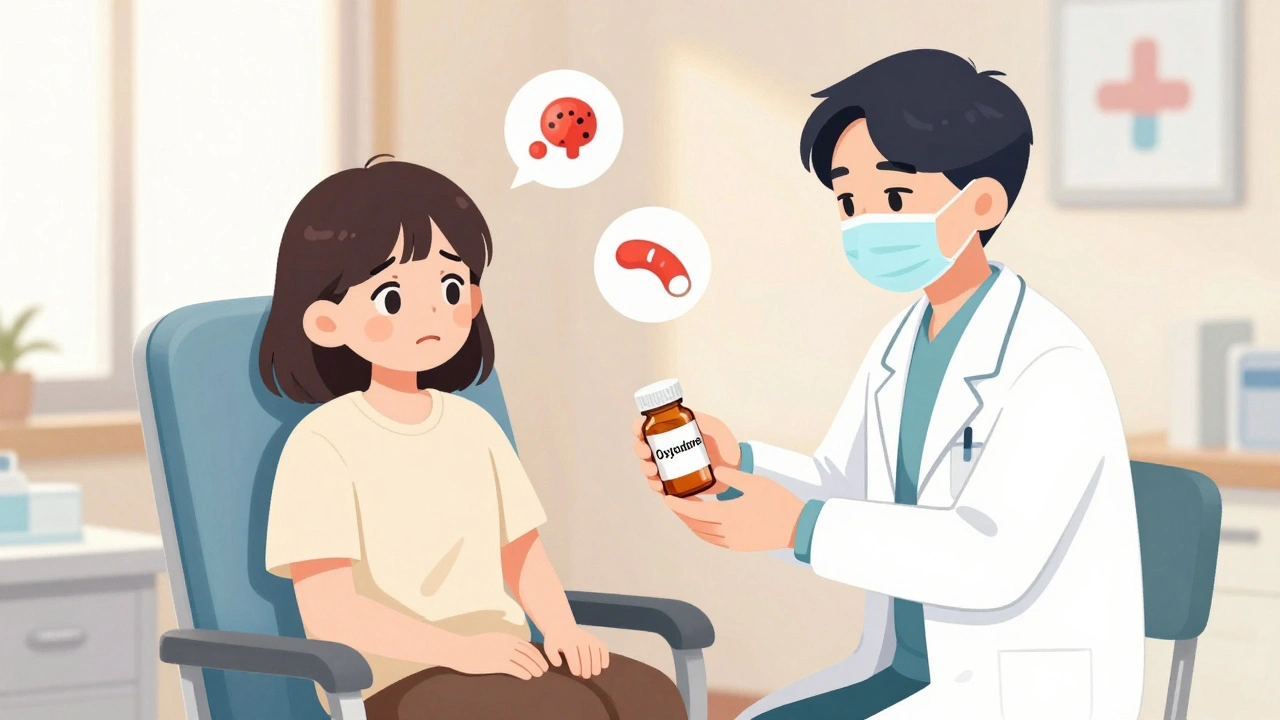
Opioid Conversion Calculator
Opioid Conversion Tool
Calculate safe starting doses when rotating opioids based on evidence-based conversion ratios. Always reduce by 25-50% as recommended by medical guidelines.
When opioids stop working the way they should, it’s not always because the pain is getting worse. Sometimes, it’s because your body has had enough of the side effects - the dizziness, the nausea, the foggy head, the constipation that won’t quit. That’s when opioid rotation becomes more than just a medical term. It’s a real solution for people who are stuck between uncontrolled pain and unbearable side effects.
Why Opioid Rotation Isn’t Just About Dose Increases
Many patients and even some providers think the only way to manage worsening pain is to keep increasing the opioid dose. But that’s like turning up the volume on a broken speaker - it gets louder, but it doesn’t sound better. In fact, pushing the dose higher often makes side effects worse without improving pain control. That’s where opioid rotation comes in.Opioid rotation means switching from one opioid medication to another - for example, going from morphine to oxycodone, or from fentanyl patches to methadone. It’s not about changing the strength. It’s about changing the drug itself. The goal? To keep pain under control while cutting down on the bad stuff your body doesn’t tolerate.
Studies show that between 50% and 90% of people who switch opioids see a drop in side effects like nausea, vomiting, or confusion. Some even feel better pain relief, even if their total daily dose goes down. This isn’t magic. It’s biology. Your body processes each opioid differently. What causes drowsiness with one drug might not even register with another.
When Is Opioid Rotation the Right Move?
You don’t just switch opioids because you’re bored with your current pill. There are clear, evidence-backed reasons to consider rotation:- You’re getting intolerable side effects - like constant vomiting, extreme drowsiness, or muscle twitching - even at doses that should be safe.
- Your pain isn’t improving, even after increasing your dose by more than 100%.
- You’ve developed new health issues, like kidney or liver problems, that make your current opioid risky.
- You need to change how you take the medicine - from pills to a patch, or from oral to injection.
- You’re on a drug that interacts badly with other medications you’re taking.
- You’ve been diagnosed with opioid-induced hyperalgesia - where the opioids themselves are making your pain worse.
One important note: if you’re having a sudden flare-up of pain - a crisis - rotation isn’t the first step. That needs immediate, targeted care. Rotation is for long-term management, not emergencies.
The Most Common Swaps and What They Do
Not all opioids are created equal. Some are better for certain side effects. Here’s what clinicians see in practice:- Oxycodone often causes less nausea and constipation than morphine. Many patients switch to oxycodone and report clearer thinking and better digestion.
- Fentanyl (especially patches) is useful when swallowing pills becomes hard. It’s also linked to fewer gastrointestinal issues.
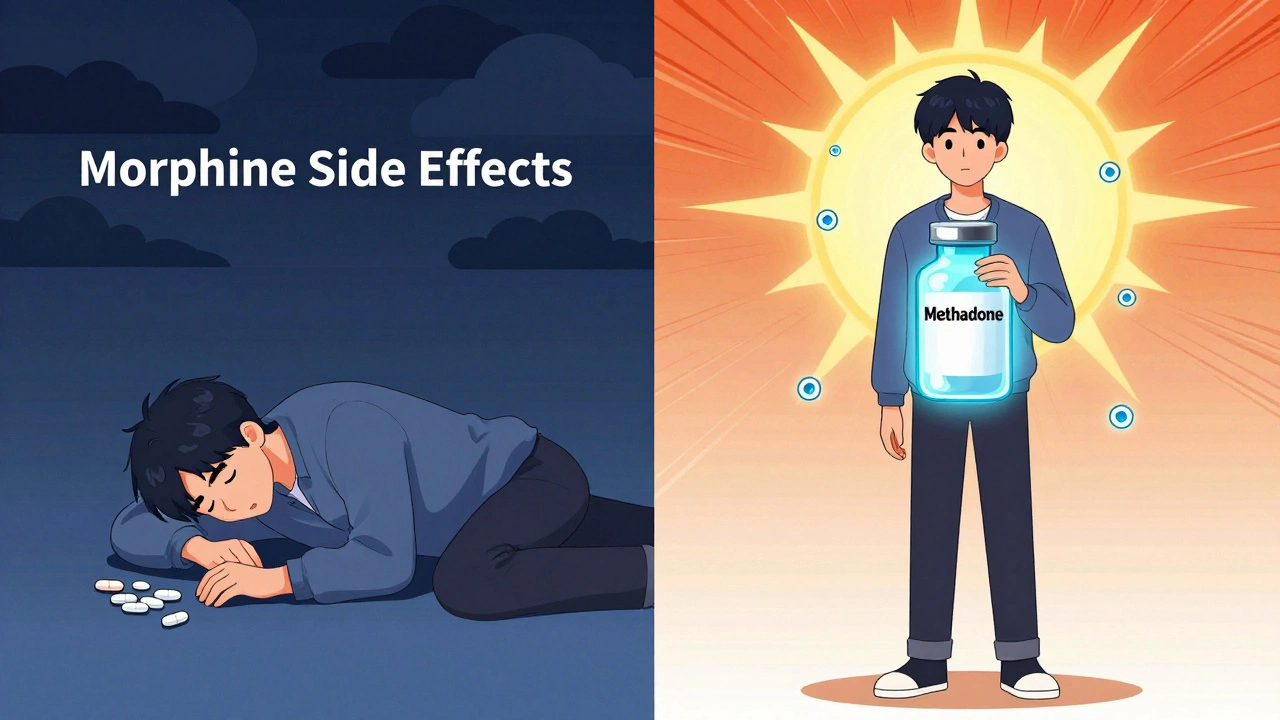
- Methadone is the wildcard. It’s not just another opioid. It works differently in the body and often lets doctors reduce the total daily dose - sometimes by 30% or more - while keeping pain controlled. That’s rare. Most rotations don’t lower the total dose, but methadone does. Why? It blocks pain receptors in a unique way and also affects how your body processes pain signals.
But here’s the catch: methadone is tricky. Its conversion ratio from morphine isn’t fixed. For someone switching because of side effects, the safe starting dose might be 9 mg of methadone for every 100 mg of morphine. For someone switching just for pain control, it might be 10:1 or even higher. That’s why you never just swap one-for-one. Always reduce the new dose by 25% to 50% to stay safe.
The Hidden Risk: Getting It Wrong
Opioid rotation can save someone’s quality of life - or it can put them in the hospital. The biggest danger? Underestimating how much cross-tolerance you still have.When you switch opioids, your body hasn’t fully adjusted to the new one. That means if you give you the full calculated dose, you could overdose. That’s why experts always recommend starting lower. The standard rule is to cut the new opioid’s dose by at least 25%, and sometimes up to 50%, especially with methadone or when switching from high-dose morphine.
Another risk? Assuming all opioids work the same. Some people think, “If morphine didn’t work, nothing will.” But that’s not true. A 2013 study showed patients who switched from morphine to oxycodone or fentanyl saw a 40% drop in nausea and a 35% drop in sedation - even though their pain scores stayed the same. The problem wasn’t the pain. It was the drug.
What Happens After the Switch?
Rotation isn’t a one-time fix. It’s a process. You need to track what happens after the switch:- How’s your pain? Is it better, worse, or the same?
- Are the side effects easing up? Which ones?
- Are you sleeping better? Eating? Thinking clearly?
Doctors should review this within 3 to 7 days. If the new opioid isn’t working or side effects are still bad, you might need another rotation - or a different approach altogether. Some patients try two or three switches before finding the right fit.
Documentation matters. Every rotation should be written down: why you switched, what dose you started with, what adjustments you made, and how you felt after. This isn’t just paperwork. It’s your medical history. It helps future providers avoid repeating mistakes.

Why the Guidelines Are Still From 2009
You might wonder - why are we still using guidelines from 2009? The truth? There haven’t been enough high-quality studies to update them. Most of the evidence comes from small observational studies, not big randomized trials. That’s a gap. But even with limited data, the consensus is strong: rotation works for many people.The 2009 expert panel, which included top pain specialists, made one thing crystal clear: safety comes first. No matter how good the science looks, if you’re risking overdose, you’re doing it wrong. That’s why they insisted on dose reductions during conversion - and why they warned against calling patients “non-responsive.” That label is misleading. You’re not resistant to opioids. You’re just not responding to that one.
What’s Next for Opioid Rotation?
The future of opioid rotation is personal. Researchers are starting to look at genetic testing. Some people have gene variants that make them process opioids slower - or faster. That could explain why one person gets dizzy on 10 mg of oxycodone, while another needs 50 mg to feel anything.Soon, we may be able to test for these variations before starting or switching opioids. Imagine knowing ahead of time that methadone is likely to work better for you - or that codeine won’t help at all because your body can’t turn it into morphine. That’s not science fiction. It’s already being tested in clinics.
Another promising step? Electronic health records that warn doctors when they’re about to make a risky conversion. Right now, a lot of rotations are done by hand, using charts and calculators. One small mistake - a misplaced decimal - can be dangerous. Smart systems that auto-calculate doses and flag unsafe conversions could save lives.
Final Thought: It’s Not a Last Resort
Too many people wait until they’re miserable before considering opioid rotation. They think, “I’ll just tough it out.” But you don’t have to. If your current opioid is making you feel worse than your pain, you have options. Rotation isn’t failure. It’s strategy.Talk to your provider. Ask: “Could a different opioid help me feel better without the side effects?” Don’t be afraid to push for a plan. You’re not asking for more drugs. You’re asking for better ones.
Is opioid rotation safe?
Yes, when done correctly. The biggest risk is overdose, which happens when the new opioid dose is too high. To prevent this, clinicians always start with a lower dose - usually 25% to 50% less than the calculated equianalgesic dose. This accounts for incomplete cross-tolerance. Always follow your provider’s instructions exactly and report any new symptoms immediately.
Can I switch opioids on my own?
No. Never switch opioids without medical supervision. Opioid rotation requires precise dosing calculations, monitoring for side effects, and adjustments based on how your body responds. Doing this alone can lead to overdose, withdrawal, or worsening pain. Always work with a doctor who understands opioid pharmacology.
Why does methadone often reduce the total daily dose?
Methadone works differently than other opioids. It blocks NMDA receptors in the brain, which helps reduce pain signals in a way other opioids don’t. It also has a long half-life, meaning it stays active longer. Because of this, it often provides effective pain control at lower total doses. Studies show patients switching to methadone can reduce their Morphine Equivalent Daily Dose (MEDD) by 20% to 40%, even when pain control stays the same.
How long does it take to see results after a rotation?
Most people notice changes within 3 to 7 days. Side effects like nausea or drowsiness often improve first. Pain relief may take a bit longer, especially if the new opioid needs time to build up in your system. Your provider will likely check in within a week to assess how you’re doing and make adjustments if needed.
Does opioid rotation mean I’m addicted?
No. Opioid rotation is a medical strategy to improve safety and effectiveness. It’s not about dependence - it’s about finding the right tool for your body. Many patients rotate opioids because their current medication causes intolerable side effects, not because they want to change their level of dependence. This is a treatment adjustment, not a sign of addiction.
What if rotation doesn’t work?
If rotation doesn’t improve your side effects or pain, your provider may explore other options: non-opioid pain meds (like gabapentin or duloxetine), nerve blocks, physical therapy, or integrative approaches like mindfulness or acupuncture. Sometimes, combining treatments works better than relying on opioids alone. The goal isn’t just to manage pain - it’s to help you live better.
Richard Eite
December 7, 2025 AT 18:38Opioid rotation is just another way doctors make money off your suffering
Katherine Chan
December 9, 2025 AT 14:01I know someone who switched from morphine to oxycodone and finally slept through the night for the first time in years. It’s not magic-it’s just listening to your body.
Philippa Barraclough
December 9, 2025 AT 21:23The clinical evidence supporting opioid rotation is largely derived from small observational cohorts with significant selection bias, and while the 2009 guidelines remain the most comprehensive reference point, the absence of large-scale randomized controlled trials undermines the strength of the recommendations. The pharmacokinetic variability between individuals, particularly in CYP450 enzyme activity, further complicates equianalgesic conversion ratios, making standardized protocols inherently risky without personalized monitoring.
Tim Tinh
December 10, 2025 AT 07:45my buddy went from fentanyl patches to methadone and his nausea just vanished. he was skeptical at first but now says he feels like himself again. just gotta do it right with a doc who knows their stuff
Olivia Portier
December 11, 2025 AT 19:53So many people think if one opioid doesn’t work, none will-but that’s like saying if one shoe hurts your foot, all shoes are bad. Opioid rotation isn’t giving up, it’s finding the right fit. You deserve to feel better without being drugged into a coma.
Rich Paul
December 12, 2025 AT 05:17methadone’s NMDA antagonism is the key here-most clinicians don’t grasp that it’s not just a mu-opioid agonist, it’s a glutamatergic modulator. That’s why it reduces MEDD so effectively. Also, cross-tolerance isn’t linear, it’s nonlinear and pharmacodynamically heterogeneous, which is why 25-50% reduction is non-negotiable. If you’re doing 1:1 conversions, you’re playing russian roulette with a loaded gun.
Lauren Dare
December 14, 2025 AT 02:22Oh great, another post telling people to ‘talk to your provider’ like that’s some magic wand. Most of us have been ignored, gaslit, or told to ‘tough it out’ for years. You don’t get to pat yourselves on the back for stating the obvious.
Gilbert Lacasandile
December 15, 2025 AT 10:35I’ve seen this work for my mom. She was on 120mg morphine daily, switched to methadone at 30% reduced dose, and now she’s walking the dog again. It’s not perfect, but it’s better. Just don’t rush it.
William Umstattd
December 16, 2025 AT 08:02People who don’t understand opioid rotation are the same ones who think addiction is a moral failure. This isn’t about dependence-it’s about biology. Your body isn’t broken. The drug was the wrong tool. If you’re still suffering side effects, you’re not weak. You’re just being failed by lazy medicine.
Simran Chettiar
December 16, 2025 AT 15:27One must consider the existential weight of chronic pain and the ontological dissonance experienced when pharmacological intervention becomes a source of suffering rather than solace. The opioid rotation paradigm, while clinically pragmatic, reflects a deeper epistemic crisis within contemporary pain medicine: the reduction of human experience to pharmacokinetic variables, ignoring the phenomenological reality of the patient’s lived body. One wonders whether true healing can ever emerge from a system that quantifies suffering in milligrams.
Anna Roh
December 18, 2025 AT 05:27So basically, just swap pills until something doesn’t make you want to die. Cool.