
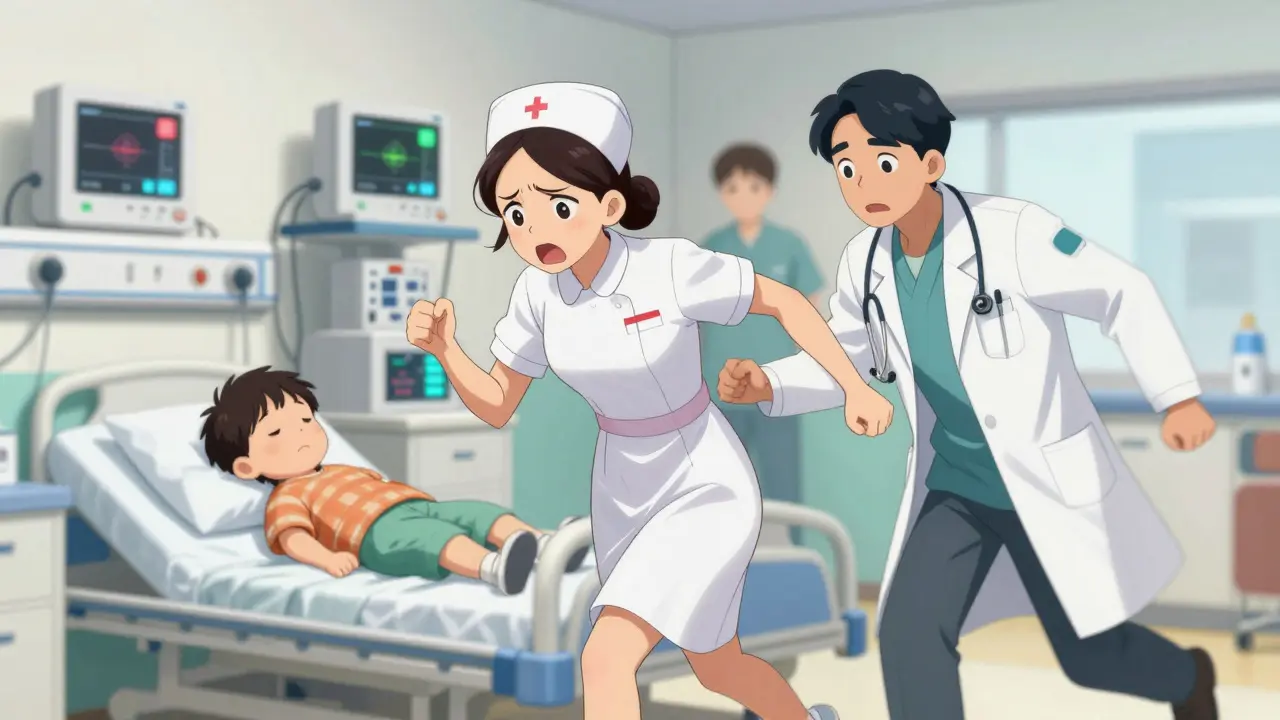
The danger here is real. While many mistakes are caught as "near misses," research in the Journal of Emergency Medicine shows that 13% of these errors in pediatric emergency departments actually result in patient harm. When we talk about a child's health, that margin of error is simply too wide. To fix this, we need to move past the idea that "humans just make mistakes" and look at the systemic traps that lead to these failures.
The Math Trap: Weight-Based Dosing Failures
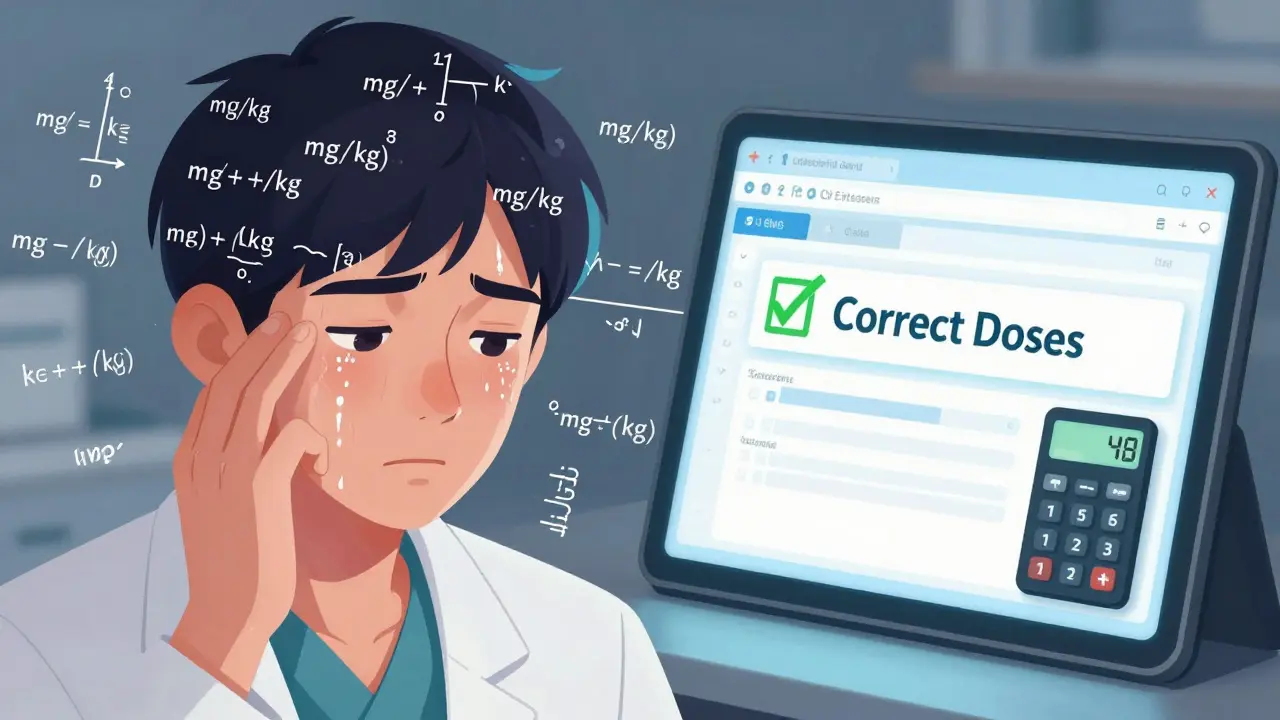
In adult medicine, many drugs have a "standard dose." In pediatrics, almost everything is based on weight-based dosing is a method of calculating medication dosage based on the patient's body mass, typically measured in milligrams per kilogram (mg/kg) . This is where the most frequent errors happen. Calculation mistakes account for 20% to 35% of all pediatric medication events.
Consider a real-world case: a child weighing 10kg needs a medication. The clinician intends to give 5mg/kg, which should be 50mg. However, a simple decimal point error or a misread scale can turn that dose into 500mg-a ten-fold overdose. This is compounded by the fact that inaccurate weight measurements occur in up to 31% of these errors. If the scale is wrong or the weight is recorded in pounds instead of kilograms, the entire foundation of the treatment is flawed.
To fight this, many hospitals are moving toward Electronic Medical Records is digital versions of patient charts that often include integrated dosing calculators to reduce manual math errors . By 2023, about 68% of children's hospitals had implemented pediatric-specific dosing calculators. These tools remove the manual math, acting as a digital safety net that prevents a tired clinician from making a fatal arithmetic error at 3 AM.
The Liquid Dilemma: Milligrams vs. Milliliters
If the math is the first trap, the formulation is the second. Most pediatric meds come in liquid form because kids can't swallow large pills. But liquid medications account for 60% to 80% of dosing errors in outpatient settings. The confusion usually boils down to two tiny words: milligrams (mg) and milliliters (mL).
A common nightmare scenario involves acetaminophen. A parent might see "5" on a prescription and assume it means 5mL, not realizing the concentration of the liquid has changed. For example, giving a 2-year-old 5mL of a high-concentration infant formula instead of a lower-concentration children's version can lead to significant toxicity. This isn't just a hospital problem; it's a home problem. One in ten parents of children with leukemia has made a dosing error when measuring chemotherapy at home.
| Risk Factor | Pediatric Context | Adult Context |
|---|---|---|
| Dosing Logic | Weight-based (mg/kg) - High Complexity | Fixed dosing - Low Complexity |
| Formulation | Mostly liquid (high error rate) | Mostly solid (lower error rate) |
| Error Rate (USP) | 31% | 13% |
| Primary Driver | Calculation & Measurement | Drug-Drug Interactions/Adherence |
Systemic Failures in the Emergency Department
The pediatric Emergency Department (ED) is a pressure cooker. High stress, noise, and the need for speed create a perfect storm for mistakes. Expert insights from the American Academy of Pediatrics highlight that verbal orders-common during a crisis-are a major vulnerability. When a doctor shouts a dose across a room, there is a high risk of the nurse mishearing a number or a drug name.
Moreover, there is a dangerous disparity between specialized children's hospitals and general community EDs. While a dedicated children's hospital might have a pharmacist on-site to verify every single pediatric order in real-time, a community hospital may rely on a general pharmacist who doesn't see many children. This lack of specialization means that "near misses" are less likely to be caught before they reach the patient.
One effective strategy used by leaders like Nationwide Children's Hospital is a leading pediatric healthcare system known for implementing proactive safety shifts to reduce harmful medication events is the "double-check" system. For high-alert medications-like insulin or concentrated electrolytes-two different clinicians must independently verify the dose before it is administered. This simple step has helped some institutions achieve an 85% reduction in harmful events.
The Literacy Gap: From Hospital to Home
Safety doesn't end at the hospital exit. The transition from the ED to the home is where some of the most preventable errors occur. There is a staggering link between health literacy and medication safety. Families with limited health literacy have error rates of 68%, compared to just 29% for those with adequate literacy. Language barriers make this even worse; Spanish-speaking families have shown 32% higher error rates than English-speaking families.
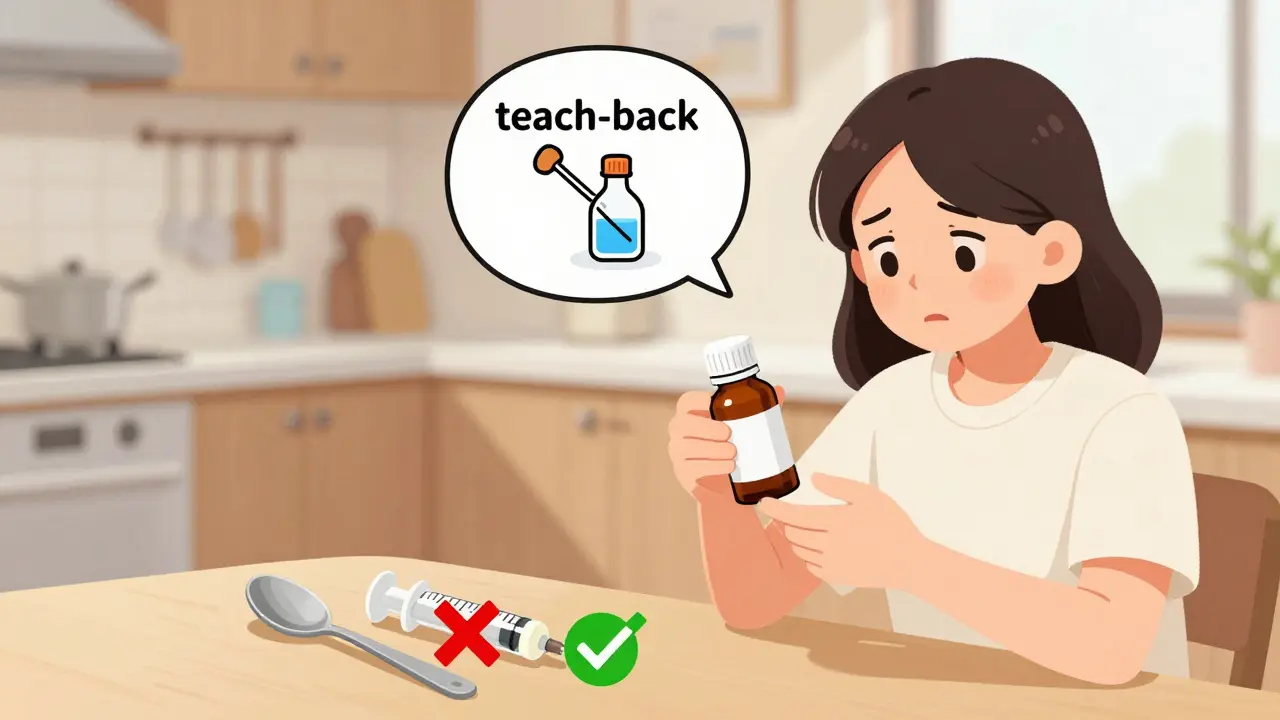
The problem is often that discharge instructions are too complex. A piece of paper with "Give 2.5mL every 6 hours" is not enough if the parent doesn't have a proper measuring device. Using a household kitchen spoon is a recipe for disaster. Research shows that providing standardized measuring devices can reduce errors by 35% to 45%.
A successful approach called the MEDS intervention has shown that adding just 90 seconds of a clinician's time to use "teach-back" methodology-where the parent explains the dosing back to the nurse-and providing pictograms can drop dosing error rates from nearly 65% down to under 50%. It turns out that a picture of a syringe is worth a thousand words of medical jargon.
Checklist for Pediatric Medication Safety
Whether you are a healthcare provider or a parent, following a strict set of rules can prevent a tragedy. Here is a practical checklist to minimize risk:
- Verify Weight: Always use the most recent weight in kilograms. If the scale is in pounds, double-check the conversion.
- Confirm Concentration: Do not just check the drug name; check the mg/mL concentration. Is it the infant version or the children's version?
- Use Proper Tools: Never use a spoon. Use the oral syringe or dosing cup that came with the medication.
- The "Read Back" Rule: If a dose is given verbally, the receiver must repeat it back exactly to the sender.
- Teach-Back Method: Before leaving the clinic, the caregiver should demonstrate how they will measure and give the dose.
Why are children more prone to medication errors than adults?
Children require weight-based dosing (mg/kg) rather than the standardized doses often used for adults. This adds a layer of mathematical complexity to every prescription. Additionally, the heavy reliance on liquid formulations increases the risk of measurement errors, and children's physiological differences make them more sensitive to dosing mistakes.
What is the most common type of pediatric medication error?
Wrong dose errors are the most frequent, accounting for about 13% of all safety events in children's hospitals. These are often caused by calculation mistakes, inaccurate weight measurements, or confusion between the volume of liquid (mL) and the amount of active drug (mg).
How can parents prevent dosing mistakes at home?
Parents should always use a standardized measuring device (like an oral syringe) instead of a kitchen spoon. They should verify the concentration of the medication on the bottle and use the "teach-back" method with their doctor to ensure they understand the exact dosage and timing.
Do electronic medical records actually reduce errors?
Yes, particularly when they include pediatric-specific dosing calculators. These tools automate the mg/kg math, removing the risk of human arithmetic errors. However, they can still be bypassed if the wrong patient weight is entered into the system.
What are "near misses" in a clinical setting?
A near miss is an error that happened-such as a drug being drawn in the wrong dose-but was intercepted by another staff member or a safety system before it ever reached the patient. While they don't cause harm, they are critical warning signs that a system is failing.
Next Steps for Improving Safety
If you are a healthcare administrator, the priority should be integrating real-time pharmacy verification and standardized weight-based protocols across all departments, not just in specialized wards. Training staff for 4-6 hours on pediatric-specific safety principles, followed by quarterly refreshers, can keep these protocols from slipping.
For parents, the goal is advocacy. Don't be afraid to ask your doctor, "Can you show me exactly how to measure this?" or "Is this the right concentration for my child's weight?" A few extra seconds of questioning in the emergency room can be the difference between a safe recovery and a dangerous complication.