
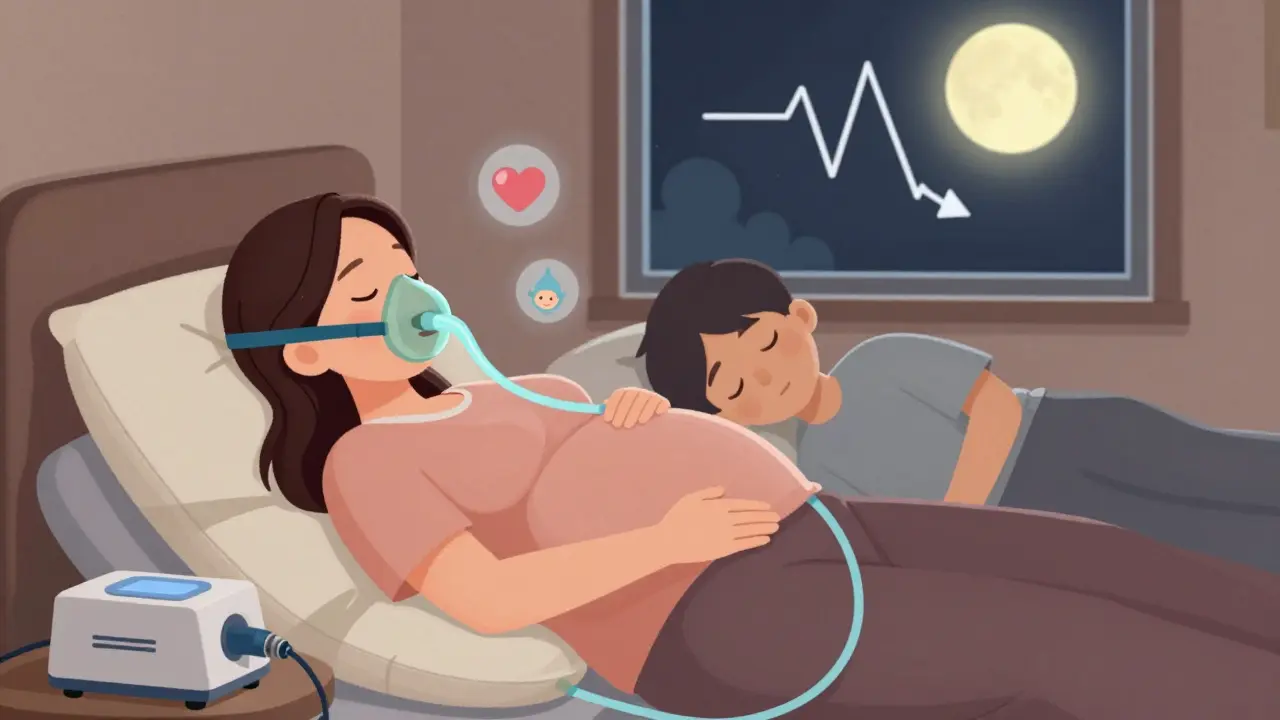
Why Sleep Gets So Hard During Pregnancy
Many women expect pregnancy to be exhausting, but few realize how much their sleep quality actually drops. By the third trimester, nearly 1 in 10 pregnant women develop obstructive sleep apnea (OSA)-and that number jumps to nearly 1 in 4 if they’re overweight. This isn’t just about snoring. It’s about breathing stopping repeatedly at night, dropping oxygen levels, and waking up without even knowing it. The result? Constant fatigue, high blood pressure, and higher risks for preeclampsia and gestational diabetes.
What’s changing? Your body. Hormones like progesterone relax the muscles in your throat, making it easier for your airway to collapse. Your growing belly pushes up on your diaphragm. Your neck swells slightly from fluid retention. And your nose gets stuffy-even if you’ve never had allergies before. All of this makes breathing during sleep harder than ever.
Recognizing Sleep Apnea: It’s Not Just Snoring
Snoring is common in pregnancy, but not everyone who snores has sleep apnea. The real red flags are when your partner notices you stop breathing for 10 seconds or more, gasp or choke during sleep, or wake up with a dry mouth or headache every morning. You might feel exhausted even after 8 hours in bed. You may find yourself falling asleep while watching TV or driving.
Doctors now recommend screening for sleep apnea at your first prenatal visit using the Berlin Questionnaire. If you score high, you’ll likely be asked to take the Epworth Sleepiness Scale and possibly have a sleep study. Don’t brush off these questions. A 2022 study found that women with untreated sleep apnea had a 2.3 times higher risk of preeclampsia and a 1.7 times higher risk of gestational diabetes.
CPAP Therapy: The Gold Standard That Actually Works
Continuous Positive Airway Pressure (CPAP) is the most effective treatment for moderate to severe sleep apnea during pregnancy. It works by delivering gentle air pressure through a mask to keep your airway open while you sleep. Studies show CPAP reduces your apnea-hypopnea index (AHI) by 78% on average-far better than any pillow or positional change alone.
Here’s what you need to know: CPAP machines for pregnant women are set between 4 and 15 cm H₂O pressure, and auto-titrating models are preferred because your needs change as your body grows. Many women start at 6-8 cm H₂O and increase slightly each trimester. The ResMed AirSense 11 Pregnancy Mode, cleared by the FDA in 2022, automatically adjusts pressure based on your breathing patterns, making it one of the most pregnancy-friendly devices on the market.
Mask fit is critical. Facial swelling is common, so nasal pillows often work better than full-face masks. Humidifiers set to 37°C help with dryness-41% of users quit CPAP because of nasal irritation. One user on Reddit said, “My nose swelled so much I thought I’d have to stop. Switching to nasal pillows and turning up the humidity made all the difference.”
Adherence is the biggest hurdle. Only 62% of pregnant women stick with CPAP beyond four weeks. But clinics like Sleep Healthy PA found that adding a 30-minute orientation session and two follow-ups within the first week boosted adherence to 82%. If you’re struggling, ask your provider for support-you’re not alone.
Positioning: The Simple Trick That Can Cut Apnea in Half
When you lie on your back, your uterus presses on major blood vessels and your tongue can fall back, blocking your airway. Sleeping on your left side is the single most effective non-device strategy for reducing apnea. A 2022 study from Brown Health showed that left lateral positioning reduced the AHI by 22.7% in women with mild sleep apnea.
But staying on your side all night? That’s hard. That’s where specialized pregnancy pillows come in. Full-body pillows like the Leachco Full Body Pillow Pro or the Boppy Noggin CPAP Pillow help you maintain side sleeping without rolling over. One verified Amazon reviewer wrote: “Finally a pillow that keeps me on my side without sliding-and my AHI dropped from 18 to 6 in two weeks.”
Pair side sleeping with head elevation. Don’t just stack pillows under your head-that can bend your neck and make apnea worse. Use a wedge pillow under your upper body, raising it 7-8 inches. This improves oxygen saturation by 3.2% compared to lying flat. Many women report fewer morning headaches and more restful sleep with this setup.
Taming Heartburn and Reflux: What Actually Helps
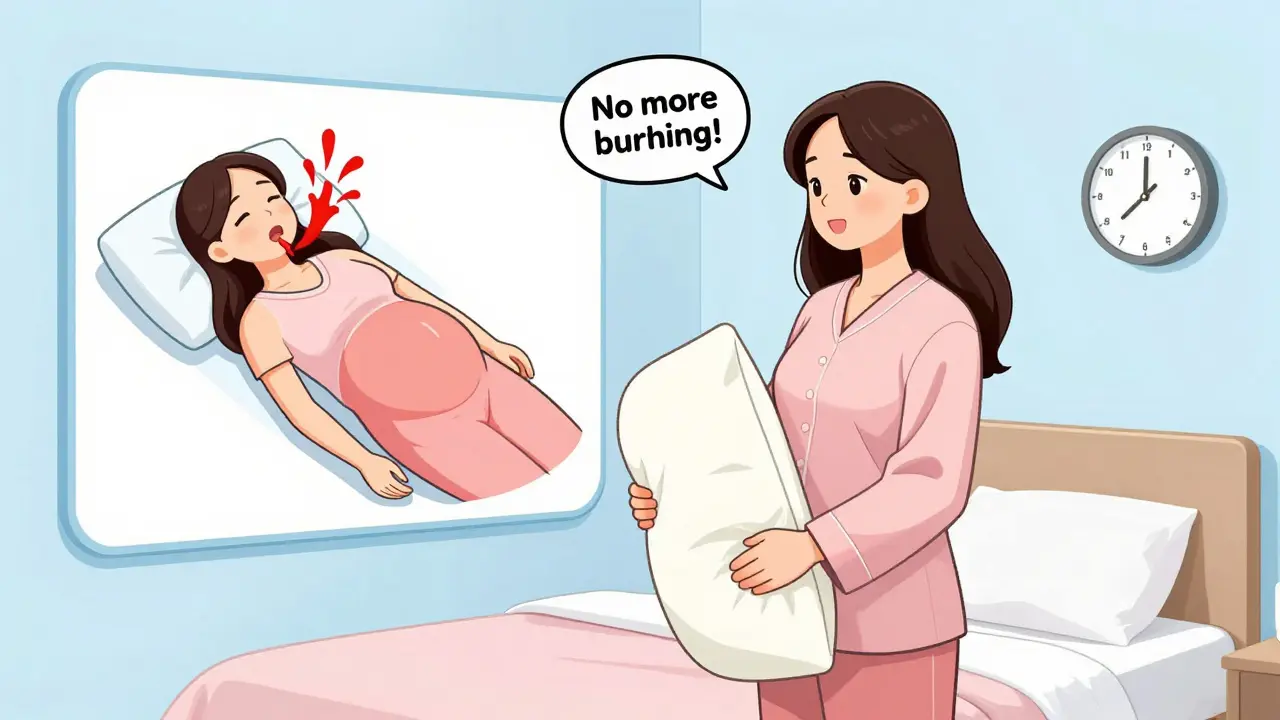
Acid reflux hits hard during pregnancy. The hormone progesterone slows digestion, and your growing baby pushes your stomach upward. Lying down makes it worse. Nighttime heartburn isn’t just uncomfortable-it can wake you up, disrupt sleep, and even trigger coughing that worsens apnea.
Here’s what works:
- Elevate the head of your bed by 6-8 inches using blocks or a wedge under the mattress. Raising just your head with pillows doesn’t help-it can bend your spine and make apnea worse.
- Avoid eating 3 hours before bed. Even light snacks like crackers or yogurt can trigger reflux.
- Use Gaviscon Advance (alginate-based antacid). It forms a protective foam barrier over stomach acid without entering your bloodstream. Unlike other antacids, it’s safe for pregnancy and costs about $15 for a 500ml bottle.
- Wear loose pajamas. Tight waistbands put pressure on your stomach.
One woman shared on a pregnancy forum: “I tried everything-Tums, omeprazole, ginger tea. Only Gaviscon and the wedge pillow stopped my nighttime burning. I slept through the night for the first time in months.”
What Doesn’t Work (And Why)
Not all sleep aids are safe or effective during pregnancy.
Mandibular advancement devices (mouthguards that push your jaw forward) work well for non-pregnant adults, reducing apnea by 58%. But during pregnancy, hormonal changes can loosen your jaw joints. The 2023 SASM/SOAP guidelines explicitly advise against them due to lack of safety data.
Over-the-counter sleep aids like diphenhydramine (Benadryl) or melatonin are not recommended. There’s no solid evidence they’re safe for fetal development, and they don’t treat the root cause of apnea or reflux.
Weight loss is not advised during pregnancy, but staying within the Institute of Medicine’s recommended weight gain range (11.5-16 kg for normal weight women, 5-9 kg for obese women) can reduce apnea severity. Focus on balanced meals and walking-not dieting.
When to Start Treatment-and When to Stop
Timing matters. Starting CPAP between 24 and 28 weeks gives you the best chance to lower your risk of complications. A 2023 study in JAMA Network Open found that each week of CPAP use before 28 weeks reduced preeclampsia risk by 4.7%. Waiting until after 30 weeks means you’ve already missed the window for maximum benefit.
What about after birth? Some women see their apnea disappear completely after delivery. Others don’t. The Brown Health protocol recommends a follow-up sleep study at 12 weeks postpartum. The NIH says observation is fine if symptoms vanish. But here’s the catch: 58% of women who had pregnancy-related apnea develop chronic high blood pressure within 10 years-even if their sleep apnea went away.
Don’t assume it’s over. If you still snore, feel tired, or wake up gasping after delivery, get checked. Pregnancy apnea might be a warning sign of future heart problems.
Real Talk: What Women Actually Experience
Women who use CPAP during pregnancy report big wins: energy returns, blood pressure stabilizes, headaches disappear. One user said, “I stopped needing naps. I could play with my toddler without falling asleep.”
But it’s not easy. Common complaints:
- Mask leaks because of facial swelling (41%)
- Machine noise disturbing partners (33%)
- Difficulty staying on your side (29%)
- Feeling claustrophobic or anxious (22%)
Most of these improve with support. Try a CPAP pillow designed for pregnancy. Use earplugs or a white noise machine. Ask your provider for a mask fitting session. You don’t have to suffer through it alone.
What’s Next: The Future of Sleep in Pregnancy
The tools are getting smarter. The Apple Watch Series 9 now detects sleep apnea with 89% accuracy-something that could help catch problems earlier. The NIH is running a major trial called PREGSLEEP to see if starting CPAP before 20 weeks can prevent fetal growth restriction. By 2027, 65% of prenatal clinics are expected to screen for sleep apnea routinely.
Right now, only 32% of OB practices screen at all. But awareness is rising. If you’re pregnant and struggling to sleep, don’t wait for your doctor to bring it up. Ask about sleep apnea. Ask about reflux. Ask about positioning. Your rest matters-not just for you, but for your baby.
Is it normal to snore during pregnancy?
Yes, snoring is common due to hormonal changes and nasal congestion. But if you stop breathing, gasp, or wake up choking, it could be sleep apnea. Snoring alone doesn’t mean you have it-but paired with daytime fatigue or high blood pressure, it’s a red flag.
Can I use a mouthguard for sleep apnea while pregnant?
No. Mandibular advancement devices aren’t recommended during pregnancy. Hormonal changes can loosen your jaw joints and increase the risk of TMJ pain. There’s also no safety data for fetal exposure. CPAP or positional therapy are safer, proven options.
Will my sleep apnea go away after I have the baby?
Many women see improvement after delivery, especially if they lost weight. But not everyone. About 40% still have symptoms 12 weeks postpartum. Even if your apnea disappears, you’re at higher risk for chronic high blood pressure later in life. A follow-up sleep study at 12 weeks is a smart move.
What’s the best pillow for sleep apnea during pregnancy?
Look for a full-body pillow that supports your belly, back, and legs while keeping you on your left side. The Leachco Full Body Pillow Pro and Boppy Noggin CPAP Pillow are two of the most recommended. The Boppy has a cutout for CPAP tubing and helps prevent rolling onto your back. Avoid regular pillows stacked under your head-they can worsen apnea.
Can I use melatonin or Benadryl to sleep better during pregnancy?
No. Neither is proven safe for long-term use during pregnancy, and they don’t treat the cause of your sleep problems. Melatonin affects hormone levels, and Benadryl can cause drowsiness in the baby. Focus on CPAP, positioning, and reflux management instead.
How do I know if my CPAP pressure needs adjusting?
If you wake up with a dry mouth, nasal congestion, or still feel tired, your pressure may be too low. If your mask leaks constantly or you feel air pressure is too strong, it may be too high. Auto-titrating machines adjust automatically, but if you’re on a fixed setting, talk to your sleep specialist. Most women need pressure increases as they progress into the third trimester.
Is it safe to use CPAP during labor and delivery?
Yes, but most hospitals aren’t prepared for it. Only 44% of hospitals have protocols for managing sleep apnea during labor. If you use CPAP, tell your OB team early. Bring your machine and mask to the hospital. Untreated apnea increases anesthesia risks by over 3 times. You have the right to advocate for your care.
Niamh Trihy
January 31, 2026 AT 10:27Also, the Leachco pillow? Game changer. I didn't realize how much I was rolling onto my back until I had something holding me in place.
Yanaton Whittaker
January 31, 2026 AT 12:06Kathleen Riley
February 1, 2026 AT 15:21Beth Cooper
February 2, 2026 AT 13:18Donna Fleetwood
February 3, 2026 AT 21:19Melissa Cogswell
February 5, 2026 AT 09:54Bobbi Van Riet
February 7, 2026 AT 05:27Jodi Olson
February 8, 2026 AT 07:21Amy Insalaco
February 9, 2026 AT 06:00Marc Bains
February 10, 2026 AT 20:49