

Simvastatin Interaction Checker
Check Your Medication Safety
Enter medications you're currently taking with simvastatin to see dangerous interactions. This tool uses FDA guidelines and clinical evidence from the article.
When you take simvastatin to lower your cholesterol, you’re trusting a medication that works - but only if you avoid a few deadly mistakes. The problem isn’t the drug itself. It’s what you take with it. Simvastatin, sold under the brand name Zocor, is one of the most common statins prescribed in the U.S. But for about 1 in 5 people on this drug, something else they’re taking - maybe an antibiotic, a heart pill, or even a glass of grapefruit juice - can turn it into a silent killer.
Why Simvastatin Is Different
Not all statins are built the same. Simvastatin is processed by your liver using an enzyme called CYP3A4. That’s fine until something else blocks that enzyme. When that happens, simvastatin builds up in your blood like traffic jam on a highway. And when levels get too high, your muscles start breaking down. That’s rhabdomyolysis - a condition where muscle tissue dissolves into your bloodstream, potentially crashing your kidneys and even killing you. The FDA made this crystal clear in 2011: the 80 mg dose of simvastatin is dangerous. At that dose, the risk of muscle damage jumps from 0.08% with 20-40 mg to 0.61%. That’s more than seven times higher. And it’s not theoretical. The SEARCH trial and FDA’s own adverse event database showed real cases of fatal rhabdomyolysis tied to this dose. Today, doctors rarely start new patients on 80 mg. If you’re already on it, your doctor should be reevaluating whether you really need it.The Top 5 Deadly Combinations
Some drugs don’t just interact with simvastatin - they turn it into a time bomb. Here are the five most dangerous ones:- Clarithromycin and erythromycin - These antibiotics are common for sinus infections and bronchitis. But when taken with simvastatin, they spike blood levels by over 400%. Studies show these two cause more adverse events than any other combo. One patient in Toronto was hospitalized after a 3-day course of clarithromycin for a cold. He was on 40 mg simvastatin. Within 72 hours, he couldn’t walk. His CK levels were off the charts.
- Ketoconazole, itraconazole, voriconazole - These antifungals are used for stubborn yeast or fungal infections. They’re strong CYP3A4 blockers. The FDA says you must stop simvastatin completely if you need one of these. No exceptions.
- Cyclosporine - Used after organ transplants. It’s life-saving for some. But it increases simvastatin levels by up to 10-fold. Even 10 mg of simvastatin can be too much. Many transplant patients switch to pravastatin or rosuvastatin instead.
- Grapefruit juice - Yes, even one glass. Grapefruit contains chemicals that block CYP3A4 in your gut. A single 8-ounce glass can raise simvastatin levels by 260%. And it doesn’t matter if you drink it in the morning and take your pill at night - the effect lasts over 24 hours. A 2023 GoodRx survey found 43% of patients on high-dose simvastatin still drank grapefruit juice despite warnings.
- Colchicine - Often prescribed for gout. It’s not a strong CYP3A4 inhibitor, but it damages muscles on its own. Combine it with simvastatin, and the risk of rhabdomyolysis spikes. DrugBank lists over 50 documented cases of this combo causing hospitalizations.
What About Other Statins?
If you’re on simvastatin and need one of these drugs, you don’t have to give up cholesterol control. You just need to switch. Pravastatin, rosuvastatin, and fluvastatin don’t rely heavily on CYP3A4. That means they’re much safer with antibiotics, antifungals, or heart meds. Rosuvastatin, for example, is processed by different enzymes and has fewer than 10 significant drug interactions - compared to simvastatin’s 300+. The American College of Cardiology now advises against starting anyone on simvastatin 80 mg. Even 40 mg should be used cautiously. If you’re on high-dose simvastatin and take other meds, ask your doctor: “Could I switch to something safer?”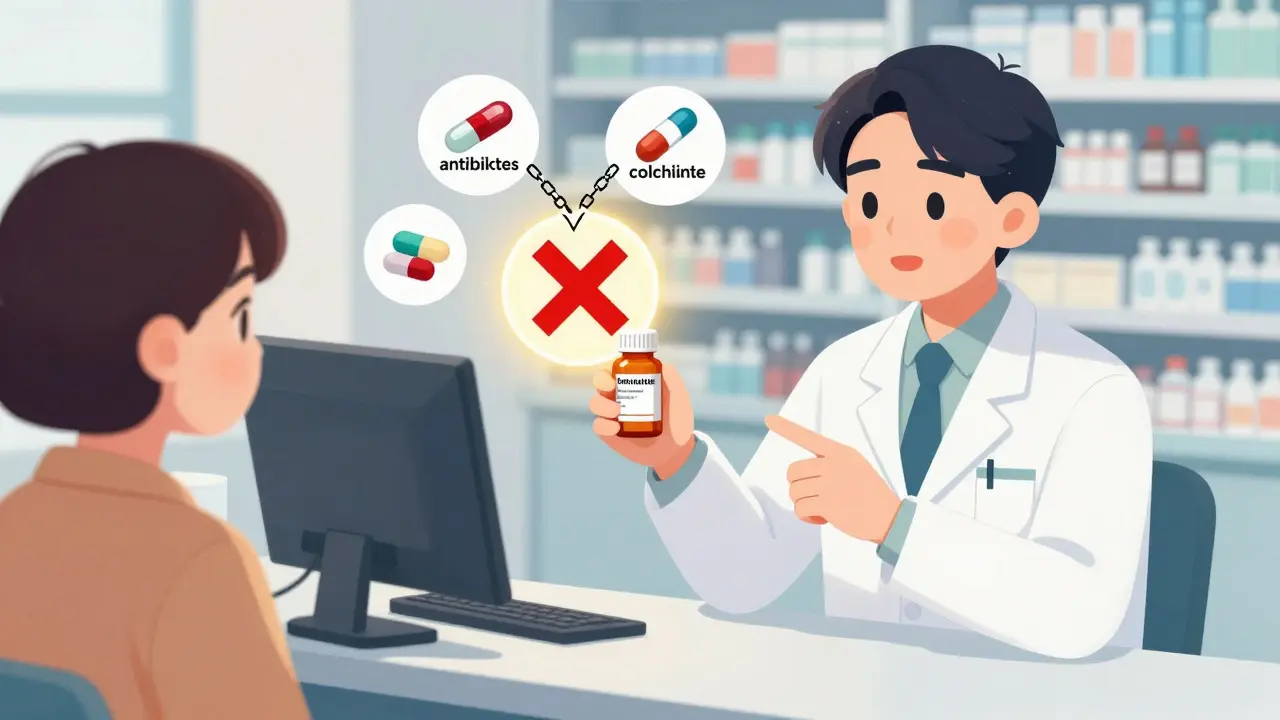
Dose Matters - A Lot
The FDA didn’t just say “avoid high doses.” They gave exact rules for when you can use lower doses with interacting drugs:- With diltiazem or verapamil (blood pressure meds): max 10 mg simvastatin
- With amiodarone or amlodipine: max 5 mg simvastatin
- With strong CYP3A4 inhibitors (like ketoconazole): stop simvastatin entirely
What You Should Do Right Now
If you’re taking simvastatin, here’s what to check:- Look at your prescription. Is it 80 mg? If yes, ask your doctor if you still need it. Most people don’t.
- Check every medication you take - even over-the-counter ones. Antibiotics, antifungals, heart pills, and gout meds are red flags.
- Stop drinking grapefruit juice. No exceptions. Even “small amounts” are dangerous.
- Ask your pharmacist to run a drug interaction check. Most pharmacies offer this for free. One study showed pharmacist interventions cut dangerous combos by 67% in seniors.
- Get liver and muscle enzyme tests (ALT, AST, CK) every 3-6 months. If you feel unexplained muscle pain, weakness, or dark urine, stop the drug and call your doctor immediately.
Genetics Play a Role Too
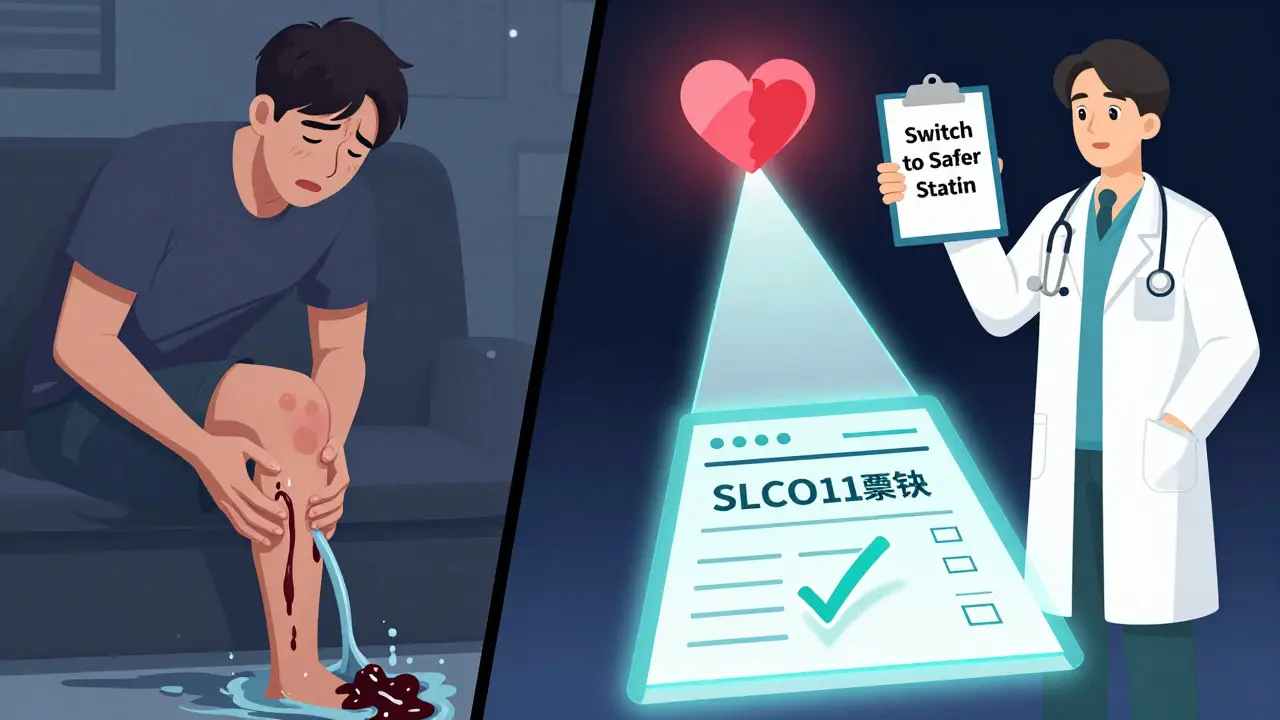
Some people are born with a genetic variation - SLCO1B1 - that makes them extra sensitive to simvastatin. If you have this variant, your risk of muscle damage is up to 4.5 times higher. The American Heart Association now recommends genetic testing before starting high-dose simvastatin, especially if you’ve had side effects before. It’s not routine everywhere yet, but it’s becoming standard in major clinics. If you’ve ever had unexplained muscle pain on statins, ask your doctor about this test.The Bigger Picture
Simvastatin is cheap - about $4 a month for the generic. That’s why it’s still used. But its safety profile has changed. The 80 mg dose, once common, now makes up less than 2% of new prescriptions. Pharmacies report fewer fills for it every year. Newer statins like pitavastatin and rosuvastatin are just as effective, safer, and now just as affordable. The goal isn’t to scare you off statins. It’s to make sure you’re on the right one. If you’re on simvastatin and take other meds, you’re not being paranoid if you’re worried. You’re being smart.Can I take simvastatin with antibiotics?
Only if the antibiotic is safe. Avoid clarithromycin, erythromycin, and azithromycin. Amoxicillin and doxycycline are usually fine. Always check with your pharmacist before starting any new antibiotic. If you’re on simvastatin 40 mg or higher and need a macrolide antibiotic, your doctor should switch you to a different statin temporarily.
Is grapefruit juice really that dangerous with simvastatin?
Yes. One 8-ounce glass can raise simvastatin levels by 260%. This effect lasts more than 24 hours, so even spacing out the juice and pill won’t help. Other citrus fruits like Seville oranges and pomelos have the same effect. Regular orange juice and lemonade are safe. If you love citrus, stick to those.
What should I do if I feel muscle pain while on simvastatin?
Stop taking simvastatin immediately and call your doctor. Muscle pain, weakness, or dark urine are signs of rhabdomyolysis. This isn’t normal soreness - it’s a medical emergency. Your doctor will order a blood test for CK (creatine kinase). If levels are high, you may need hospitalization. Don’t wait. Early action saves kidneys and lives.
Can I switch from simvastatin to another statin?
Yes, and you should if you’re on high-dose simvastatin or take other interacting drugs. Rosuvastatin and pravastatin are safer alternatives with far fewer interactions. They’re just as effective at lowering LDL cholesterol. Many patients switch without losing control of their numbers. Ask your doctor about the options - cost isn’t a barrier anymore.
Is simvastatin still used at all?
Yes, but only at lower doses - 10 mg or 20 mg - and only for people who don’t take interacting drugs. It’s still used because it’s cheap and works well for low-risk patients. But the 80 mg dose is nearly gone. New prescriptions for that dose are rare, and most doctors avoid it entirely. If you’re on it, ask if you can step down.