
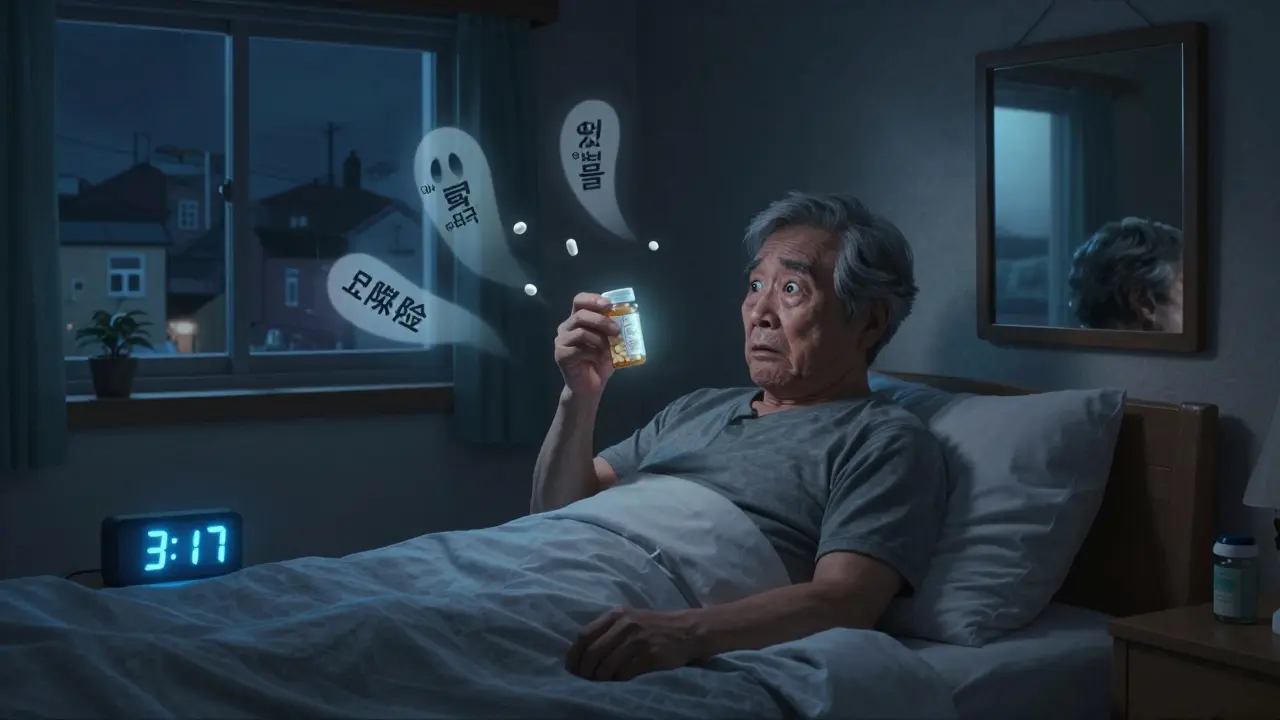
More than 1 in 10 adults over 80 are taking prescription sleep pills. That’s not a rare case-it’s the new normal. But behind that number is a quiet crisis: people waking up groggy, forgetting how they got to the kitchen, or panicking when they realize they can’t sleep without a pill. Sleep medications aren’t magic. They’re bandaids on a broken system. And too often, we’re using them like they’re permanent fixes.
How Sleep Medications Actually Work
Sleep meds don’t fix why you can’t sleep. They just slow down your brain enough to make you pass out. Most work by boosting GABA, a brain chemical that calms nerve activity. That’s why you feel drowsy. But this isn’t natural sleep. It’s chemical sedation. Your brain doesn’t cycle through deep restorative stages the way it should. You might fall asleep faster, but your sleep quality? That’s another story.
There are three main types you’ll hear about:
- Benzodiazepines - like lorazepam and clonazepam. These have been around since the 1970s. They work well, but they’re sticky. Your brain adapts fast. After a few weeks, you need more to get the same effect.
- Z-drugs - zolpidem (Ambien), eszopiclone (Lunesta), zaleplon (Sonata). These were marketed as safer, targeted versions of benzos. But they come with their own dangers: sleepwalking, sleep-driving, and memory blackouts. The FDA added a black box warning to Ambien in 2019 after reports of people driving to work and not remembering it.
- Sedating antidepressants - trazodone, doxepin. These are often prescribed off-label, especially for older adults. They’re cheaper, but trazodone can cause painful, prolonged erections (priapism), and doxepin can mess with heart rhythms at higher doses.
Then there are the OTC options: diphenhydramine (Benadryl) and doxylamine (Unisom). They sound harmless, right? Wrong. These are anticholinergics. Long-term use? A 54% higher risk of dementia, according to a 2015 JAMA study. And they don’t even work well for sleep. You might nod off, but your sleep is shallow, broken, and full of side effects like dry mouth, constipation, and confusion.
The Hidden Dangers: Dependence and Side Effects
Dependence doesn’t mean addiction. It means your body can’t function without the drug. You stop taking it? You get rebound insomnia-sleep worse than before you started. That’s a trap. You think you need the pill to sleep. But the pill made your sleep worse in the first place.
Here’s what happens in real life:
- You take Ambien for two weeks. It works.
- Three weeks in, you need a second pill to get the same effect.
- By month two, you’re anxious if you forget your pills. You start hoarding them.
- You try to quit. You lie awake for three nights. Your heart races. You’re convinced you’ll never sleep again.
- You go back on the pill.
This cycle is common. A 2016 study in Addiction found up to 33% of people on benzodiazepines become dependent after just 4-6 weeks. Z-drugs? Lower risk-around 5-10%-but still real. And for older adults? The risk of falls doubles. A 2023 update to the American Geriatrics Society Beers Criteria says these drugs should be avoided in seniors entirely. Why? Because they increase fracture risk by 20-30%. One fall can end mobility. One fall can end life.
And then there are the side effects you don’t see coming:
- Next-day drowsiness (31% of users)
- Dizziness (24%)
- Memory lapses (25% have residual impairment equivalent to a 0.05-0.08% blood alcohol level)
- Sleepwalking or sleep-driving (0.5% of Z-drug users)
One user on Reddit wrote: “After 6 months of nightly Ambien, I tried to quit and couldn’t sleep for 3 nights straight-ended up back on it.” That’s not weakness. That’s pharmacology.
Why CBT-I Is the Real Solution
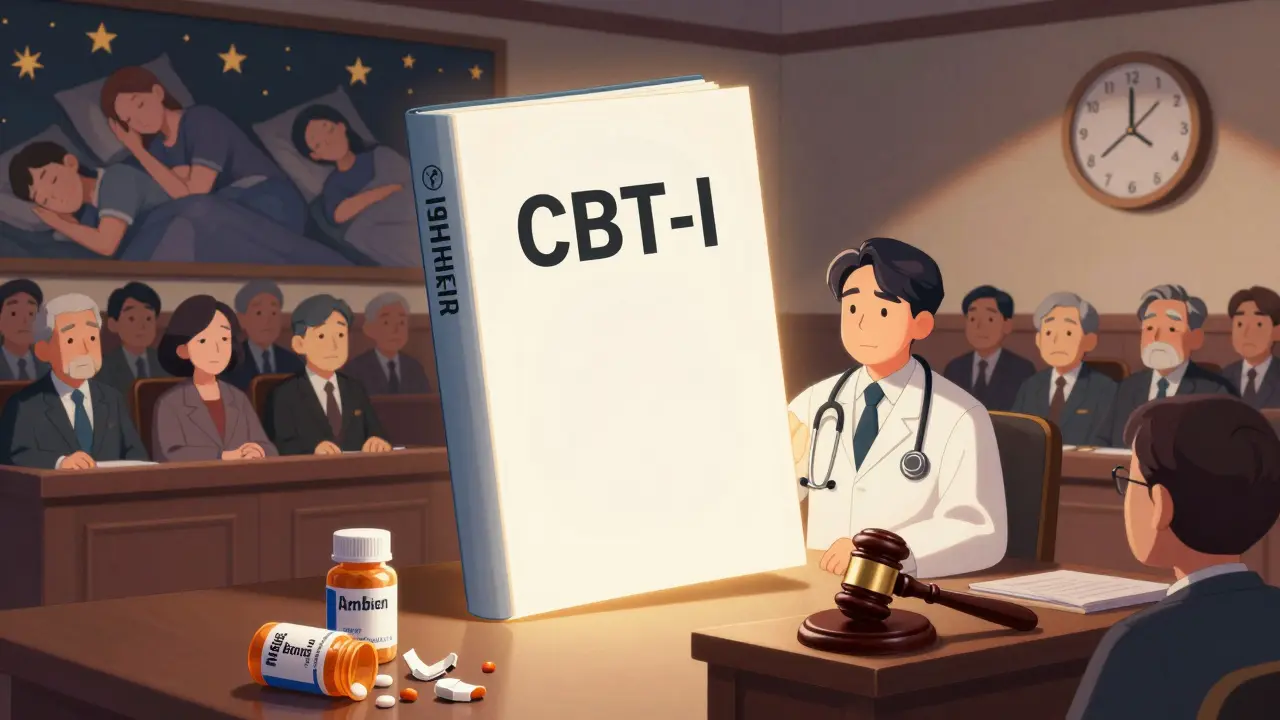
There’s a treatment that works better than any pill. It’s called Cognitive Behavioral Therapy for Insomnia, or CBT-I. It doesn’t come in a bottle. It doesn’t cost $400 a month. It’s not flashy. But it’s proven.
CBT-I doesn’t try to force sleep. It fixes the thoughts and habits that keep you awake:
- Stopping the habit of lying in bed worrying
- Setting a strict sleep schedule-even on weekends
- Reducing screen time before bed
- Learning to associate your bed with sleep, not stress
Studies show CBT-I helps 70-80% of people. And the benefits last. Unlike pills, which lose effectiveness after 4 weeks, CBT-I keeps working for years. A 2021 JAMA Internal Medicine study found that 78% of people who tried CBT-I had better long-term sleep than those who used medication alone.
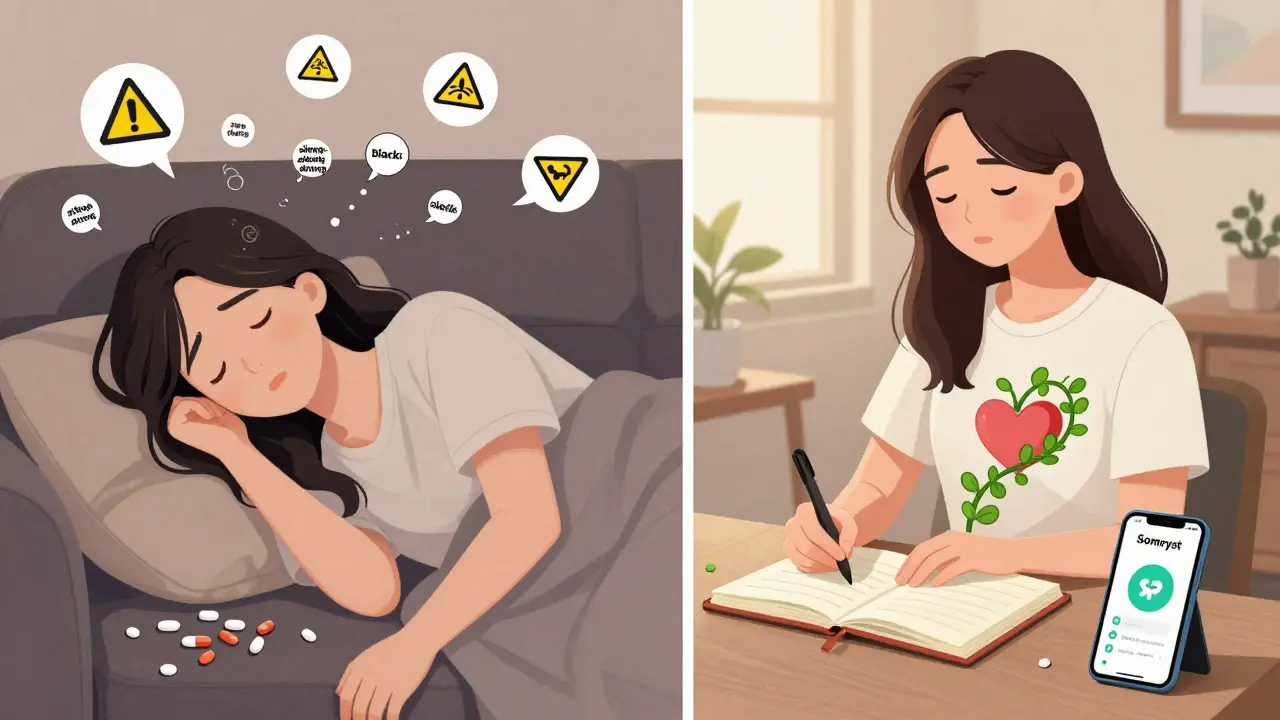
And now, it’s digital. The FDA approved Somryst in 2020-a prescription app that delivers full CBT-I through your phone. In trials, it helped 60% of users stop needing sleep meds. No pills. No side effects. Just better habits.
What About Melatonin and Natural Alternatives?
Melatonin gets a lot of love. Amazon reviews are full of 5-star ratings. But here’s the truth: melatonin isn’t a sleep pill. It’s a timing signal. It tells your brain, “It’s time to wind down.” It doesn’t force sleep. It helps if your internal clock is off-like after jet lag or shift work.
But if you’re lying awake because you’re anxious, stressed, or have bad sleep habits? Melatonin won’t fix that. And there’s little regulation. A 2017 study found some melatonin supplements contained 10x the labeled dose. Others had serotonin or even a sedative drug called 5-HTP. You don’t know what you’re taking.
Other “natural” options-valerian root, magnesium, CBD-have weak or mixed evidence. None have the track record of CBT-I. They’re not dangerous like prescription pills, but they’re not reliable either. Don’t mistake popularity for effectiveness.
What Should You Do?
If you’re on sleep meds right now, don’t panic. But don’t keep going either. Here’s what to do:
- Talk to your doctor. Ask if you’re on the lowest effective dose. Ask if you’ve been on it longer than 4 weeks. If yes, ask about tapering.
- Ask for a CBT-I referral. Most clinics offer it now. Some insurance plans cover it. If not, try a digital option like Somryst or Sleepio.
- Track your sleep. Use a simple notebook: when you go to bed, when you wake up, how you felt the next day. Patterns emerge.
- Stop alcohol before bed. It makes sleep meds 300% more dangerous. It also ruins sleep quality.
- Don’t try to quit cold turkey. Taper slowly-25% every two weeks. Ask your doctor for help. You’re not alone.
If you’re not on meds but struggling to sleep? Start with behavior. No pills. No supplements. Just:
- Go to bed and wake up at the same time every day
- Get sunlight within 30 minutes of waking
- Don’t look at screens 1 hour before bed
- Use your bed only for sleep and sex
It takes 2-4 weeks to see results. But when it works? You won’t need a pill.
What’s Changing in Sleep Medicine?
The field is shifting. The FDA approved daridorexant (Quviviq) in 2022-a new class of drug that blocks orexin, a brain chemical that keeps you awake. Early data shows less next-day grogginess than zolpidem. It’s promising. But it’s still a drug. And drugs come with risks.
Meanwhile, medical schools are finally teaching CBT-I. The American Medical Association passed a policy in 2021 to train future doctors in non-drug sleep treatments. Hospitals now require prior authorization for sleep meds beyond 30 days. And 68% of them require proof you’ve tried CBT-I first.
This isn’t a fad. It’s science. The future of sleep isn’t in a pill bottle. It’s in your habits, your routine, and your mindset.
Are sleep medications addictive?
Not always in the classic sense, but yes-they can cause physical dependence. Your body adapts. You need more to get the same effect. Stopping suddenly can cause rebound insomnia, anxiety, and even seizures in rare cases. Benzodiazepines have the highest dependence risk. Z-drugs like Ambien carry lower but still real risk-especially after 4+ weeks of use.
Can I stop taking sleep meds on my own?
It’s risky. Quitting cold turkey can trigger severe rebound insomnia, anxiety, or withdrawal symptoms. The safest way is to taper slowly-reducing your dose by 25% every 2 weeks under medical supervision. If you’ve been on them for months or years, ask your doctor for help. Support programs exist.
Why do doctors still prescribe sleep meds if they’re risky?
Because they work-quickly. For someone who hasn’t slept in days, a pill can be a lifeline. But they’re meant for short-term use-2 to 5 weeks. Many doctors don’t have time to guide patients through CBT-I. Insurance doesn’t always cover it. And patients often ask for the fastest solution. The system isn’t perfect, but the guidelines are clear: CBT-I comes first.
Is melatonin safer than prescription sleep aids?
Generally, yes-no risk of dependence or next-day impairment. But melatonin isn’t a cure-all. It helps reset your body clock, not fix anxiety, stress, or bad sleep habits. And since it’s not FDA-regulated like prescription drugs, dosing can be wildly off. Some pills contain 10 times more melatonin than labeled. Stick to low doses (0.5-1 mg) and avoid long-term daily use.
What’s the best alternative to sleep medication?
Cognitive Behavioral Therapy for Insomnia (CBT-I). It’s the gold standard. It works better than pills long-term, has no side effects, and the benefits last. Digital programs like Somryst and Sleepio are FDA-approved and covered by some insurers. If those aren’t available, start with sleep hygiene: fixed bedtime, no screens before bed, get morning sunlight, and only use your bed for sleep.
If you’re tired of relying on pills, you’re not alone. And you don’t have to stay stuck. Sleep isn’t broken. Your habits are. Fix those, and your sleep will follow.
Janelle Pearl
March 9, 2026 AT 01:48I’ve been off sleep meds for 18 months now. Started with CBT-I through Sleepio. It felt impossible at first-like trying to unlearn a lifetime of bad habits. But the consistency? Game changer. I didn’t magically fall asleep faster. I just stopped fighting sleep. Now I sleep like a baby, no pills, no guilt. If you’re stuck in that cycle, you’re not broken. Your system is just trained wrong. You can retrain it.
It’s not about willpower. It’s about rewiring.
And yes, I still check my phone before bed. But now I catch myself. And I put it down. Small changes, over time. That’s the secret.
Dan Mayer
March 10, 2026 AT 10:32Neeti Rustagi
March 10, 2026 AT 21:52While I appreciate the attempt to raise awareness regarding pharmacological interventions for insomnia, I must emphasize the critical importance of clinical supervision. The assertion that sleep medications are merely ‘band-aids’ oversimplifies a complex neurophysiological landscape. In elderly populations with comorbid anxiety or neurological disorders, pharmacotherapy remains a necessary, evidence-based intervention. CBT-I, while commendable, is not universally accessible-particularly in regions with limited mental health infrastructure. A one-size-fits-all approach risks exacerbating health disparities.
Moreover, the dismissal of melatonin as ‘not a cure-all’ is misleading. In circadian rhythm disorders, it is a cornerstone of treatment. Regulatory gaps in supplements are a systemic failure of oversight, not a flaw of the compound itself.
Let us not confuse moralizing with medicine.
APRIL HARRINGTON
March 12, 2026 AT 03:59Ray Foret Jr.
March 12, 2026 AT 12:16Robert Bliss
March 14, 2026 AT 02:42Leon Hallal
March 14, 2026 AT 18:23rafeq khlo
March 16, 2026 AT 09:27Peter Kovac
March 17, 2026 AT 02:07Let’s analyze the data objectively. The JAMA study cited on dementia risk from anticholinergics has a confounding variable: pre-existing cognitive decline often precedes sleep disturbances. Correlation is not causation. Furthermore, the 78% efficacy rate for CBT-I is drawn from highly motivated, high-SES cohorts. Real-world adherence is closer to 30%. Meanwhile, pharmacotherapy provides immediate, measurable relief to patients who are functionally impaired. To dismiss medication as a ‘band-aid’ is not only inaccurate-it is ethically irresponsible to those in acute distress.
Also, the FDA-approved digital CBT-I apps? They’re not regulated for clinical outcomes. They’re marketed as ‘wellness tools.’ Don’t mistake a smartphone app for a clinical intervention.
Philip Mattawashish
March 18, 2026 AT 01:39Tom Sanders
March 20, 2026 AT 00:05Jazminn Jones
March 21, 2026 AT 22:52It is deeply concerning that the article casually references ‘digital CBT-I apps’ as if they are equivalent to clinically delivered therapy. The evidence base for these platforms is underpowered, with most studies funded by the companies themselves. Furthermore, the suggestion that melatonin is ‘unregulated’ is misleading-it is classified as a dietary supplement under DSHEA, which explicitly excludes it from FDA pre-market approval. This is not a loophole; it is a legislative reality. To imply that patients are being misled is to misrepresent the regulatory framework entirely.
One must ask: who benefits from this narrative? The wellness industry, certainly. The pharmaceutical industry? Not so much-sleep meds are a shrinking market. This is not science. It is moral panic masquerading as public health.
Samantha Fierro
March 23, 2026 AT 12:35I’ve worked in geriatric care for 17 years. I’ve seen the falls. I’ve held the hands of women who broke their hips because they took a z-drug and woke up disoriented. I’ve seen families break because a loved one couldn’t sleep without a pill-and then couldn’t live without it.
But I’ve also seen the opposite: a man who started CBT-I at 82, stopped his benzo, and slept through the night for the first time in 15 years. He cried. Not because he was relieved. Because he remembered what rest felt like.
It’s not about being ‘anti-pill.’ It’s about being pro-rest.
You deserve to wake up without a chemical fog. You deserve to remember your dreams. You deserve to be safe.
Judith Manzano
March 24, 2026 AT 07:42Stephen Rudd
March 25, 2026 AT 08:05Janelle Pearl
March 26, 2026 AT 21:24