
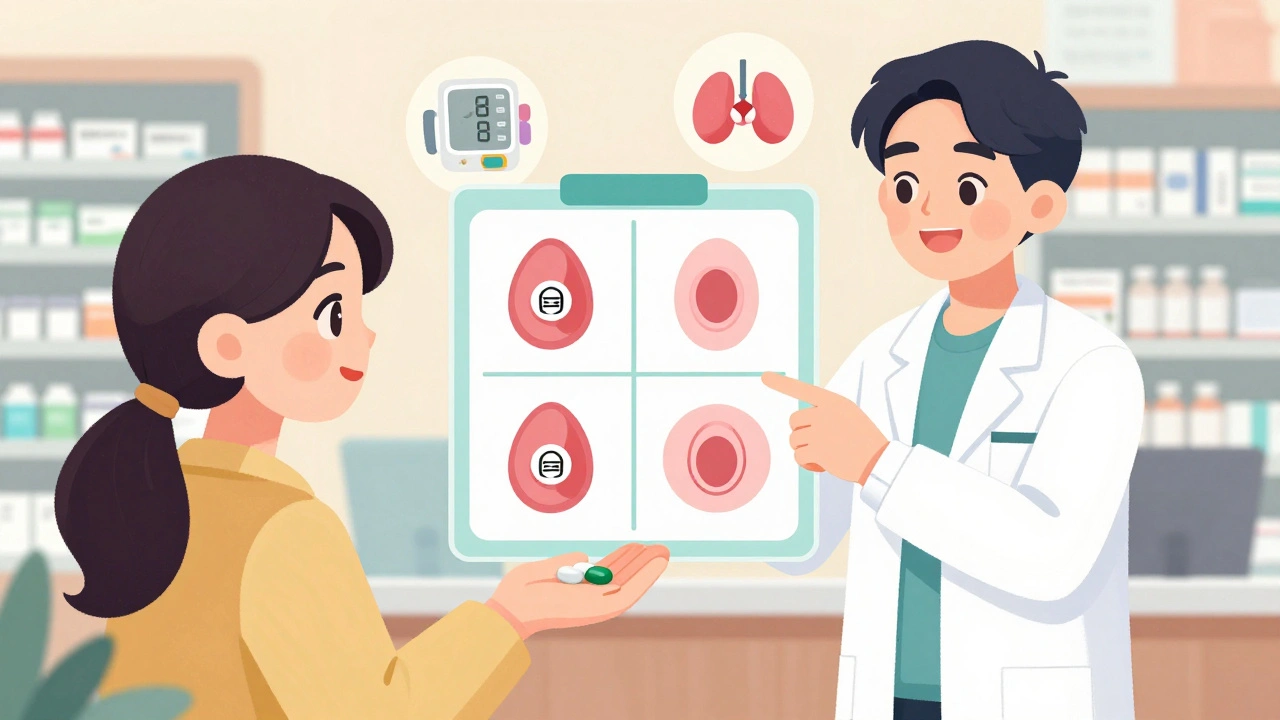
When a brand-name drug goes generic, patients often face a sudden change in their medication - different pill color, new label, maybe even a different pharmacy. But what if the pill inside is exactly the same? That’s where authorized generics come in. Unlike regular generics, which are made by different companies and must prove they work similarly, authorized generics are made by the original brand-name manufacturer. They’re identical in active ingredients, inactive ingredients, size, shape, and how they work in your body. The only difference? No brand name on the bottle.
For patients on long-term medications - especially those with narrow therapeutic windows like warfarin, levothyroxine, or seizure drugs - this matters. A tiny change in how a drug is absorbed can mean the difference between control and crisis. Studies show that 12.7% of patients have problems switching to regular generics because of differences in fillers like lactose or dyes. With authorized generics, that number drops to 2.3%. That’s not just a statistic. It’s someone who stops having rashes, or whose blood pressure stays stable, or who doesn’t end up back in the hospital.
Why Authorized Generics Are Different
Not all generics are created equal. Regular generics go through the FDA’s Abbreviated New Drug Application (ANDA) process. They must show they’re bioequivalent - meaning they deliver the same amount of medicine into your bloodstream as the brand. But they don’t have to match the exact inactive ingredients. That’s where trouble can start. Some people are sensitive to dyes, gluten, or preservatives. A patient who’s been on the same brand for years might suddenly get headaches, stomach upset, or skin reactions after switching to a regular generic - even though the active drug is the same.
Authorized generics avoid this entirely. They’re made in the same factory, on the same line, with the same recipe as the brand-name drug. The FDA allows them to be sold under the brand’s original New Drug Application (NDA), so they skip the ANDA review. That means no guesswork. No reformulation. No hidden variables. If your brand-name drug is made by Pfizer, and Pfizer also makes the authorized generic, you’re getting the exact same product - just without the brand logo.
This isn’t theoretical. A 2021 study in the Journal of Clinical Pharmacy and Therapeutics found that patients switching to regular generics had an 18.4% chance of going back to the brand. For authorized generics? Just 7.2%. That’s more than half the switchback rate. For asthma patients, the difference was even clearer: 42% fewer people stopped taking their medication when switched to an authorized generic versus a regular one.
Cost Savings - But Not Always What You Expect
One big reason to switch to an authorized generic? Price. The Federal Trade Commission found that when an authorized generic enters the market, retail prices drop by 4-8%, and wholesale prices fall by 7-14%. That’s real savings. For someone paying $150 a month for a brand-name drug, that could mean $10-$12 off each month. Over a year, that’s $120-$144 saved.
But here’s the catch: insurance doesn’t always reflect that savings. Some plans put authorized generics on the same tier as brand-name drugs - meaning higher copays. Meanwhile, regular generics get placed on lower tiers, even though they’re not identical. A 2022 Health Affairs study found that 28% of commercial insurance plans charge more for authorized generics than for regular ones. That’s backwards. You’re paying more for the exact same medicine.
Patients need to check their formulary before switching. Don’t assume the authorized generic is cheaper. Call your pharmacy or log into your insurer’s portal. Look up the drug by its generic name, not the brand. Ask: “Is the authorized generic covered at a lower tier than the brand?” If not, your pharmacist can often request a prior authorization or suggest an alternative.
Who Benefits Most?
Authorized generics aren’t for everyone - but they’re critical for some. The FDA defines narrow therapeutic index (NTI) drugs as those where small changes in dose or absorption can lead to serious side effects or treatment failure. About 5.3% of all prescription drugs fall into this category. These include:
- Warfarin (blood thinner)
- Levothyroxine (thyroid hormone)
- Phenytoin and carbamazepine (seizure meds)
- Lithium (bipolar disorder)
- Cyclosporine and tacrolimus (organ transplant drugs)
For these, consistency isn’t optional - it’s life-saving. A 2023 FDA report showed a 28% lower rate of therapeutic failure when patients switched to authorized generics versus regular generics for NTI drugs. That means fewer lab tests, fewer ER visits, fewer hospitalizations.
Patients with allergies or sensitivities also benefit. If you’ve ever had a reaction to a dye, gluten, or a specific preservative in a pill, you know how unpredictable regular generics can be. Authorized generics eliminate that risk. One patient on Reddit shared: “Switched to the authorized generic of my blood thinner and haven’t had the bruising issues I experienced with the regular generic.” That’s the kind of story that doesn’t show up in clinical trials - but it matters just as much.
How to Make the Switch - Step by Step
Switching to an authorized generic isn’t just about filling a new prescription. It’s a process. Here’s how to do it right:
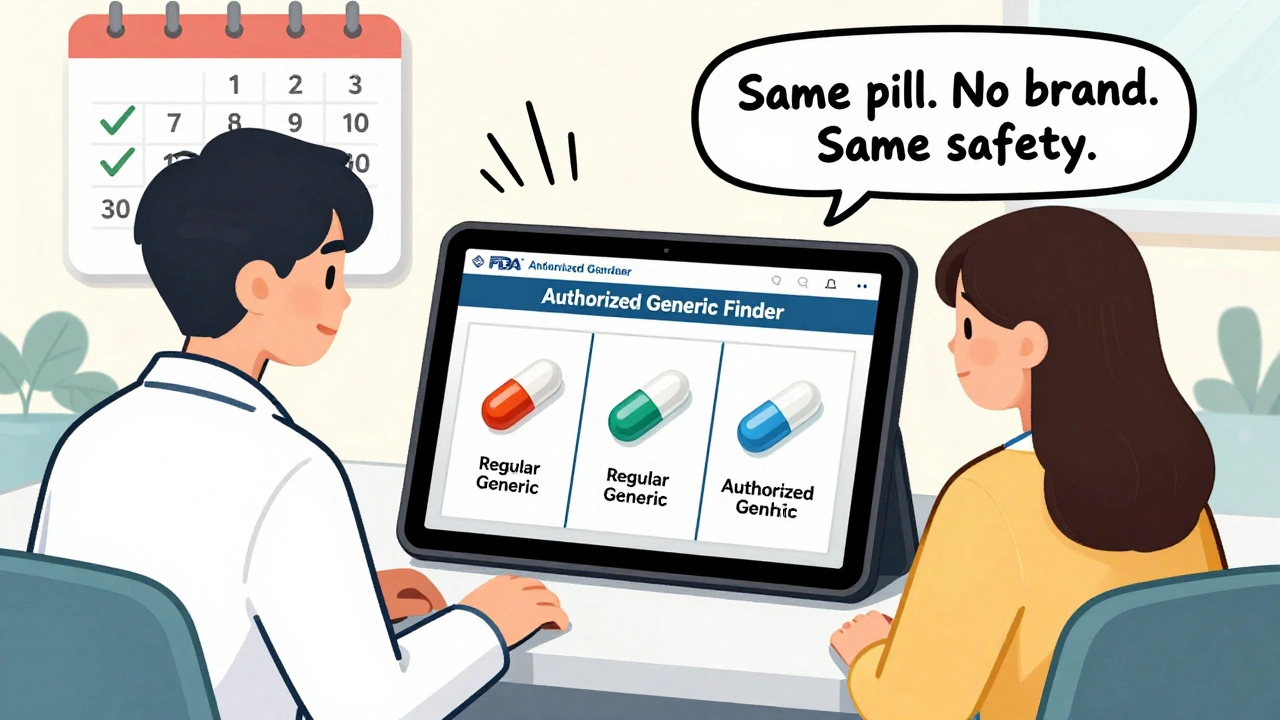
- Check availability. Not every brand has an authorized generic. As of Q3 2023, only 37.5% of brand-name drugs with generics also had an authorized version. Use the FDA’s Drugs@FDA database or ask your pharmacist. The FDA launched a new “Authorized Generic Finder” tool in 2023 to make this easier.
- Verify insurance coverage. Don’t assume it’s cheaper. Compare the copay for the brand, the regular generic, and the authorized generic. Sometimes, the authorized version costs more because of how the plan is structured.
- Talk to your prescriber. Your doctor needs to write the prescription for the authorized generic specifically. Some systems default to “generic” - which could mean the regular one. Ask for the exact name. Example: “Brand: Lipitor. Authorized generic: Atorvastatin calcium (Pfizer).”
- Educate the patient. Many patients don’t know authorized generics exist. A 2022 survey found 41% of patients weren’t aware of them. Use simple language: “This is the same pill your doctor prescribed, just without the brand name. It’s made by the same company, same factory, same ingredients.” Show them the pill if possible.
- Follow up. Schedule a check-in at 14 and 30 days. Especially for NTI drugs, monitor symptoms, lab values, or side effects. Most pharmacists report that counseling for authorized generics takes only 3-5 minutes - half the time needed for regular generics, because there’s less to explain.
What’s Holding Back Wider Use?
Despite the benefits, authorized generics aren’t as common as they should be. Why?
First, availability. Only a third of brand-name drugs have them. Manufacturers don’t always launch them - sometimes because they want to protect brand loyalty, or because they’re waiting for patent challenges to play out. The CREATES Act of 2022 tried to fix that by stopping brand companies from blocking access to samples needed for generic development.
Second, confusion in the system. Most electronic health records (EHRs) can’t tell the difference between an authorized generic and a regular one. So when a patient moves from one provider to another, or gets hospitalized, their medication list might just say “atorvastatin” - and no one knows if it’s the brand, the regular generic, or the authorized one. That’s dangerous. The FDA’s new labeling rules, coming in 2025, will require clearer labeling on packages to fix this.
Third, misinformation. Some doctors and patients believe authorized generics are “better” than regular generics - and that’s misleading. The FDA approves all generics as safe and effective. But for patients with sensitivities or NTI drugs, the identical formulation of authorized generics removes a layer of risk. It’s not about superiority - it’s about certainty.
What’s Next?
The future of authorized generics is tied to value-based care. More accountable care organizations (ACOs) are now tracking authorized generic use as part of quality metrics. In Q2 2023, 37% of ACOs included them in their performance goals. That’s because they reduce hospitalizations, lower lab costs, and improve adherence.
Medicare Part D also changed its rules in 2022: now, plans must cover authorized generics at the same or lower cost-sharing as the brand. That benefits over 1.2 million seniors. And a $2.8 million NIH study - tracking 5,000 patients across 12 drug classes - is due to finish in late 2024. Its results could reshape how insurers and providers think about generic switches.
The bottom line? Authorized generics are not a marketing trick. They’re a practical, evidence-backed way to reduce cost without compromising safety. For patients on high-risk medications, they’re the closest thing to staying on the brand - without the brand price tag.
If you’re considering a switch, ask your pharmacist: “Is there an authorized generic for this?” If yes, ask your insurer: “Is it covered at the lowest tier?” And if you’re on a narrow therapeutic index drug - don’t settle for anything less than certainty.
Declan Flynn Fitness
December 2, 2025 AT 17:47Big fan of authorized generics - my dad’s on warfarin and switched last year. No more random bruising, no ER trips. Same pill, just cheaper. 🙌
Louise Girvan
December 3, 2025 AT 05:48THEY’RE JUST DOING THIS TO CONTROL US!! FDA, pharma, insurance - ALL IN ON THE SAME SCAM!!
James Steele
December 4, 2025 AT 01:37Let’s be real - this isn’t about bioequivalence, it’s about epistemological certainty in pharmacological phenomenology. The brand’s ontological identity is embedded in the excipient matrix - and when that’s severed, even if chemically identical, the patient’s therapeutic narrative fractures. Authorized generics restore the hermeneutic continuity of treatment. 🧠💊
Michelle Smyth
December 4, 2025 AT 21:33Oh, so now we’re romanticizing Big Pharma’s ‘authorized’ versions? How quaint. The real issue is the commodification of health under neoliberal biopolitics - this is just a rebranding of pharmaceutical hegemony dressed in the clothes of patient care. 🤡
Adrian Barnes
December 6, 2025 AT 05:38While I appreciate the data presented, the entire premise is fundamentally flawed. The FDA’s bioequivalence standards are statistically robust and validated across millions of patients. To suggest that ‘authorized’ generics are clinically superior is not only misleading - it undermines public trust in generic drug regulation as a whole. This is dangerous rhetoric masquerading as patient advocacy.
Moreover, the notion that patients with NTI drugs are somehow ‘special’ and require identical formulations ignores the reality that most therapeutic failures stem from non-adherence, not formulation variance. The data cited is cherry-picked and lacks longitudinal control.
Let’s not forget: generic drugs save the U.S. healthcare system over $300 billion annually. To elevate one subset as ‘better’ is to invite tiered access - and ultimately, higher costs for everyone else.
The real problem? Insurance formularies that misclassify authorized generics. That’s a policy failure, not a pharmacological one. Fix the formulary, not the drug.
Also, ‘same factory, same line’? That’s marketing spin. The same facility can produce multiple batches with different excipients - the FDA doesn’t require excipient consistency for authorized generics, only active ingredient equivalence. You’re conflating manufacturing proximity with molecular identity.
And don’t get me started on the ‘42% fewer people stopped taking their medication’ claim - correlation isn’t causation. Did they also change counseling protocols? Did the pharmacy switch to automated refill reminders? The study doesn’t say.
This isn’t about safety. It’s about brand loyalty disguised as science. And that’s a disservice to patients who need to understand that generics are safe, effective, and regulated - period.
Stop selling fear. Start selling facts.
Grant Hurley
December 8, 2025 AT 03:21my pharmacist just told me about this last week and i was like ‘wait, so my 150$ pill is literally the same as the 30$ one??’ 🤯
switched my levothyroxine and my energy’s been way better. no more brain fog. also, my insurance didn’t even notice 😅
Tommy Walton
December 9, 2025 AT 05:55Authorized generics = the only real generics. The rest are just knockoffs with extra chemicals. 🚫💊
patrick sui
December 10, 2025 AT 06:53Just wanted to add - if you're on cyclosporine or tacrolimus, ask your transplant team about the authorized version. My sister’s been on it for 7 years now. Her levels are stable, no more 3am panic calls to the clinic. Seriously, if you're on an NTI drug, don't just accept the first generic they give you. Ask for the one with the same manufacturer. It’s not ‘better’ - it’s just predictable. And predictability saves lives. 🙏
Dennis Jesuyon Balogun
December 12, 2025 AT 04:27As a clinician in Lagos, I see this daily. Patients here often can’t afford brand drugs - but when they switch to generics, some crash. Not because the drug is bad - but because the fillers cause reactions. We’ve started requesting authorized generics where available. It’s not perfect, but it’s the closest we get to equity in access. This isn’t a U.S. problem - it’s a global one. We need transparency, not marketing.
Also, the idea that ‘all generics are equal’ ignores the reality of supply chains. In low-resource settings, storage conditions vary wildly. A generic made in a climate-controlled U.S. facility is not the same as one shipped through a tropical warehouse. Authorized generics at least have consistent production standards - even if they’re not always accessible.
Let’s not romanticize the system. But let’s also not dismiss what works.
soorya Raju
December 13, 2025 AT 06:43lol authorized generic? more like pharma’s way of keepin the brand alive while chargin the same price but callin it cheap. they just put a new label on the same pill. its all a scam. i read it on a forum. also, the fda is owned by big pharma. 🤫
Patrick Smyth
December 14, 2025 AT 08:52My wife has been on carbamazepine for 15 years. Switched to the authorized generic last month. She cried. Not because she was happy - because she was terrified. She thought the pill was fake. She held it up to the light. She checked the imprint. She called the pharmacy three times. I had to sit with her for an hour just to get her to swallow it. This isn’t about science. It’s about fear. And we need to talk to patients like humans - not like data points.
Linda Migdal
December 15, 2025 AT 03:53Why are we letting foreign companies make our medicine? This is national security. Authorized generics sound great - until you realize they’re still made overseas. We need American-made drugs. Period. No exceptions. This isn’t about cost - it’s about sovereignty.