
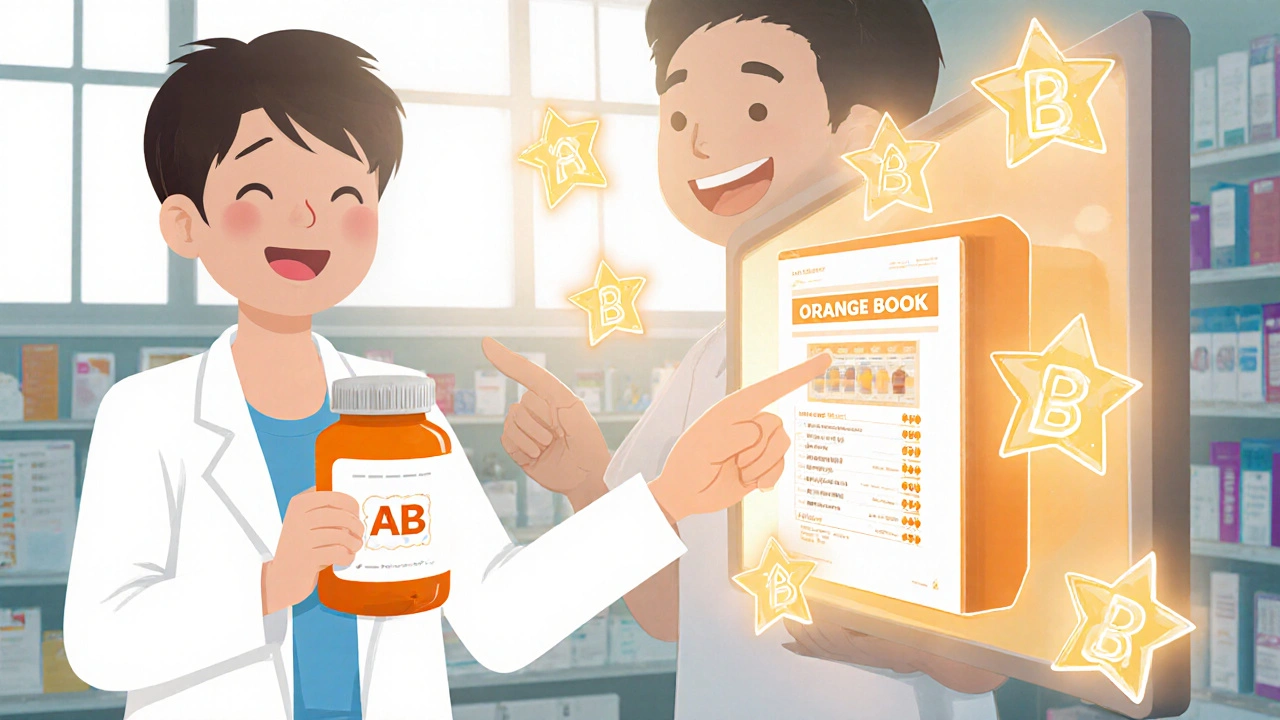
When you pick up a prescription, you might see a different name on the bottle than what your doctor wrote. That’s not a mistake. It’s likely a generic version of your medicine. And if it’s listed in the FDA’s Orange Book with an therapeutic equivalence rating of AB, you can be confident it will work the same way as the brand-name drug - same effect, same risks, same safety. This isn’t guesswork. It’s science, tightly regulated, and critical to keeping millions of patients safe while cutting costs.
What therapeutic equivalence really means
Therapeutic equivalence isn’t just about having the same active ingredient. That’s pharmaceutical equivalence - a basic requirement, but not enough. Two pills can have identical pills of the same drug, but if one absorbs too slowly or too quickly in your body, the results can be very different. Therapeutic equivalence goes further. It means two drugs - one brand-name, one generic - produce the same clinical outcome when taken the same way, under the same conditions. The U.S. Food and Drug Administration (FDA) sets the standard. To earn an "A" rating in the Orange Book, a generic drug must pass two major tests: bioequivalence and pharmaceutical equivalence. Bioequivalence means the generic drug enters your bloodstream at nearly the same rate and to nearly the same extent as the brand. The FDA requires the 90% confidence interval for key measurements - AUC (total exposure) and Cmax (peak concentration) - to fall between 80% and 125% of the brand. That’s not a wide margin. It’s tight enough to catch even small differences that could matter. For most drugs, this works perfectly. But for some, like warfarin or levothyroxine, the margin is even narrower. The FDA requires a 90% to 110% range for these narrow therapeutic index drugs. Why? Because a tiny change in blood levels can mean the difference between effective treatment and dangerous side effects - like a stroke or an irregular heartbeat.The Orange Book: Your safety checklist
The FDA’s Orange Book is the official database that lists every drug approved in the U.S. and assigns each one a two-letter code. If you see "AB", it means the drug is therapeutically equivalent to the brand. "A" alone means pharmaceutical equivalence is confirmed, but bioequivalence data isn’t available yet. "B" means there’s reason to believe the drug may not work the same - maybe because of how it’s made, how it dissolves, or how it’s absorbed. Pharmacists rely on this code every day. In 49 states, they can legally swap a brand-name drug for a generic with an "AB" rating without asking your doctor. That’s not random. It’s based on years of data, thousands of studies, and strict testing. The system works because it’s transparent. Anyone - doctors, pharmacists, even patients - can look up a drug in the Orange Book and see its rating. In October 2023, the Orange Book listed over 13,000 drug products with therapeutic equivalence evaluations. That’s not just a list. It’s a safety net.Why this matters for patient safety
The biggest fear patients have when switching to a generic is: "Will it still work?" The answer, backed by data, is yes - for the vast majority. A 2022 survey of 12,500 UnitedHealthcare patients found 87% reported no change in how their medication worked after switching to an Orange Book-listed generic. Only 3.2% reported side effects they blamed on the switch. When researchers dug into those cases, most turned out to be unrelated - anxiety, other health changes, or confusion with non-equivalent drugs. The Institute for Safe Medication Practices reviewed 127 adverse event reports linked to generic substitution between 2018 and 2022. Only 17 involved drugs with confirmed therapeutic equivalence. The rest were cases where patients switched to a "B"-rated product, or were given a different drug from the same class - something called therapeutic interchange, which is not the same thing. Therapeutic interchange is risky. It means swapping one drug for another in the same category - say, switching from one statin to another. That’s not based on equivalence. It’s based on cost or availability. A 2019 study in JAMA Internal Medicine showed that therapeutic interchange led to 32% more adverse events than switching to a therapeutically equivalent generic. Therapeutic equivalence prevents that confusion. It tells you: this generic is not just similar - it’s the same.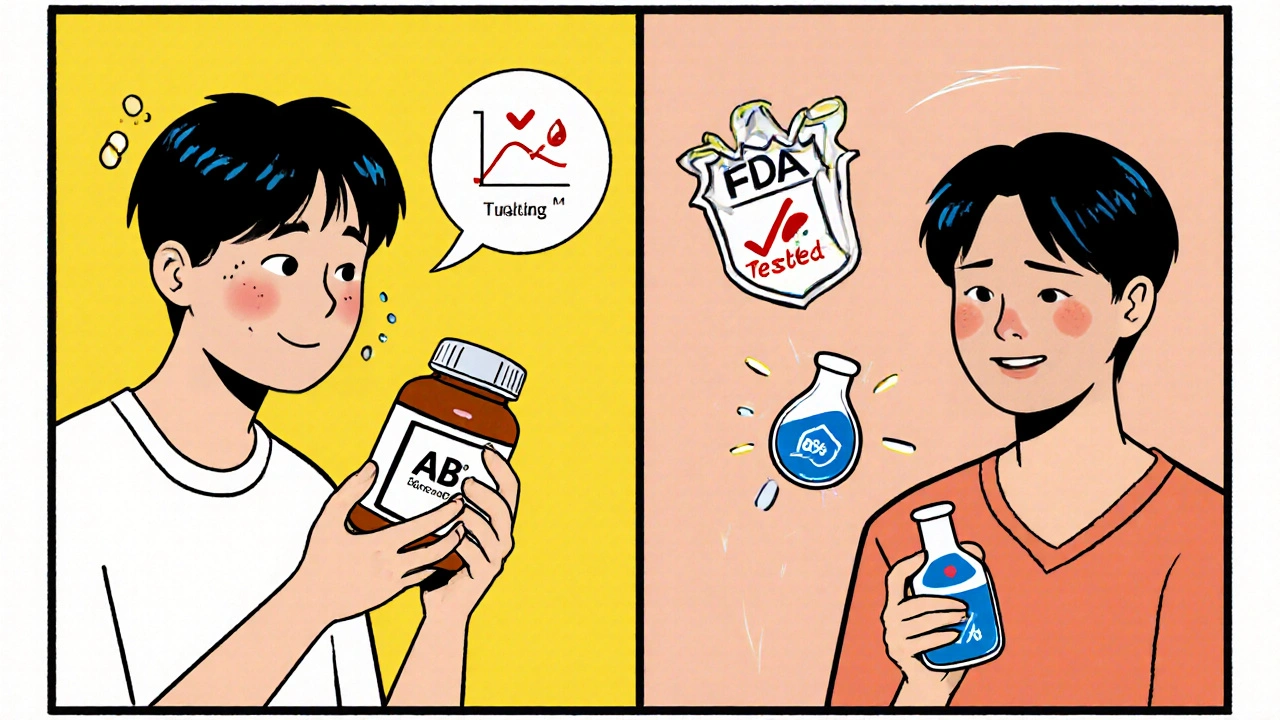
Where the system has limits
Not all drugs are easy to test. Inhalers, topical creams, eye drops, and complex injectables don’t behave like pills. You can’t just measure blood levels and call it done. The active ingredient might stick to the device, or the delivery method might change how it reaches your lungs or skin. The FDA admits this. In its 2023 draft guidance, the agency acknowledged that traditional bioequivalence methods don’t always work for these products. That’s why they’re investing $65 million through GDUFA III to develop better testing tools - including new ways to measure how a cream spreads on skin or how an inhaler delivers particles to the lungs. Even then, some patients report issues. Reddit threads and pharmacy forums sometimes mention problems after switching. But when you look closely, most of these cases involve drugs that aren’t rated "AB," or where patients switched multiple times, or where anxiety played a role. The system isn’t perfect, but the data shows it’s reliable.What doctors and pharmacists need to know
Healthcare providers must understand the difference between "therapeutic equivalence" and "interchangeability." The FDA uses "interchangeability" for biosimilars - complex biologic drugs made from living cells. That’s a whole different category with its own rules. Confusing the two can lead to errors. Pharmacists need to check the Orange Book before substituting. Doctors need to know what the codes mean. If a patient reports a problem after switching, the first question shouldn’t be "Did the generic fail?" It should be: "What’s the Orange Book rating?" If it’s "AB," the problem likely isn’t the drug. If it’s "B," the switch shouldn’t have happened. The FDA offers free online training on therapeutic equivalence. Over 85% of pharmacists and providers who complete it show improved accuracy in identifying equivalent drugs.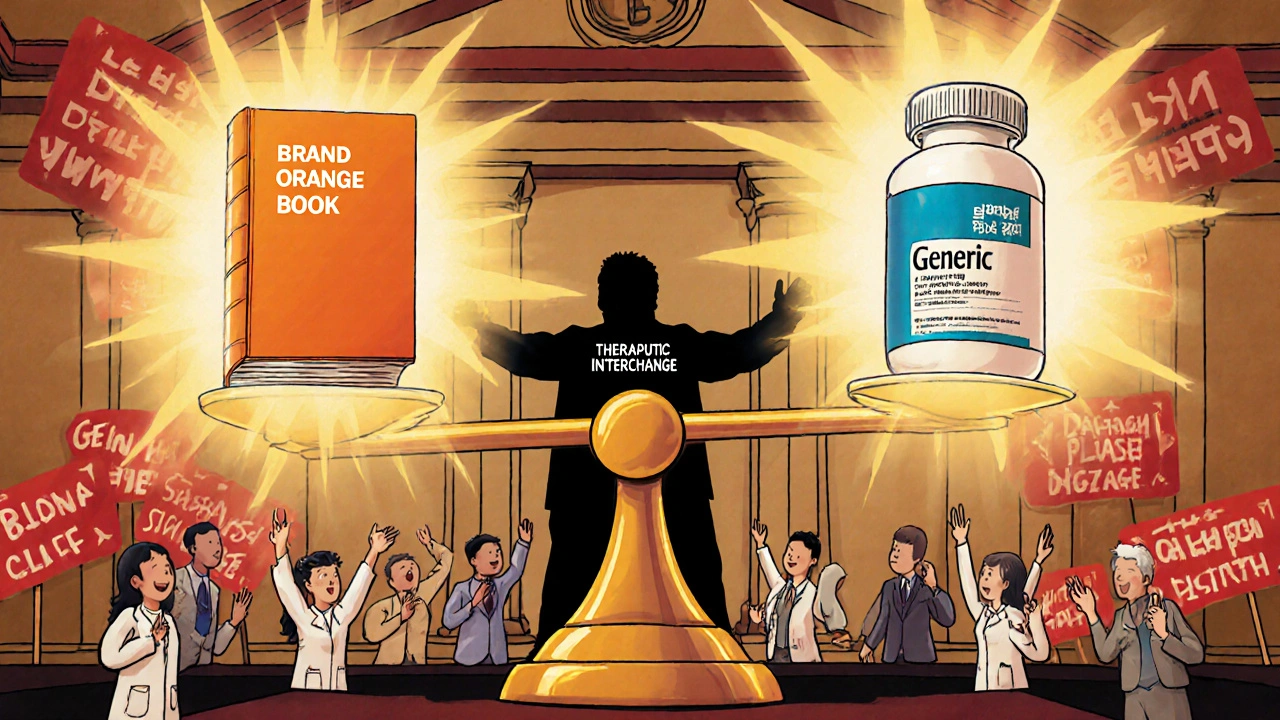
The big picture: Safety and savings
Generic drugs make up 90.7% of all prescriptions filled in the U.S. But they cost only 58% of what brand-name drugs do. That’s how the system saves $158 billion every year. Those savings don’t come from cutting corners. They come from eliminating marketing, patent monopolies, and brand-name markups - while keeping the science the same. The FDA doesn’t approve a generic drug unless it meets the same standards as the brand. In 2022 alone, the FDA approved 1,257 generic drugs - each one required to prove therapeutic equivalence. That’s not a number. That’s 1,257 chances for patients to get the same treatment at a lower cost. And when brand-name drugs go on shortage - which happens 78% of the time - therapeutic equivalence is what keeps treatment going. Without it, patients would face delays, higher costs, or worse outcomes.What’s next
The FDA is now partnering with MIT on a $2.3 million project to use artificial intelligence to predict which generic formulations might cause problems before they even hit the market. By analyzing chemical structures and manufacturing data, the AI will flag potential issues in bioequivalence - catching problems early, before a single pill is made. The goal? To make therapeutic equivalence even stronger. Not to replace the science, but to protect it better. Therapeutic equivalence isn’t just a regulatory term. It’s a promise - a promise that your medicine, no matter who made it, will do what it’s supposed to. And for patient safety, that promise matters more than ever.What does "AB" mean on the FDA Orange Book?
"AB" means the generic drug is therapeutically equivalent to the brand-name drug. It has the same active ingredient, dosage form, and route of administration, and has passed bioequivalence testing - meaning it works the same way in the body. This rating allows pharmacists to substitute it without a doctor’s permission in most states.
Are all generic drugs therapeutically equivalent?
No. Only generics that meet strict FDA standards for pharmaceutical and bioequivalence receive an "A" rating. Some generics are rated "B" - meaning there’s evidence they may not work the same as the brand. These should not be substituted without consulting a doctor. Always check the Orange Book before switching.
Can switching to a generic cause side effects?
For drugs with an "AB" rating, side effects from the switch are rare. Most reported issues are due to anxiety, changes in inactive ingredients (like fillers), or confusion with non-equivalent drugs. In rare cases, patients sensitive to even tiny changes - like those on levothyroxine or warfarin - may need to stay on the same brand. But that’s not because the generic is unsafe - it’s because their condition is very sensitive to small variations.
What’s the difference between therapeutic equivalence and therapeutic interchange?
Therapeutic equivalence means swapping a brand-name drug for a generic with the exact same active ingredient and proven bioequivalence. Therapeutic interchange means switching to a different drug in the same class - like going from one statin to another. Interchange doesn’t require proof that the new drug works the same way. Studies show it carries a higher risk of side effects and treatment failure.
Why are some drugs hard to make generic versions of?
Complex products like inhalers, topical creams, and certain injectables are difficult because their effectiveness depends on how they’re delivered, not just what’s inside. A generic inhaler might have the same drug, but if the propellant or nozzle design is different, the dose reaching the lungs could vary. The FDA is developing new testing methods for these drugs, but they’re not yet covered by standard bioequivalence rules.
Austin Simko
November 28, 2025 AT 18:28Generics are a government scam to control us.
Sam txf
November 29, 2025 AT 02:05Let me break this down for you folks - the FDA’s ‘AB’ rating is basically a magic trick. They don’t test enough. I’ve seen people go from brand to generic and turn into zombies. It’s not ‘bioequivalence,’ it’s bio-BS. And don’t get me started on how they let some generic labs in India churn out pills that look like they were molded by a toddler with a glue stick.
kaushik dutta
November 30, 2025 AT 12:22As someone from India where generics are the backbone of healthcare access, I’ve seen this play out in real life - millions rely on these drugs daily. The AB rating isn’t just bureaucratic jargon; it’s a lifeline. The bioequivalence thresholds? They’re not arbitrary - they’re calibrated with clinical precision. Sure, there are edge cases, but the data doesn’t lie. This system prevents more deaths than it causes. And yes, I know the pharma execs hate it - that’s exactly why it works.
Olivia Gracelynn Starsmith
November 30, 2025 AT 21:46Therapeutic equivalence is one of the most underappreciated public health achievements in modern medicine
It’s not sexy like a new cancer drug but it saves billions and keeps people alive every single day
Pharmacists are the unsung heroes here checking the Orange Book like librarians of life-saving knowledge
And patients? They’re getting the same outcome for a fraction of the cost
That’s not just smart policy - it’s ethical policy
Skye Hamilton
December 2, 2025 AT 13:57i switched to generic lisinopril last year and my face swelled up like a balloon… and then my cat started staring at me differently… and now my neighbor says my voice sounds ‘off’… is it the pills? or are they watching me? i think they’re using the generic to track us… the FDA knows… they always know
Maria Romina Aguilar
December 3, 2025 AT 18:17I’ve read the FDA’s guidelines… and the Orange Book… and the GDUFA III funding reports… and the 2022 UnitedHealthcare survey… and the JAMA study… and yet… I still don’t trust it… because… well… what if… just once… just one time… the 90% confidence interval was… manipulated?… and what if… the AI… at MIT… is already… wrong?
Hannah Magera
December 5, 2025 AT 05:26I’m a nurse and I’ve watched patients switch to generics for years. Most don’t notice a thing. A few get nervous and think their symptoms are from the pill, but it’s just anxiety. I always tell them: if it’s AB-rated, it’s the same medicine. No magic, no tricks. Just science. And if they’re still worried? We stick with the brand. No pressure. But please, stop calling generics ‘cheap drugs.’ They’re not cheap - they’re smart.
Nicola Mari
December 6, 2025 AT 10:18How dare you glorify this corporate-controlled pharmaceutical facade? The FDA is a puppet of Big Pharma. They approve generics that are barely different enough to pass the test, while the real issue - the cost of healthcare - is ignored. And now they’re using AI to cover it up? This isn’t safety. It’s control. And you’re all too naive to see it.
George Hook
December 8, 2025 AT 01:47Let me tell you something about therapeutic equivalence that no one talks about - it’s not just about blood levels and confidence intervals. It’s about trust. Patients don’t just need the science to be right, they need to believe it. And when you’ve been on the same brand for 15 years, your body knows that pill. The inactive ingredients - the dyes, the binders, the fillers - they’re not inert. Some people have subtle reactions to those. And yes, that’s why we have the ‘B’ rating. But here’s the problem: most patients don’t know what AB means. Most pharmacists don’t explain it. And doctors? They assume the patient understands. So the real failure isn’t the system - it’s the communication around it. We need plain-language labels. We need pharmacist counseling built into the script. We need to stop treating patients like data points and start treating them like humans who’ve lived with their meds longer than their doctors have been out of med school. The science is solid. The system is sound. But the human piece? We’re still playing catch-up.
Brandon Trevino
December 8, 2025 AT 12:43Let’s be clear: the 80-125% bioequivalence window is statistically indefensible for narrow therapeutic index drugs. The FDA’s own data shows that 3.2% of adverse events are attributed to switching - but that’s a gross underestimate. The margin of error in pharmacokinetic modeling is not accounted for in population-level surveys. The assumption that all patients metabolize drugs identically is a colonialist fallacy rooted in Eurocentric clinical trials. Furthermore, the AI initiative at MIT is a distraction - predictive modeling based on chemical structure ignores epigenetic variability, gut microbiome interactions, and polypharmacy synergies. Until the FDA acknowledges that bioequivalence is not universal - only probabilistic - we are engineering false confidence. This is not safety. It’s statistical arrogance dressed in regulatory clothing.
Austin Simko
December 8, 2025 AT 21:07They’re using your meds to track your heartbeat.