
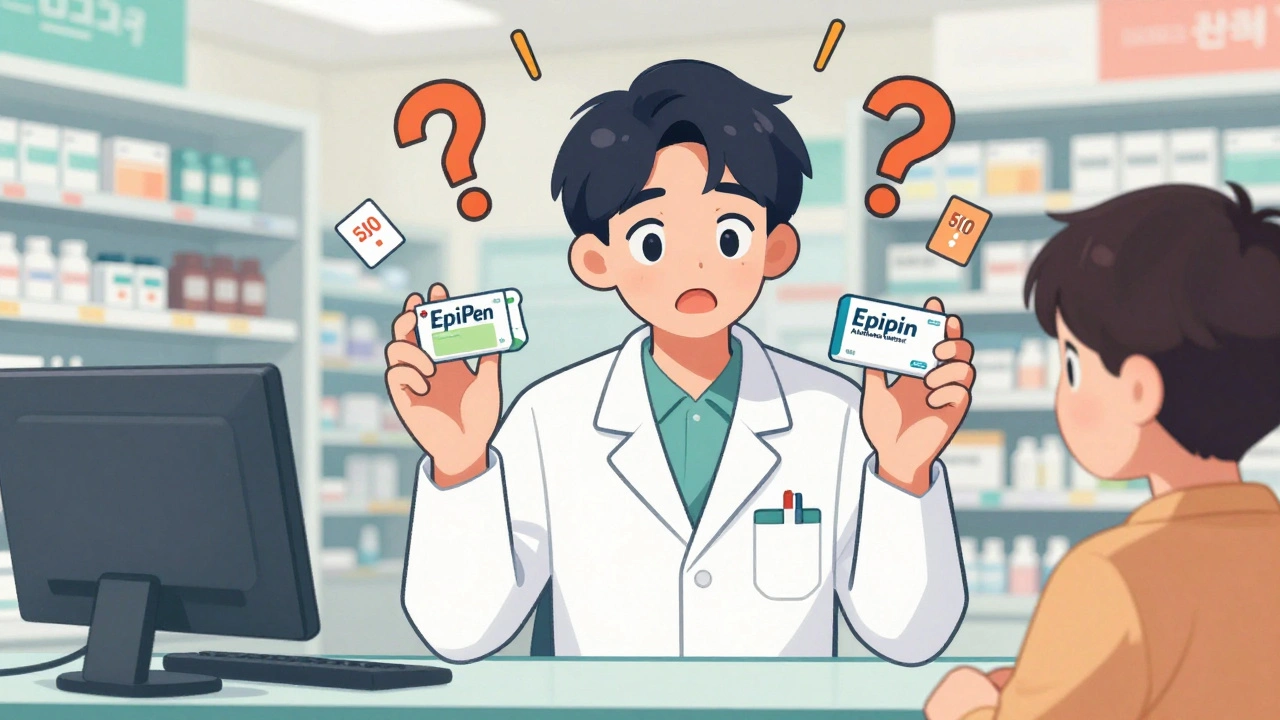
When you pick up a prescription, you might assume the generic version is just a cheaper copy of the brand-name drug. But what if the generic you’re getting isn’t actually made by a different company at all? What if it’s the exact same pill, same factory, same packaging - just with a different label? That’s an authorized generic. And here’s the catch: not every drug has one. In fact, most don’t.
Authorized generics (AGs) are brand-name drugs sold under a generic label, at generic prices. They’re made by the same company that makes the brand, using the same ingredients, same equipment, same quality controls. The FDA lists them separately because they’re marketed differently, but chemically? Identical. You’re getting the real thing - just without the brand name on the bottle.
So why don’t all drugs have them? The answer isn’t about science or regulation. It’s about money - and strategy.
How Authorized Generics Work - And Why They’re Not Just Regular Generics
Regular generics enter the market after a brand-name drug’s patent expires. The generic company has to prove to the FDA that their version works the same way. That process, called an Abbreviated New Drug Application (ANDA), can take 3 to 4 years. They have to run tests, submit data, wait for approval. It’s expensive. It’s slow.
Authorized generics skip all that. They’re made under the brand’s original New Drug Application (NDA). That means no new testing. No waiting. The moment the brand company decides to launch an AG, it can hit shelves - sometimes even before the patent expires. Mylan did this with the EpiPen in 2016, launching its AG while the brand was still under patent protection.
The result? A generic version that’s not just cheaper - it’s instantly available. No delay. No uncertainty. But here’s the twist: only the brand company can make it happen. No third-party generic manufacturer can create an authorized generic. They don’t have the rights. They don’t have the NDA. They’re locked out.
Why Brand Companies Choose (or Skip) Authorized Generics
Brand manufacturers don’t launch AGs because they’re being nice. They do it to protect their profits.
Think of it like this: when a patent expires, a generic competitor rushes in. They get 180 days of exclusive rights to be the first generic on the market. During that time, they can charge more than later generics - sometimes even close to the brand price. That’s a big payday.
But if the brand company launches its own AG right when that 180-day clock starts, it floods the market. Suddenly, there are two versions of the same drug: the first generic and the brand’s own AG. Prices drop fast. The FTC found that when an AG enters during this window, the first generic’s revenue falls by 40% to 52%. Retail prices drop 4% to 8%. Wholesale prices drop 7% to 14%.
For the brand company, that’s a win. They keep market share. They keep cash flowing. They prevent the generic from gaining too much ground. And they look like they’re lowering prices - even though they’re the ones controlling the drop.
But here’s the flip side: if a drug doesn’t have high sales or isn’t facing a big patent cliff, the brand company won’t bother. Why spend the time and money launching an AG for a drug that only brings in $20 million a year? It doesn’t make financial sense. That’s why 89% of AGs are for drugs with over $500 million in annual sales. Only 22% of smaller drug makers use them.
The Hidden Cost: AGs Can Block Real Generic Competition
Authorized generics aren’t just cheaper alternatives. They’re strategic weapons.
When a brand company launches an AG, it sends a message to other generic manufacturers: “Don’t bother trying to compete. We’ll crush you before you even get started.”
According to Harvard Medical School’s Aaron Kesselheim, this discourages companies from challenging patents in the first place. Why spend millions on legal battles and clinical trials if the brand company will just launch its own generic and slash prices? The FTC’s modeling shows that when AGs are expected, a generic company needs at least a 10% chance of winning a patent case to justify the risk. Without AGs, that threshold drops to 4%.
It’s a paradox. AGs lower prices in the short term - but they make it harder for true competition to emerge later. That’s why consumer advocates like the Association for Accessible Medicines call them a loophole in the Hatch-Waxman Act. The law was meant to speed up generic access. Instead, it’s being used to delay it.
Who Gets Confused - And Who Pays the Price
Patients aren’t the only ones affected. Pharmacists and doctors are caught in the middle.
At Walgreens, pharmacy staff reported a 27% increase in prescription errors when both a brand and its AG were available. Why? Because they look identical. The pill color, shape, markings - everything matches. The only difference is the label. One says “EpiPen.” The other says “EpiPen Authorized Generic.” To a pharmacist rushing between 20 prescriptions, it’s easy to mix them up.
Doctors are confused too. A 2018 survey of 1,200 physicians found that 63% struggled with therapeutic substitution when AGs were in play. If a patient’s prescription says “generic epinephrine,” which version do you give? The brand’s AG? Or a true third-party generic? The clinical outcome is the same - but the cost isn’t.
And patients? They’re left guessing. A Medicare Part D survey showed 72% of respondents didn’t understand why their “generic” suddenly looked different. They thought their medication changed. They worried it wasn’t working. They called their doctor. They paid more out of pocket because they didn’t know the AG was covered at the same rate.

What’s Changing - And What’s Not
The FDA started updating its AG list quarterly in January 2022, after years of only publishing annual reports. That’s progress. But it doesn’t fix the core problem: AGs are still entirely optional.
Legislation like the Preserve Access to Affordable Generics and Biosimilars Act has been reintroduced in Congress multiple times since 2003. It would ban brand companies from launching AGs during the 180-day exclusivity period. So far, it hasn’t passed.
Meanwhile, the FTC keeps pushing back. In 2023, they filed a legal brief arguing that AGs during exclusivity periods unfairly suppress competition. They’ve seen data: when AGs enter during that window, first generic entrants lose nearly half their potential revenue.
And big pharma? They’re not backing down. Pfizer, Teva, Mylan - they’ve all used AGs as a core part of their pricing strategy. For drugs like Lyrica and Protonix, AGs helped slash prices by 12% and 35% respectively. But those drops were controlled, temporary, and strategically timed.
What This Means for You
If you’re on a brand-name drug, ask your pharmacist: “Is there an authorized generic for this?”
If there is, you might save money - but only if you’re lucky. AGs are only available for about 1,200 of the thousands of drugs on the market. And even then, they’re not always cheaper than true generics. Sometimes, they’re priced the same. Sometimes, they’re only available for a few months.
Don’t assume your generic is the cheapest option. Ask for the AG. Ask for the true generic. Compare prices. The difference could be $10, $20, or more per prescription.
And remember: if your drug doesn’t have an authorized generic, it’s not because it’s too new, too complex, or too hard to copy. It’s because the company that makes it doesn’t think it’s worth their time. That’s not a failure of the system. It’s how the system was designed.
Until the rules change, authorized generics will remain a tool for big pharma - not a guarantee of fair pricing for patients.
Shannara Jenkins
December 3, 2025 AT 14:03Wow, I had no idea authorized generics were just the same pill with a different label. I always thought generics were totally different companies making cheaper versions. This explains why my prescription cost dropped so much last month - my pharmacist switched me to the AG. I feel like I just got a secret discount! 😊
Rebecca M.
December 5, 2025 AT 08:13Oh wow, so big pharma’s just playing pretend to look like they care about our wallets? How adorable. 🙄 Next they’ll tell us they’re donating to orphanages while hiking insulin prices by 300%. The theater! The *drama*! I’m literally crying into my $12 bottle of lisinopril.
Lynn Steiner
December 5, 2025 AT 17:51My mom died because they wouldn't let her get the real EpiPen when she needed it. The pharmacy gave her the 'authorized generic' and she had a reaction because the filler was different. I know it's the same thing but my body knows the difference. They don't care. They never care. 💔
Alicia Marks
December 6, 2025 AT 15:37Ask your pharmacist about AGs - it could save you a ton! Seriously, it’s such an easy question to ask. No shame in it. You’re worth the extra 10 minutes of asking. 💪
Steve Enck
December 6, 2025 AT 22:28The structural inefficiency inherent in the current pharmaceutical regulatory framework is not merely a market anomaly-it is a deliberate epistemic maneuver orchestrated by vertically integrated corporations to preserve rent-seeking behavior under the guise of consumer welfare. The Hatch-Waxman Act, intended as a bulwark against monopolistic pricing, has been subverted into a mechanism for strategic market suppression via authorized generics, thereby rendering the notion of 'generic competition' a performative illusion. The FTC’s empirical findings, while statistically robust, remain insufficiently leveraged by legislative bodies whose inertia is functionally complicit in this oligopolistic architecture.
Jay Everett
December 8, 2025 AT 06:43Let me break this down like I’m explaining it to my grandma: Imagine you’re selling a fancy chocolate bar. Then you make the exact same bar, slap on a plain wrapper, and sell it for half the price. But here’s the kicker-you’re still the one making it, and you’re doing it just to scare off other chocolate makers from even trying. So now you’ve got two versions: the fancy one, and the ‘cheap’ one you made yourself. Genius? Or just… kinda shady? 🤔🍫
Joel Deang
December 9, 2025 AT 15:47so like… if the ag is the same thing why does the label even matter? i mean i get it’s cheaper but my pharmacist always messes it up and i end up with the brand and then my insurance says nope not covered. it’s a mess. 😅
Roger Leiton
December 10, 2025 AT 17:58Wait, so if the brand company makes the AG, does that mean they’re basically the only ones who can decide whether we get a real discount? That’s wild. It’s like they hold the keys to the pharmacy and say, ‘You can have this cheaper version… if I feel like it.’ 😮
Laura Baur
December 11, 2025 AT 05:55It is deeply concerning that the FDA, despite its mandate to ensure public health and equitable access to therapeutics, continues to permit the existence of authorized generics as a regulatory loophole that fundamentally undermines the spirit of the Hatch-Waxman Act. The fact that 89% of these are reserved for drugs generating over $500 million annually reveals a systemic prioritization of corporate profitability over patient equity. This is not merely market behavior-it is institutionalized pharmaceutical elitism, where the financial viability of a drug dictates whether a patient receives a genuine therapeutic alternative. The ethical implications are not merely academic; they are existential for millions who cannot afford the brand-name version, even when the ‘generic’ is functionally identical.
Jack Dao
December 12, 2025 AT 20:27Anyone who thinks this is a ‘patient-friendly’ move is either naive or complicit. The system is rigged. You don’t get lower prices because the system wants you to-you get them because the company *lets* you. And they’ll pull the plug the second it stops being profitable for them. 🤡
dave nevogt
December 13, 2025 AT 16:14It’s strange, isn’t it? We think medicine is about healing-but so much of it is about control. The brand company doesn’t just own the patent; they own the perception of what’s ‘real’ and what’s ‘cheap.’ And in doing so, they make patients doubt their own bodies. If your pill looks different, you think it’s not working. But it’s the same. The same factory. The same science. Just a different label. It’s not the drug that’s broken-it’s the story we’re told about it.
Arun kumar
December 14, 2025 AT 23:15bro in india we dont even have ags most of the time.. we just get random generics from companies we never heard of.. and sometimes they dont even work same as brand.. so this whole ag thing sounds like luxury problem 😅