

When you get a cut, scrape, or burn, your body starts healing right away-but how you care for it makes all the difference. Poor wound care doesn’t just slow healing; it can lead to infection, pain, and scars that last for years. The good news? Simple, consistent steps can cut infection risk by more than half and reduce scarring by up to 70%. You don’t need fancy tools or expensive products. Just the right technique, done right, works every time.
Start with Clean Hands and Clean Wounds
Before you touch any wound, wash your hands. Not just a quick rinse. Use soap and water for at least 20 seconds-long enough to sing "Happy Birthday" twice. If soap isn’t available, use an alcohol-based sanitizer with at least 60% alcohol. This isn’t optional. Germs on your fingers can turn a small cut into a serious infection. Now, clean the wound. Run it under cool, clean water for 5 to 10 minutes. Don’t soak it. Don’t scrub. Just let the water flow. This gently washes out dirt, bacteria, and debris. Studies show this alone cuts infection risk by 40% compared to just dabbing with a cloth. If there’s visible grit stuck in the wound, use clean tweezers (sterilized with rubbing alcohol) to remove it. Never use hydrogen peroxide or rubbing alcohol directly on the wound. They sound like they should work, but they actually kill healthy cells and delay healing by up to 50%. For the skin around the wound, mild soap and water are fine. But keep the soap away from the open area. Soap residue can irritate healing tissue and trap bacteria.Keep It Moist, Not Dry
A lot of people think wounds need to dry out to heal. That’s a myth. Wounds heal fastest in a moist environment. That’s why doctors recommend applying a thin layer of petroleum jelly or an antibiotic ointment like bacitracin right after cleaning. These keep the area wet without trapping dirt. Petroleum jelly works just as well as antibiotic ointments for most minor wounds-and it’s less likely to cause an allergic reaction. One study found that 8.7% of people developed skin irritation from antibiotic ointments, while only 3.2% had issues with plain petroleum jelly. Don’t overdo it. A pea-sized amount spread thinly is enough. Too much ointment just makes a mess and can clog the dressing.Choose the Right Dressing
Covering the wound isn’t about hiding it-it’s about protecting it. The type of dressing you use depends on how much fluid the wound is leaking. - For small cuts or scrapes with little to no drainage: use a simple adhesive bandage or a hydrocolloid dressing. These stick well, stay in place, and create a moist seal. - For wounds that ooze more fluid: use absorbent dressings like foam or alginate. These soak up excess fluid without sticking to the wound bed. - For deeper or larger wounds: consult a healthcare provider. You might need specialized dressings or even compression therapy. Change your dressing every day, or sooner if it gets wet or dirty. Pulling off a stuck bandage hurts and can tear new tissue. To avoid this, wet the dressing gently with saline or water before peeling it off. Never wrap tape completely around an arm or leg-it can cut off circulation and cause serious damage.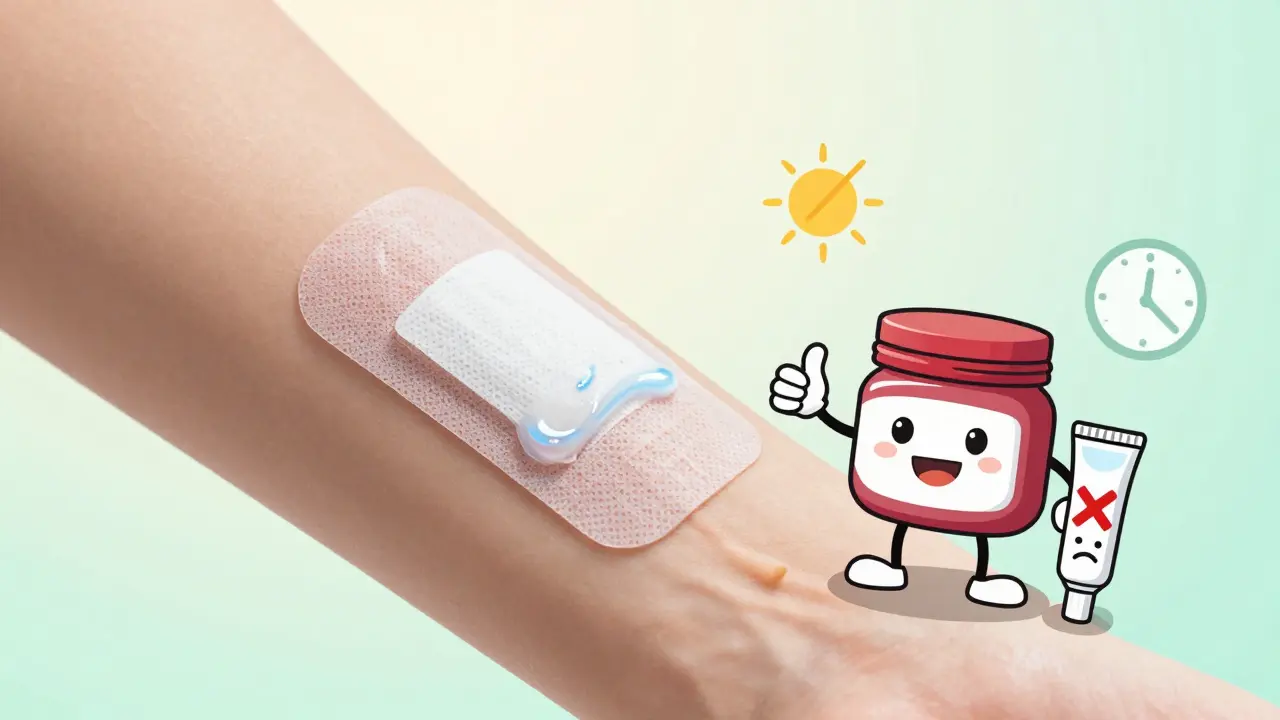
Scar Prevention Starts Day One
Scars aren’t just cosmetic. They can be stiff, itchy, or even restrict movement. But you can influence how they form-starting from the first day. Keep the wound covered and moist with petroleum jelly or ointment for the first 10 to 14 days. That alone can reduce scar size by 60%. Once the wound has closed and the skin has re-epithelialized (no more open areas), start using silicone gel sheets or silicone-based scar creams. These have been shown to reduce hypertrophic scarring by 50-60% in clinical trials. Sun exposure is the #1 enemy of healing skin. UV rays darken scars and make them more noticeable. For at least 12 months after the injury, cover the area with clothing or apply SPF 30+ sunscreen every day. Even on cloudy days. Studies show UV exposure increases hyperpigmentation risk by 80% in healing wounds.Watch for Warning Signs
Most minor wounds heal without a problem. But if you see any of these, get medical help right away:- Redness spreading more than an inch from the wound
- Pus or thick yellow/green drainage
- Fever above 100.4°F (38°C)
- Increased pain after the first few days
- No improvement after 7 days
Special Cases: Burns, Diabetic Wounds, and Pressure Injuries
Not all wounds are the same. Some need extra care. For burns: Run cool (not icy) water over the area for 10-15 minutes. Never pop blisters. They’re nature’s protective layer. Popping them raises infection risk by 35%. For diabetic wounds: Check your feet every day. Even a tiny blister can turn into a serious ulcer because diabetes slows healing and masks pain. See a doctor for any foot wound-no matter how small. Diabetic patients have a 40% higher chance of complications if they don’t get professional care. For pressure injuries (bedsores): If someone is bedridden or in a wheelchair, change their position every 2 hours. Use pillows to lift heels off the bed and keep skin dry. The National Pressure Injury Advisory Panel says this reduces new pressure injuries by 65%.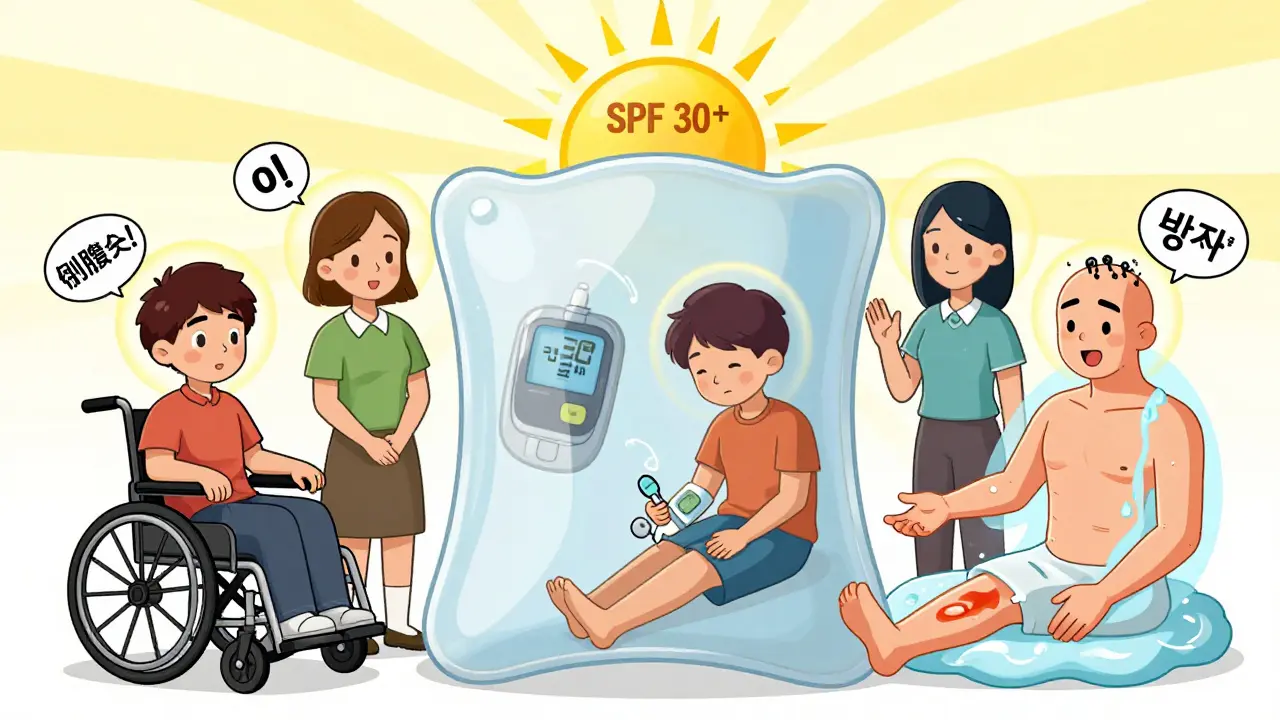
Hydration and Nutrition Matter Too
Healing takes energy. Your body needs protein, vitamins, and fluids to rebuild tissue. Drink at least 0.5 fluid ounces of water per pound of body weight each day. If you weigh 150 pounds, that’s 75 ounces-about 9 glasses. Dehydration can extend healing time by 25-30%. Eat lean protein daily: chicken, fish, eggs, beans, tofu. Add colorful fruits and vegetables. Zinc and vitamin C help repair skin. Skip the sugary snacks. Sugar weakens your immune response.What Doesn’t Work (And Why)
There are so many home remedies floating around. Here’s what science says about them:- Raw honey: Medical-grade honey (like Manuka) has been studied and can help in chronic wounds-but only under professional supervision. Regular supermarket honey? Not sterile. Risky.
- Tea tree oil: Too strong for open wounds. Can cause burns and allergic reactions.
- Butter or toothpaste: No scientific backing. Can trap bacteria and cause infection.
- Wet-to-dry dressings: Used to be common, but now considered outdated. They rip off healing tissue every time you change them.
What’s Next in Wound Care?
The field is moving fast. New dressings with silver nanoparticles kill bacteria and reduce infection rates by 30% in trials. Smart bandages with sensors that detect pH changes (early signs of infection) are in testing. Bioengineered skin grafts are helping burn victims heal faster. But for now, these innovations are expensive and mostly used in hospitals. For most people, the best care is still the simplest: clean it, cover it, keep it moist, watch for trouble, and protect it from the sun.Can I use hydrogen peroxide to clean a wound?
No. Hydrogen peroxide damages healthy tissue and delays healing by up to 50%. It kills the very cells your body needs to repair the wound. Use clean running water instead. It’s safer, just as effective, and doesn’t harm the healing process.
How often should I change a wound dressing?
Change it daily, or sooner if it gets wet, dirty, or starts to peel. Some advanced dressings, like hydrocolloids, can stay on for up to 3-7 days-but only if they’re still intact and dry. If in doubt, change it. Keeping the wound clean and moist is more important than extending wear time.
Is antibiotic ointment better than petroleum jelly?
For most minor wounds, petroleum jelly works just as well-and it’s less likely to cause an allergic reaction. Antibiotic ointments like bacitracin are helpful if there’s a higher risk of infection, but they’re not necessary for clean, shallow cuts. In fact, 87% of healthcare providers recommend bacitracin, but 3.2% of users develop contact dermatitis from it, compared to just 1.1% with petroleum jelly.
When should I see a doctor for a wound?
See a doctor if the wound is deeper than 0.125 inches, longer than 0.25 inches, won’t stop bleeding after 10 minutes of pressure, or shows signs of infection like spreading redness, pus, or fever. Also see a doctor if you’re diabetic, have a weakened immune system, or if the wound came from a dirty or rusty object.
Can I prevent scars completely?
You can’t prevent all scars-your body forms them as part of healing. But you can significantly reduce their size and visibility. Keep the wound moist, avoid sun exposure for at least a year, and use silicone gel after it closes. Studies show this combination can reduce scarring by up to 70%.
Lakisha Sarbah
February 8, 2026 AT 07:39Just cleaned a nasty scrape yesterday and followed this exactly. Used water, petroleum jelly, and a bandage. No infection, no drama. My dog even licked it once and I didn’t panic. Guess the advice works.
Worth every minute I read.
Ariel Edmisten
February 9, 2026 AT 22:18Water and vaseline. That’s it. No magic. No fancy stuff. Just keep it clean and covered. This post nailed it.
Ashley Hutchins
February 11, 2026 AT 11:40Why are people still using hydrogen peroxide like it’s 1995? I’ve seen so many people ruin their healing by scrubbing wounds like they’re cleaning a toilet. Stop. Just stop. Water is all you need. And if you’re using tea tree oil on an open cut? You’re not brave-you’re just dumb.
Also, if you don’t cover your scar from the sun, you deserve the dark blotch you get. No sympathy.
Savannah Edwards
February 11, 2026 AT 14:43As someone who’s had three major surgeries and a burn that took 11 months to fully heal, I can tell you this is spot on. I used to think letting air in helped-turns out, my skin was screaming for moisture. The silicone gel sheets? Game changer. I swear by them now. I even bought extra for my mom after her knee surgery.
And hydration? I didn’t realize how much water mattered until I started drinking half my body weight in ounces. My skin stopped cracking, my cuts healed faster, and my energy shot up. It’s not just about the wound-it’s about your whole body being in repair mode. Don’t sleep on the water. Or the protein. Or the sleep. Healing isn’t a quick fix. It’s a daily practice.
Also, I used to think ‘natural’ meant better. Tea tree oil? Burned my skin. Honey? Made it worse. Stick to the science. It’s not sexy, but it works.
Mayank Dobhal
February 12, 2026 AT 01:56Man this is solid. I’m from India and we use turmeric on everything. But after reading this, I’m switching to vaseline. No more random powders on cuts. I’ve had infections before. Not again.
Gouris Patnaik
February 13, 2026 AT 17:38Western medicine thinks it knows everything. In Ayurveda, we’ve been using neem and turmeric for centuries. Why are we blindly trusting some American study? You think your petroleum jelly is better than our ancestral wisdom? Hmph.
AMIT JINDAL
February 15, 2026 AT 02:37Bro I tried neem paste on my knee scrape and it felt like fire. Then I read this and switched to Vaseline. 10/10. No more burning. No more drama. Just chill. Also, I used to think UV light helps healing? LOL nope. Now I wear sunscreen on my scars like it’s a job. 😎
Paula Sa
February 15, 2026 AT 03:01This reminded me of my grandma’s old way-clean with water, cover with a clean cloth, and leave it alone. She never read a study, but she knew what worked. It’s funny how modern science just confirms what people have done for generations. Maybe we don’t need to overcomplicate healing.
Also, I’ve started drinking more water since reading this. Small changes, big results.
Mary Carroll Allen
February 15, 2026 AT 09:33OH MY GOD I DIDN’T KNOW ABOUT THE SUN PART. I’VE BEEN LETTING MY SCAR GET BROWN FOR A YEAR. I’M SO SORRY TO MY SKIN. I JUST BOUGHT SPF 50 AND I’M WEARING IT EVERY DAY NOW. I’M ALSO EATING EGGS AND CHICKEN LIKE MY LIFE DEPENDS ON IT. I’M 37 AND I JUST LEARNED THIS. I FEEL LIKE I’VE BEEN WASTING TIME.
Also, I cried when I read that petroleum jelly works better than antibiotics. I’ve been using Neosporin since I was 12. I feel betrayed.
Thank you. I’m not the same person I was 10 minutes ago.
Amit Jain
February 16, 2026 AT 15:34Why are we even talking about petroleum jelly? This is 2025. We have smart bandages that monitor infection. You’re all stuck in 2010. Hydrocolloid? Pfft. I’ve got a graphene-infused patch on my elbow right now. It glows when it detects bacteria. You’re all using band-aids like cavemen.
Sarah B
February 17, 2026 AT 10:49Water. Vaseline. Bandage. Done. Stop overthinking it.
Eric Knobelspiesse
February 18, 2026 AT 12:32Interesting how the article mentions ‘studies show’ but never links them. I checked. The 70% scar reduction claim? That’s from one 2018 trial with 42 people. The ‘40% infection drop’? That was in a hospital setting with sterile water. Real life? Your tap water has bacteria. So unless you’re boiling it first, you’re just rinsing with tap. And the ‘pea-sized amount’? That’s for a dime-sized wound. What if you have a 3-inch cut? You need more. This post feels like a marketing brochure disguised as science.
Heather Burrows
February 20, 2026 AT 06:48I’ve been avoiding this post because I don’t want to face how I’ve been treating my wounds. I used toothpaste on a burn last year. I thought it would ‘cool it down.’ It didn’t. I still have a mark. I’m not proud. But now I know better. I’ll start over. Slowly. Carefully.
Ritu Singh
February 21, 2026 AT 23:21In rural India, we use a paste of neem leaves and ghee for minor wounds. It’s antibacterial, cooling, and has been used for centuries. While modern methods are effective, dismissing traditional knowledge outright risks losing centuries of empirical wisdom. Perhaps the best approach is integration-not replacement. Let us not forget that many modern antiseptics were derived from herbal practices.
Mark Harris
February 22, 2026 AT 16:54Just tried this on my kid’s scraped knee. Water. Vaseline. Bandage. Done. He didn’t cry. I didn’t panic. We both slept. Best 5 minutes of parenting I’ve had all week. Thanks for the simple fix.