
When you take a pill, it doesn’t just disappear and start working. bioavailability, the portion of a drug that enters your bloodstream and becomes active in your body. Also known as drug absorption rate, it’s what decides if a 10mg dose actually gives you 10mg of effect—or just 3mg. Two pills might look identical, have the same active ingredient, and even cost the same—but if one has poor bioavailability, it won’t work as well. That’s why the FDA checks this before approving any generic drug.
Bioavailability ties directly to bioequivalence, the standard that proves a generic drug performs the same as the brand-name version. If a generic doesn’t match the original’s bioavailability within a tight range, it’s rejected. This isn’t just paperwork—it’s safety. For drugs with a narrow therapeutic index, like warfarin or digoxin, even a 10% drop in absorption can mean treatment failure or overdose. That’s why switching generics isn’t always as simple as swapping brands.
It’s not just about pills. therapeutic equivalence, the broader guarantee that two drugs produce the same clinical outcome depends on bioavailability. A patch, an inhaler, or a cream might deliver the same active ingredient, but if your body doesn’t absorb it the same way, the result changes. Fentanyl patches, for example, can become dangerous if heat increases absorption—because bioavailability isn’t fixed. It’s affected by your gut, your liver, what you ate, even your genetics.
That’s why some people feel a generic doesn’t work like the brand. It’s not always in their head. Differences in inactive ingredients, how the pill breaks down, or even the coating can change how fast or how much gets into your blood. That’s why bulk-purchased generics might vary between suppliers, and why switching between generics can sometimes cause side effects—even when labeled "equivalent."
Understanding bioavailability helps you ask the right questions. Why did my doctor switch me? Is this new generic the same? Should I be worried about my statin dose if I skip a day? These aren’t just pharmacy questions—they’re about your body’s ability to use the medicine you’re paying for.
Below, you’ll find real-world examples of how bioavailability affects everything from antibiotic effectiveness to fentanyl safety, from generic substitution risks to combination drugs that confuse even doctors. No theory. No fluff. Just what you need to know to make sure your meds actually work.
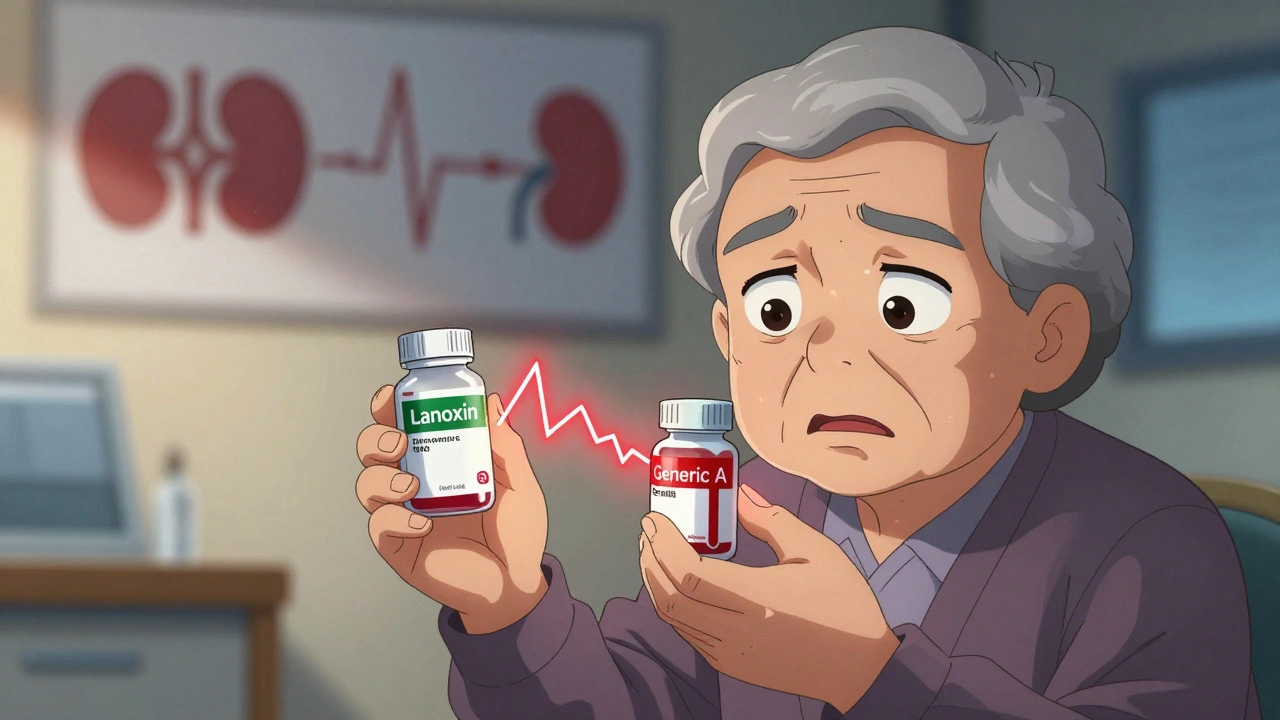
Digoxin generics may be bioequivalent on paper, but small differences in absorption can cause dangerous toxicity or treatment failure. Learn why consistent use and blood monitoring are critical for safe therapy.
View more