
When you pick up a generic pill at the pharmacy, you might assume it’s just a cheaper version of the brand-name drug. But how does the FDA know it’s safe and works the same? That’s where the FDA Orange Book, the official public list of approved drug products with therapeutic equivalence evaluations. Also known as Approved Drug Products with Therapeutic Equivalence Evaluations, it’s the backbone of generic drug approval in the U.S. Without it, pharmacies couldn’t legally substitute brand drugs with generics—and you’d pay way more for the same medicine.
The FDA Orange Book doesn’t just list drugs. It tells you which generics are therapeutically equivalent to the original. That means they have the same active ingredient, strength, dosage form, and route of administration—and they work the same way in your body. But here’s the catch: not all generics are equal on paper. Some drugs, like blood thinners or seizure meds, have a narrow therapeutic index, where tiny differences in absorption can cause real problems. The Orange Book flags these, so doctors and pharmacists know when to be extra careful.
It also tracks authorized generics—the exact same drug as the brand, just sold under a different label at a lower price. These aren’t knockoffs. They’re made by the brand company itself, often to compete with other generics. That’s why some drugs have authorized generics and others don’t. It’s not about quality—it’s about business strategy. And if you’re buying in bulk, like a clinic or hospital, the Orange Book helps you identify which generics are truly interchangeable, so you can cut costs without risking patient safety.
Behind every generic you buy, there’s a paper trail in the Orange Book. It shows patent expirations, exclusivity periods, and who’s legally allowed to sell what. That’s why some drugs have no generics for years, while others flood the market the moment a patent drops. If you’ve ever wondered why your prescription switched from one generic to another—or why a drug suddenly became cheaper—the Orange Book holds the answer.
What you’ll find below are real stories about how this system affects your prescriptions. From how bulk buyers save thousands using Orange Book data, to why some patients can’t switch to generics even when they’re labeled equivalent, to how authorized generics quietly lower prices without fanfare. These aren’t theory pieces. They’re practical, real-world breakdowns of how the FDA Orange Book shapes what’s in your medicine cabinet—and what you pay for it.
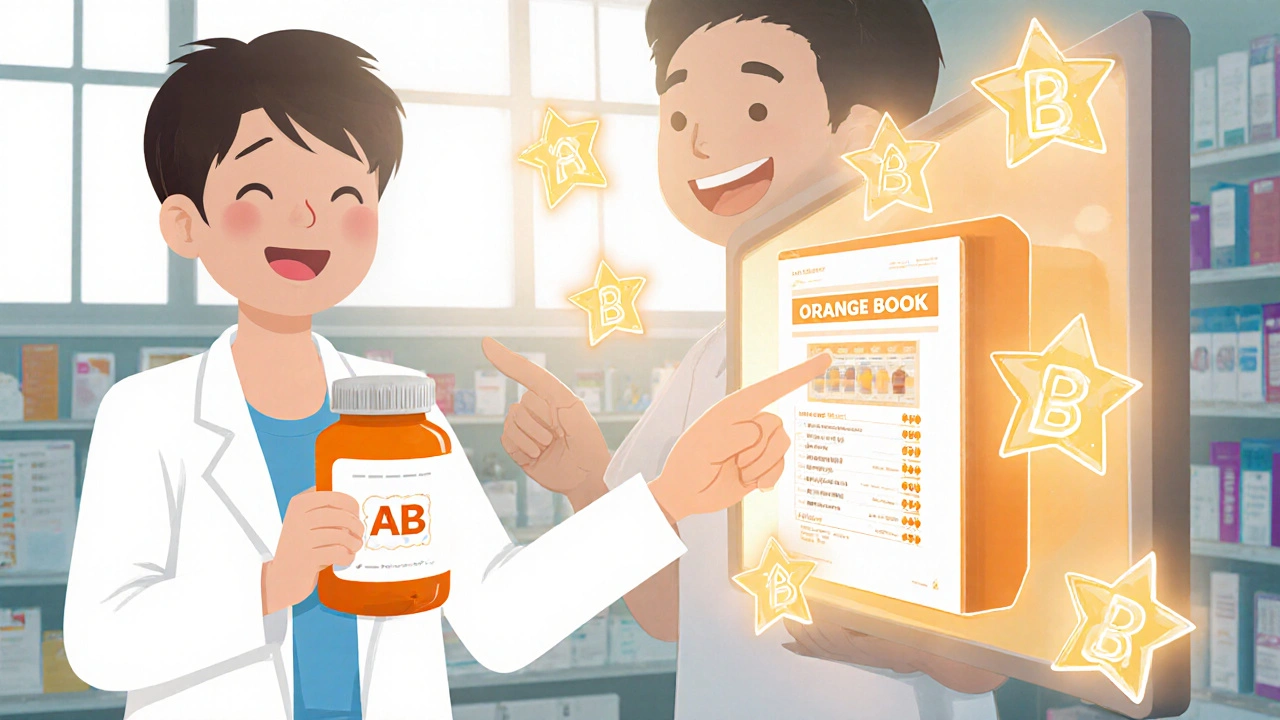
Therapeutic equivalence ensures generic drugs work just like brand-name ones, keeping patients safe while cutting costs. Learn how the FDA's Orange Book system protects you and why it matters for your treatment.
View more