
When your body overheats and can't cool itself down, you're facing heat overdose, a dangerous rise in core body temperature that can lead to organ failure if untreated. Also known as hyperthermia, it’s not just about feeling sweaty—it’s when your internal thermostat breaks down, and your cells start to shut down. This isn’t just a summer problem. People on medications for high blood pressure, depression, or even allergies are at higher risk because those drugs can block your body’s natural cooling signals.
Dehydration, the loss of fluids and electrolytes your body needs to regulate temperature is often the first step toward heat overdose. If you’re taking diuretics, anticholinergics, or even some antibiotics, your body might not tell you it’s thirsty until it’s too late. And heat stroke, the most severe form of heat overdose, happens when your body hits 104°F or higher. At that point, confusion, seizures, or even coma can follow—fast. It doesn’t take hours. In extreme heat, it can happen in under 30 minutes, especially if you’re active or older.
Some medications make you more sensitive to heat without you even realizing it. Antidepressants like SSRIs, antipsychotics, and even over-the-counter cold pills can interfere with sweating. If you’re on any of these and you start feeling dizzy, nauseous, or unusually tired in the heat, don’t brush it off. Your body is screaming for help. Cooling down isn’t just about drinking water—it’s about getting out of the sun, using cold towels, and knowing when to call 911.
What you’ll find below are real, practical guides on how medications interact with heat, why some people are at higher risk, and how to protect yourself or someone you care for. From how certain drugs reduce your ability to sweat, to what to pack when traveling in hot climates, these posts give you the facts—not guesses. No fluff. Just what works.
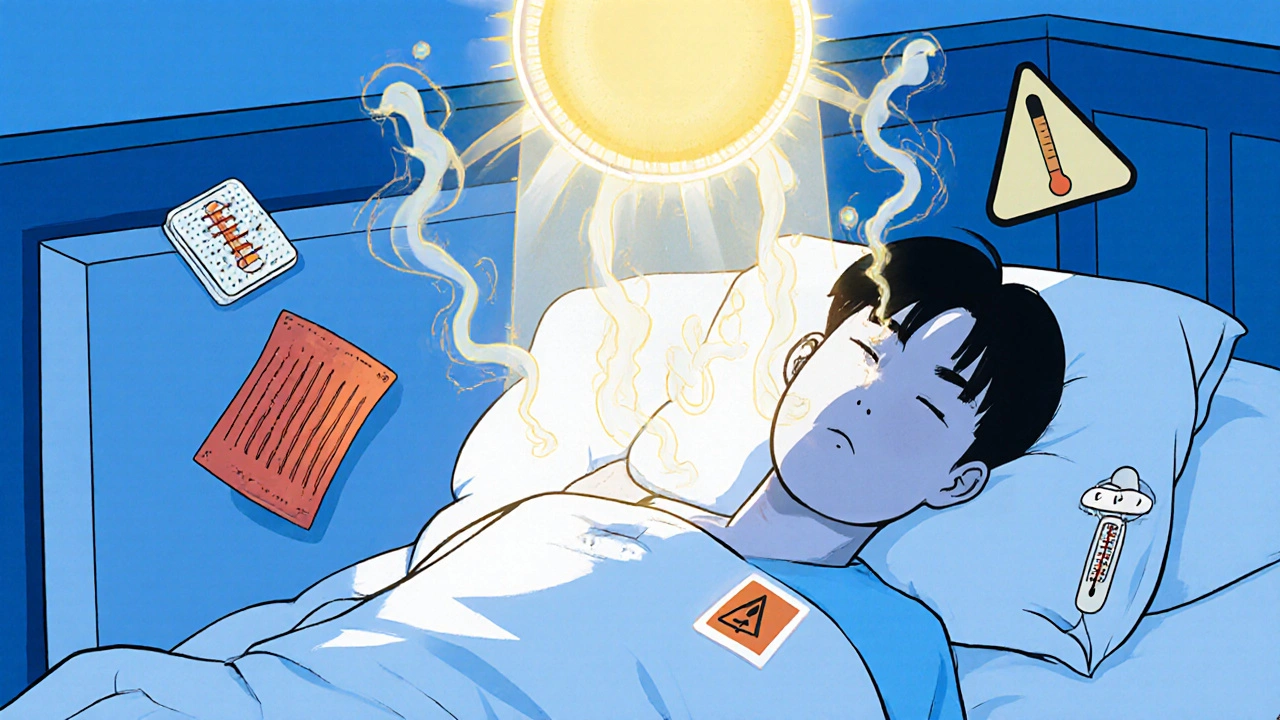
Fentanyl patches can be life-saving for chronic pain - but heat from showers, fever, or heating pads can cause deadly overdose. Learn what really increases absorption and how to stay safe.
View more