
When a drug has a narrow therapeutic index, a small difference between the dose that works and the dose that causes harm. Also known as NTI drugs, these medications leave almost no room for error — even a slight change in dosage, absorption, or formulation can lead to toxicity or treatment failure. Think of it like walking a tightrope: too little and the drug doesn’t work; too much and you risk serious harm. This isn’t theoretical — it’s why drugs like warfarin, lithium, phenytoin, and cyclosporine come with strict monitoring rules and warnings.
These drugs don’t just need exact doses — they need consistent bioequivalence, how closely a generic matches the brand-name version in how it’s absorbed and used by the body. Not all generics are created equal when it comes to NTI drugs. Even tiny differences in inactive ingredients or manufacturing can change how fast the drug enters your bloodstream. That’s why the FDA treats them differently — and why switching between brands or generics without doctor approval can be risky. This is also why therapeutic equivalence, the gold standard that says two drugs work the same way in the body matters so much for NTI drugs. Just because a generic is approved doesn’t always mean it’s safe to swap without testing.
Patients on these drugs often need regular blood tests to check levels — like INR for warfarin or serum lithium levels — because symptoms of under- or overdosing can be subtle until it’s too late. That’s why stories about patients switching to a generic and ending up in the hospital aren’t rare. The same goes for drug interactions: a change in diet, another medication, or even a fever can alter how your body handles an NTI drug. And when you’re on something like fentanyl patches or cyclosporine, those small shifts can be life-threatening. That’s why managing NTI drugs isn’t just about the pill — it’s about your whole health picture: what you eat, what else you take, how your body reacts, and whether your pharmacy knows the exact brand you’re on.
What you’ll find below are real-world stories and science-backed guides about how these drugs behave, why substitutions can go wrong, how testing helps, and what you can do to stay safe. From warfarin food interactions to why some generics aren’t trusted for critical meds, these posts give you the practical details you won’t get from a label or a quick Google search. This isn’t about theory — it’s about avoiding mistakes that could change your life.
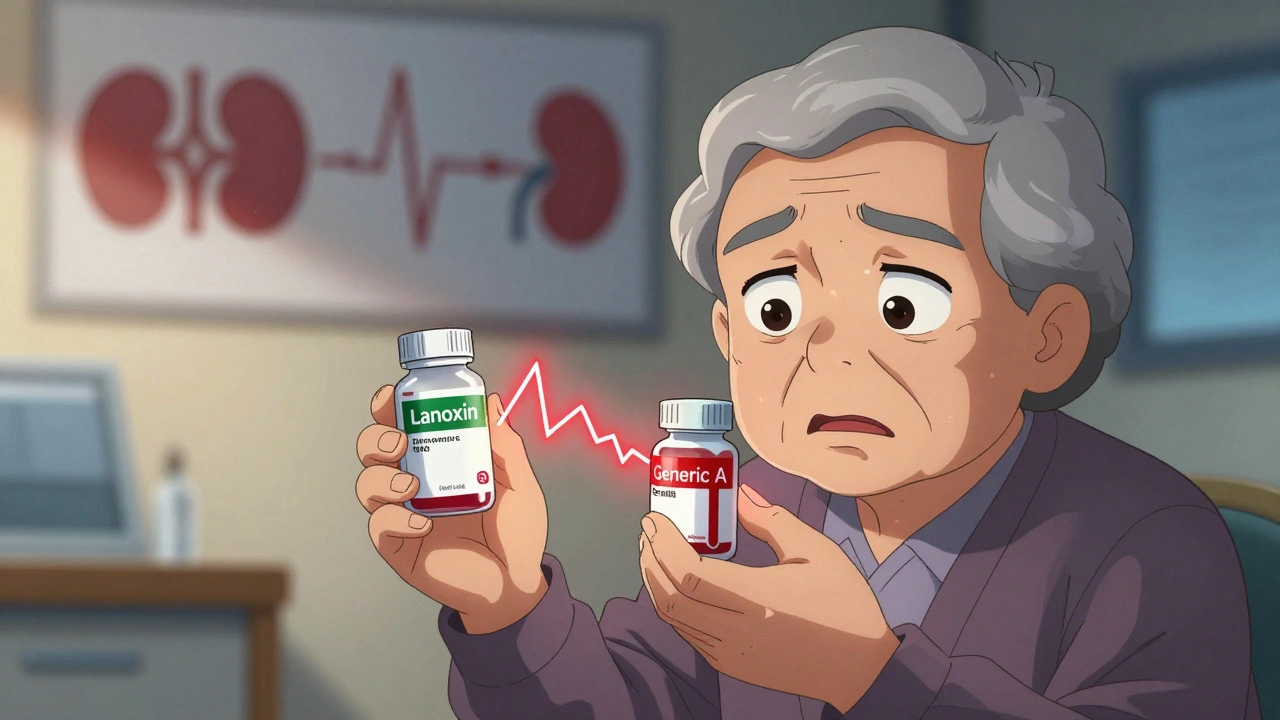
Digoxin generics may be bioequivalent on paper, but small differences in absorption can cause dangerous toxicity or treatment failure. Learn why consistent use and blood monitoring are critical for safe therapy.
View more